Understand painting costs per square foot in Canada. Get accurate estimates for interior and exterior projects, factoring in materials, labour, and location.
Interior painting in Canada costs $2-$5/sq ft; exterior $3-$7/sq ft
Labour, especially prep work, drives 70% of painting project costs
Always vet Canadian contractors: check insurance (WSIB), references, detailed quotes
Painting costs are higher in major Canadian urban centres like the GTA
In Canada, expect to pay between $2 to $5 per square foot for interior painting and $3 to $7 for exterior work according to industry pricing guides. While this range provides a solid baseline, the final quote will depend on project specifics like surface preparation, paint quality, and job complexity.
Understanding Painting Costs Per Square Foot in Canada
When I was starting out, I’d watch old-timers price a job just by looking at it. They weren’t guessing. They were doing lightning-fast math in their heads, a calculation that every pro runs, whether on a napkin or a tablet.
It breaks down into four simple buckets: materials, labour, overhead, and profit. Forget one, and you’re not running a business, you’re funding a very expensive hobby.
Factors Influencing Paint Project Costs
The price per square foot is a baseline, not a bible. The real cost is in the details. Is the drywall full of dings from a tenant who thought they were a professional hockey player? That's prep time. Are the ceilings 14 feet high? That's equipment and higher risk. Are we painting over a dark red with a light beige? That's primer and extra coats. Each of these adds to the labour and material columns.
Average Interior Painting Costs in CAD
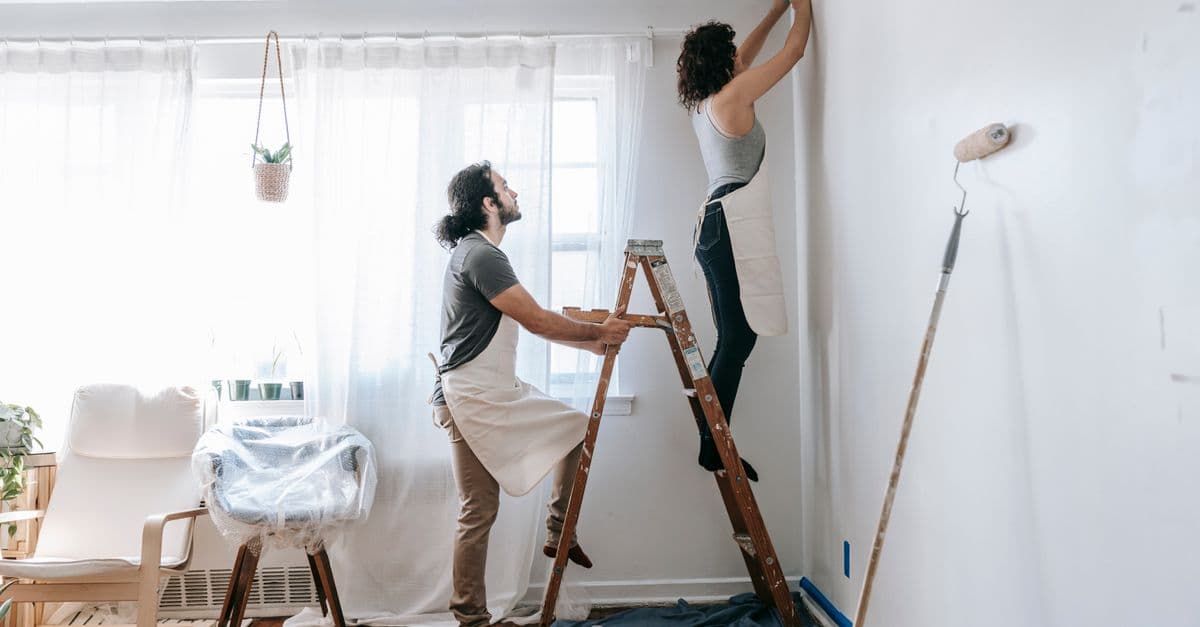
For the inside of a home, the typical range is $2–$5 per square foot. This usually covers standard prep (minor patching, sanding), two coats of quality paint on the walls, and protection for your floors and furniture as outlined by pros like Revive Painting. A simple, empty bedroom will be on the low end. A living room with crown moulding, high ceilings, and three doors will push you toward the higher end.
Average Exterior Painting Costs in CAD
Taking the job outside raises the stakes and the price. You’re looking at $3–$7 per square foot for most exterior projects according to industry pricing guides. Why the jump? Weather, for one. You can't paint in the rain, and in Canada, that can shrink your work season. You also have more prep work like pressure washing, scraping old paint, and dealing with surfaces like stucco or wood siding. Plus, exterior paints are formulated to survive a Canadian winter, and that costs more.
What Drives Painting Price Per Square Foot in Canada?
The square footage gives you a ballpark. The specifics of the job are what buy the tickets to the game. I’ve seen a "simple" 500-square-foot job end up costing more than a straightforward 1000-square-foot one because of what was hiding on the walls.
Material Costs: Paint Types and Primers
Not all paint is created equal. You can buy a can for $30 or a can for $90. The difference is in the quality of the pigments and binders, which affects coverage, durability, and how it looks. Using a premium brand like Benjamin Moore often means fewer coats and a finish that lasts years longer. Your material cost per square foot with material will also include primer, tape, plastic sheeting, and rollers. It all adds up.
Labour Costs: Skill and Efficiency
Labour is almost always the biggest chunk of the bill. It's not just about slapping paint on a wall; it's the prep that takes the time. A pro painter might spend 70% of their time on site just preparing the surface. This is what you’re paying for: the perfect cut-in lines, the smooth finish, and the knowledge of how to fix problems, not just paint over them. An experienced painter is efficient and makes fewer mistakes, which saves time and money in the long run.
Project Scope: Prep Work and Cleanup
Every contractor I know has a story about a "quick touch-up" that turned into a full-blown wall restoration. Extensive patching, stripping wallpaper, or intricate masking around fixtures takes time. And cleanup isn't just rolling up a drop cloth. A professional leaves the space cleaner than they found it, with no drips, splatters, or leftover mess. This is all factored into the labour estimate.
Location-Specific Variations (e.g., GTA)
Where you are in Canada matters. Costs in downtown Toronto are going to be higher than in a smaller rural community. Higher overheads, parking costs, and demand all play a role. A painter in the Greater Toronto Area might have a higher hourly rate to cover their business expenses, which is a reality reflected in local market pricing as noted by services like UrbanTasker.
Interior vs. Exterior Painting: Cost Differences Explained
While both involve paint and a brush, interior and exterior jobs are completely different animals.
Interior Painting Cost Per Square Foot Considerations
Interior work is a game of precision. You're working in someone's home, navigating around furniture, pets, and family life. The focus is on fine detail: sharp lines, smooth walls, and protecting everything that isn't getting painted. The costs are driven by the complexity of the space, think trim, windows, and doors, more than the raw square footage. That's why the range sits around $2–$5 per square footas outlined by pros like Revive Painting.
Exterior Painting Price Per Square Foot Factors
Exterior painting is a battle against the elements. You need ladders or scaffolding, specialized equipment for prep like pressure washers, and a keen eye on the weather forecast. The surfaces are more challenging, from porous brick to peeling wood siding. The paint itself is a more advanced (and expensive) product designed to withstand UV rays, moisture, and temperature swings. These factors push the price up to that $3–$7 per square foot range according to industry pricing guides.
How to Calculate Painting Costs: A Step-by-Step Guide
There’s no magic formula, but there is a reliable process. Accurate estimates require a site visit, but you can create a solid rough estimate with some basic math.
Estimating Material Needs
First, calculate the paintable surface area. For a simple room, measure the length of all the walls, multiply by the height, and you have your wall square footage. A gallon of quality paint typically covers about 400 square feet. Don't forget to factor in a second coat and primer if needed. A pro tip from Benjamin Moore's guides for contractors is to always budget for slightly more paint than you think you'll need. Running to the store mid-job kills your momentum and your profit.
Calculating Labour Hours and Rates
This is the hardest part to estimate without experience. A seasoned painter can cover about 100-150 square feet of wall per hour on average, but that doesn't include prep. Factor in time for taping, patching, sanding, and cleanup. Multiply your estimated hours by your hourly rate (or your crew's rate) to get your base labour cost.
Accounting for Overhead and Profit
Your hourly rate isn't pure profit. It has to cover your business overhead: insurance, vehicle costs, tools, marketing, and the time you spend creating quotes, all legitimate business expenses you can claim on your taxes as outlined by the Canada Revenue Agency. After all that, you need to add a profit margin (typically 15-25%) to actually grow your business. This is where software that helps you create Unlimited proposals & quotes can save you hours, ensuring you account for everything without spending your entire evening on paperwork.
Worked Example: Interior Painting Cost Calculation (CAD)
Let's price out a hypothetical 12' x 15' bedroom with 8' ceilings and one door and one window.
Calculate Wall Square Footage:
Two walls are 12' x 8' = 96 sq ft each (192 sq ft total)
Two walls are 15' x 8' = 120 sq ft each (240 sq ft total)
Total wall area: 192 + 240 = 432 sq ft
Subtract door (21 sq ft) and window (15 sq ft): 432 - 36 = 396 sq ft.
Let's round up to 400 sq ft for easy math.
Estimate Materials:
One gallon of premium paint covers ~400 sq ft. For two coats, you'll need 2 gallons.
Paint Cost: 2 gallons @ $80/gallon = $160
Supplies (tape, primer, rollers, plastic): ~$50
Total Materials: $210
Estimate Labour:
Prep (taping, minor patching, setup): 2 hours
Painting (2 coats @ 125 sq ft/hour): 400 sq ft / 125 = 3.2 hours per coat. Total ~6.5 hours.
Overhead & Profit (add 20%): $732.50 x 0.20 = $146.50
Final Quote: $732.50 + $146.50 = $879
Calculate Price Per Square Foot:
$879 / 400 sq ft = $2.20 per square foot. This falls squarely in the expected range for a simple interior room.
Choosing a Canadian Painting Contractor: Key Considerations
A cheap quote can quickly become the most expensive job you ever commission. Vetting your contractor is the most important step.
Vetting for Quality and Reliability
Don't just look at the price. Ask for proof of insurance (liability and WSIB coverage). Check their references. Look at their portfolio of past work. A professional painter will have all of this ready to go. A painter who gets cagey when you ask for their insurance number is a painter you don't hire.
Understanding Quotes and Contracts
A quote should be more than a number on the back of a business card. It should be a detailed document outlining the scope of work, the materials to be used (including the brand and type of paint), the prep work included, and the payment schedule. Get it in writing. Always.
Local Expertise: Ecopainting, Revive, UrbanTasker
In Canada, you have a mix of independent painters and established companies. Firms like Ecopainting in Toronto focus on commercial and eco-friendly options, while companies like Revive Painting and Wall Coverings provide detailed breakdowns for residential clients. Using platforms like UrbanTasker can also give you a sense of local pricing. These companies understand the local market and building codes.
References: Can they provide you with 2-3 recent clients you can actually call?
Detailed Quote: Is the quote broken down? Does it specify the exact paint (brand, line, and finish) and the prep work to be done?
Contract: Is there a clear contract outlining the scope, timeline, and payment schedule?
Warranty: Do they offer a warranty on their workmanship? (A 1-3 year warranty is standard for reputable painters).
Experience: How long have they been in business? Do they have experience with your specific type of project (e.g., historic homes, commercial spaces)?
Professionalism: Do they communicate clearly, show up on time, and have a professional online presence or portfolio?
Maximizing Value: Tips for Your Painting Project
Getting the best price isn't about finding the cheapest painter. It's about getting the best result for your money that will last.
Cost-Saving Strategies
If you’re on a tight budget, you can save money by doing some of the work yourself. Moving furniture, taking down wall hangings, and even doing the final cleanup can shave hours off the labour bill. Scheduling your project for the off-season (late fall or winter for interior work) can sometimes get you a better rate, as painters are less busy.
Long-Term Value of Quality Paint
It’s tempting to save $40 a can on cheaper paint, but it's a classic false economy. A premium paint provides better coverage (fewer coats needed), is more durable (washable and resistant to scuffs), and holds its colour longer. You might pay a little more upfront, but you'll save on having to repaint in three years instead of seven.
When to DIY vs. Hire a Professional
Honestly assess your skills and your patience. Painting a small powder room on a Saturday? Go for it. Painting your two-story colonial with peeling siding? Unless you own scaffolding and have a great relationship with your chiropractor, hire a professional. The quality of the finish and the safety risk alone make it worth the investment.
Key Takeaways for Canadian Painting Projects
So, what’s the final word? The price per square foot is a useful starting point, but it's not the whole story. This guide gives you the Canadian-specific cost breakdowns and a real-world example of how those numbers come together, but the most critical takeaway is that the quality of the contractor determines the value of the job. By using a detailed checklist to vet your painter and understanding that prep work is where your money really goes, you move from just getting a price to making a smart investment in your property. The best paint job is the one you don't have to think about for another decade.
Related Articles
Discover more insights and tips for your construction business