Upgrading the Home Plumbing: A Contractors Guide
Practical, step-by-step guide for upgrading the home plumbing. Scope, materials, code checks, sizing, testing, and client buy-in—clear steps contractors can use.
Intro
On most jobs, the call starts the same way: low pressure, rusty water, or a bath that never gets hot enough. Upgrading the home plumbing solves those problems and adds value. It can also open doors for add-ons like recirculation, new fixtures, and leak protection. In this guide, we walk through upgrading the home plumbing with clear steps. We cover scope, code checks, materials, sizing, and testing. You’ll see simple rules, real numbers, and timeframes you can trust. Use this to plan, quote, and deliver a clean upgrade with fewer callbacks.
Quick Answer
Upgrading the home plumbing means replacing old lines, valves, and fixtures to improve pressure, flow, and safety. Start with a pressure and flow check, then plan pipe sizing, venting, and drainage. Pull permits, use quality materials, pressure-test to code, and document everything. Aim for a 2–5 day turnaround for a typical 2–3 bath home.
Table of Contents
- Plan the Scope and Code Checks
- Choose the Right Pipe and Fittings
- Upgrade for Performance and Efficiency
- Step-By-Step: Upgrading the Home Plumbing
- Estimate, Propose, and Get Buy-In
- Testing, Handover, and Maintenance
Key Takeaways
- Map fixtures and pressure first; aim for 50–60 psi delivered.
- Size mains at 3/4 in and branches at 1/2 in for most homes.
- Keep drain slope at 1/4 in per foot (about 2%).
- Typical repipe: 2–5 days; permits can take 5–10 business days.
Plan the Scope and Code Checks
When upgrading the home plumbing, start with a simple survey. Count fixtures. Note pipe sizes, materials, and shut-offs. Take clear photos of access points. Check static pressure at a hose bib. Many homes sit at 50–60 psi. Over 80 psi? Plan a pressure-reducing valve (PRV).
Pull local code requirements. In Canada, many areas follow the National Plumbing Code (NPC) or a provincial version. Venting rules, cleanout spacing, and backflow can change by city. Confirm permits. It’s common to need 5–10 business days for approval.
List homeowner goals. Better hot water? Faster wait times? Cleaner drinking water? Upgrading the home plumbing works best when you match work to goals. Agree on fixture upgrades and locations now, not on day three.
Tip: Sketch a simple isometric. Mark 3/4 in trunk lines and 1/2 in branches. Mark shut-off valves at every toilet and sink. This avoids guesswork on site.
Choose the Right Pipe and Fittings
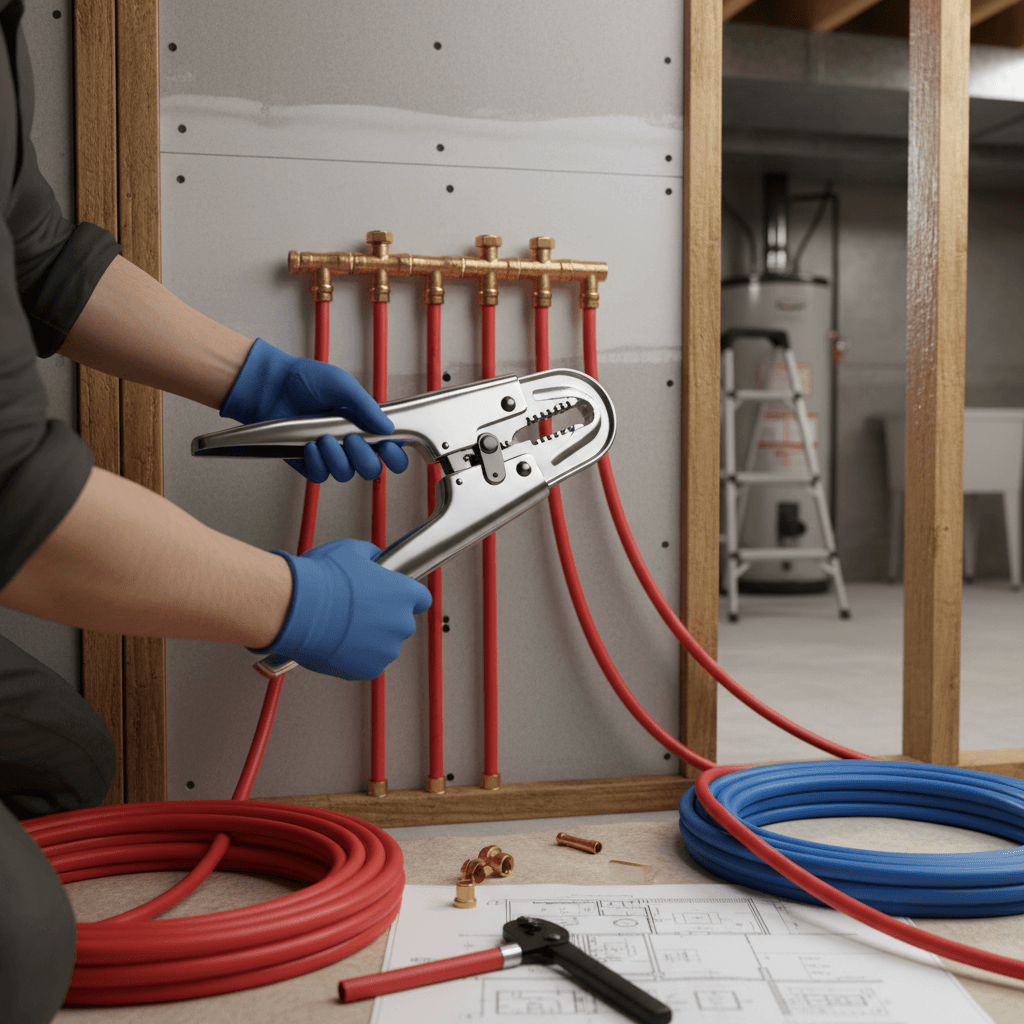
Pick materials based on access, budget, and local rules. PEX is fast and flexible. Copper is durable and heat-safe. CPVC is an option in some regions but needs careful handling.
- Supply mains: 3/4 in is common. Step down to 1/2 in for branches.
- Water heater lines: keep 3/4 in to the tank for flow balance.
- Minimum bend radius: follow the manufacturer, especially with PEX. Kinks cause noise and restriction.
- Valves: Use full-port ball valves. Put one at the main, one at the heater, and shut-offs at each fixture.
Use brass or polymer fittings rated for the pipe. Support every 32–48 in for PEX (check your code) and every 6–8 ft for copper. Protect pipes through studs with nail plates. Upgrading the home plumbing should also mean fewer hidden risks later.
Upgrade for Performance and Efficiency
This is where you add value. Simple choices make daily life better and bills lower.
- Pressure and mixing: Install a PRV if static pressure is 80 psi or more. Add a thermostatic mixing valve at the heater and set near 49°C (120°F) to reduce scald risk.
- Hot water speed: Consider a hot water recirculation loop= or a demand pump. It can cut wait times by 20–60 seconds at far fixtures.
- Insulation: Use pipe insulation at 13 mm (1/2 in) thickness or better on hot lines. Insulate the first 1.5–2.0 m (5–6 ft) at minimum.
- Fixtures: Low-flow showerheads at 6–9 L/min and 1.28 GPF toilets save water without complaints when supply lines are sized right.
- Filtration: If water is hard or has sediment, add a whole-home filter or softener. Place isolation valves and bypass for service.
Upgrading the home plumbing is more than swapping pipes. It’s about better comfort, safer temperatures, and lower noise. Add water hammer arrestors near quick-closing valves, like dishwasher lines, to stop banging.
Step-By-Step: Upgrading the Home Plumbing
Follow these numbered steps for a smooth job.
-
Document and Test
- Measure static pressure at a hose bib. Target 50–60 psi delivered.
- Time a 10 L bucket fill at a tub spout to gauge flow.
- Take 10–20 photos of key runs, shut-offs, and penetrations.
-
Secure Permits and Plan Access
- Pull permits and mark drywall cuts. Protect floors. Plan 150–200 mm (6–8 in) access openings where needed.
- Schedule 2–5 days for a typical 2–3 bath repipe. Tell the client when water will be off each day.
-
Isolate and Demo
- Shut off water, drain lines, and cap as needed.
- Remove old galvanized or polybutylene if present. Watch for lead solder on old copper. Dispose safely.
-
Rough-In New Supply
- Run a 3/4 in trunk, 1/2 in branches. Keep hot on the left, cold on the right.
- Use nail plates at studs. Support PEX every 32–48 in; copper every 6–8 ft.
- Pressure test at the recommended level for the pipe (commonly 100 psi for PEX air tests or water tests per local rules) and hold for 15 minutes with zero drop.
-
Drainage and Venting (If Included)
- Slope horizontal drains at 1/4 in per foot (about 2%).
- Use long-sweep 90s. Add cleanouts within 15 m (50 ft) and at base of stacks.
- Check vent distances and sizes per local code.
-
Valves, Fixtures, and Trim
- Set balancing and isolation valves. Use flexible connectors rated for the fixture.
- Install anti-scald shower valves set near 49°C (120°F).
Upgrading the home plumbing with this sequence reduces errors and callbacks. Keep it tight. Keep it clean.
Estimate, Propose, and Get Buy-In
Clear scope means fewer surprises. Break the job into zones: kitchen, main bath, ensuite, basement. Separate supply, drains, and fixtures. When upgrading the home plumbing, list every valve, fitting type, and insulation length in your takeoff.
- Build a simple, fixed-scope proposal. Include allowance items for fixture selections.
- Note exclusions: drywall paint, tile repairs, or after-hours work.
- Offer 2–3 upgrade options: recirc pump, PRV, mixing valve, and filtration. Many homeowners pick at least one.
Capturing the scope with voice notes and photos is fast on site. Tools like Donizo let you record details, generate a branded proposal, send it by email, get e-signatures, and convert the accepted proposal to an invoice in one click. That keeps your paperwork as clean as your piping.
If you’re also looking to streamline professional proposals, our guide covers building clear scope lines and options. This pairs well with understanding change order workflows so you protect margin when surprises pop up. For contractors dealing with billing, we recommend using invoice templates that save time and reduce errors.
Testing, Handover, and Maintenance
Testing makes or breaks the job. Don’t rush this part.
- Pressure test: Hold at the specified test pressure for 15 minutes. Zero drop is the goal.
- Functional test: Run two showers and a sink together. Check temperature stability and pressure. Listen for hammer.
- Drain test: Fill and dump tubs. Watch for slow drains or gurgling.
- Water quality: Run hot and cold at each fixture for 2–5 minutes. Check clarity and odour.
Handover:
- Show the owner each valve. Leave spare aerators and a filter wrench if you installed a filter.
- Provide a one-page maintenance sheet: PRV check every 12 months, anode rod check every 3–5 years, and recirc pump service per the manual.
Upgrading the home plumbing should end with clear documents and happy users. A short follow-up visit in 30–60 days builds trust and finds issues early.
Conclusion
Upgrading the home plumbing is about clean planning, right sizing, and solid testing. Map the system, pull permits, choose proper materials, and pressure-test before you close walls. Do that, and callbacks drop fast.
Next steps:
- Walk your next job and record pressure, fixture counts, and photos.
- Build a clear scope with three upgrade options.
- Schedule testing time into the plan.
To keep admin simple, platforms such as Donizo help you capture details, send proposals, collect e-signatures, and invoice without fuss. Build trust, deliver neat work, and keep moving forward.
Ditch the paperwork and reclaim your time with Donizo.
Contractors across Europe trust Donizo to handle their quotes and invoices while they focus on what they do best: their craft.