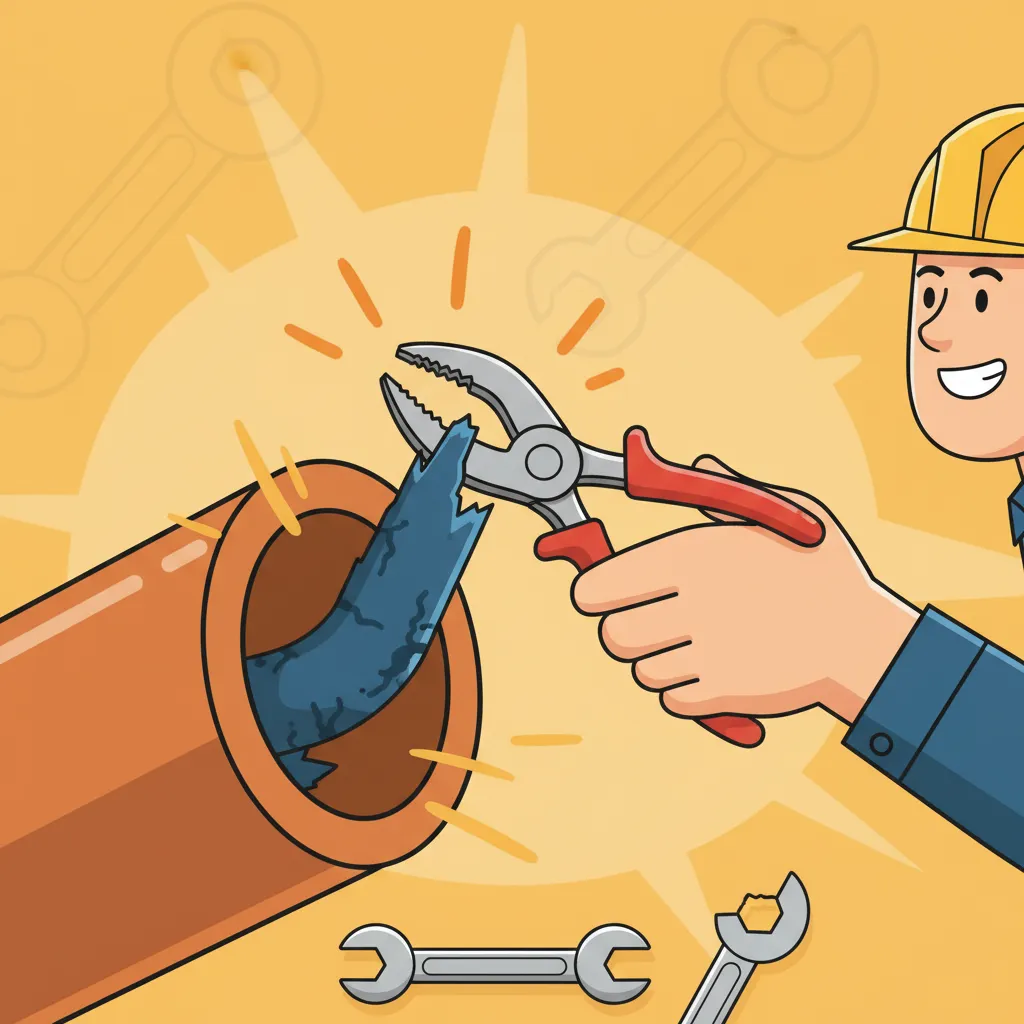
Retrofit Isolation Valves Without Draining Down: A UK Guide
Learn how to retrofit isolation valves without draining your heating system in the UK. Discover essential tools, safety tips, and step-by-step guidance for…
Key takeaways
- Retrofit isolation valves without draining using a pipe freezer
- Save time, mess, and inhibitor by avoiding a full system drain
- Always cool the system and ensure pipe freezing is solid before cutting
- Use compression or push-fit valves; avoid overtightening for leak-free joints
The three most terrifying words in plumbing aren't 'burst water main'. They're 'just a small drip'. But adding an isolation valve to fix it shouldn't mean draining litres of sludgy, inhibitor-laced water from an entire heating system. It is absolutely possible to retrofit isolation valves without turning your house into a swimming pool, saving you time, mess, and the headache of a full system refill BestHeating.
Why Retrofit Isolation Valves Without Draining Your Heating System?
I've seen grown men weep at the thought of draining down a central heating system. It's not just the water; it's the black, smelly sludge that comes with it, the hours spent bleeding every radiator afterwards, and the cost of topping up the corrosion inhibitor. It turns a one-hour job into a half-day ordeal.
Avoiding a full drain is a massive win. You save time, you avoid a colossal mess, and you keep the chemically-treated water right where it belongs: inside your system. This method is perfect for a few common scenarios:
- Future-proofing: You’re working on a pipe and realise there’s no way to isolate it. Adding an isolation valve now will make the next plumber’s life (which might be yours) infinitely easier.
- Emergency repairs: A radiator valve is weeping, or you need to replace a small section of pipe. You can isolate the problem area without shutting down the heat for the whole house.
- Appliance installation: Fitting a new towel rail or moving a radiator becomes a surgical operation rather than a full system transplant.
Let's be clear on our terms. A radiator valve controls= water flow to a radiator. This can be a simple manual valve (on/off), a lockshield valve (used for balancing the system and usually left alone), or a Thermostatic Radiator Valve (TRV), which adjusts flow based on room temperature. Upgrading to modern TRVs is a key step in improving your home's energy efficiency, helping it align with standards like Building Regulations Part L Conservation of fuel and power: Approved Document L. An isolation valve is simpler: it's a stopcock for a specific pipe, allowing you to shut off water to a single appliance or section of pipework. Adding them is a mark of a well-planned system.
What Tools and Materials Do You Need for a No-Drain Isolation Valve Installation?
Doing this job without draining the system relies on one key piece of kit: a pipe freezer. Forgetting it is like forgetting the teabags on a Monday morning. It’s simply not going to work.
Beyond your standard plumbing toolkit of grips and spanners, you'll need a few specific items.
Essential Tools and Materials Checklist
- Pipe freezing kit: This is non-negotiable. Either an aerosol kit for a one-off job or a professional electric version.
- A good quality pipe cutter: Do not use a hacksaw. You want a clean, perfectly square cut for a watertight seal. A hacksaw cut looks like a dog's dinner and will almost certainly leak.
- Two pairs of adjustable grips/spanners: One to hold the valve, one to tighten the nuts.
- The new isolation valve: A 15mm or 22mm compression or push-fit valve is usually best for retrofit jobs.
- PTFE tape or jointing compound: For threaded connections.
- A bucket: Obvious, but essential.
- Towels: Lots of them. More than you think you need. The oldest, ugliest ones you can find.
- Wire wool or a deburring tool: To clean the pipe ends after cutting.
- Safety goggles and gloves: Hot, sludgy water in the eye is a trip to A&E waiting to happen Health and Safety Executive.
Push-fit valves are fantastic for speed, especially in tight spaces, but a well-made compression fitting is bombproof. The choice is yours.
How to Retrofit Isolation Valves Without Draining: A Step-by-Step Guide
Right, let's get to it. This is a job that demands care and preparation. Rushing is the fastest way to get a wet floor and a bad mood. The principle is the same as changing a radiator valve without a full drain, just applied to a straight run of pipe HomeServe.
Retrofitting Isolation Valves Without Draining Your Heating System
- Prepare your workspace and gather all necessary tools and safety equipment. Turn off the boiler and central heating pump. Let the system cool down completely. Water at 60°C will ruin your day. Put down dust sheets and towels around your work area. Have your bucket ready.
- Isolate the specific pipe section using appropriate methods to minimise water loss. Attach the pipe freezer kit clamps to the pipe, a good 15-20cm away from where you plan to cut. Follow the kit's instructions precisely. This creates two ice plugs inside the pipe, stopping the water flow. This is the magic part. Get it wrong, and the magic vanishes in a puff of... well, a jet of water.
- Carefully cut the pipe and fit the new isolation valve, ensuring a secure, leak-free connection. Once the pipe is frozen solid (the kit will tell you), use your pipe cutter to make a clean cut. Remove the small section of pipe where the valve will go. Clean the pipe ends with wire wool. Slide on the compression nuts and olives, then the valve body itself. Hand-tighten the nuts, then use your spanners to tighten them fully – usually one and a half turns past hand-tight is the rule. Do not overtighten.
- Slowly repressurise the system and thoroughly check for any leaks around the newly installed valve. Leave the valve in the closed position. Remove the pipe freezer clamps and let the ice plugs thaw naturally. This can take 10-15 minutes. As it thaws, watch the valve like a hawk for any drips.
- Bleed any air from the system and confirm proper valve operation. Once you're confident there are no leaks, you can slowly open the new isolation valve. You might hear some gurgling as water fills the small section. Turn the boiler and pump back on. You'll likely need to bleed the nearest radiator to release any air that got in. Finally, check the system pressure and top up if necessary.
Safety Precautions and Potential Risks When Working on a Live System
Let's be honest, you're performing surgery on a pressurised water system. While it's a common job for professionals, it's not without risks. The main danger is the ice plug failing. This can happen if the freezer kit isn't used correctly or if it's disturbed during the job.
Working safely is about planning for failure. Hope for the best, but prepare for a sudden, unwelcome fountain in the living room Health and Safety Executive.
Live System Isolation Valve Installation Safety Checklist
- Have you turned off the boiler and pump? And waited for it to cool completely?
- Are your safety goggles on? This is not optional.
- Is the pipe freezer kit correctly installed and fully activated? Don't rush this step. Give it the full time recommended by the manufacturer.
- Do you have a way to cap the pipe quickly if a leak occurs? A push-fit stop end is a brilliant emergency tool to have in your pocket.
- Is your work area clear? Make sure you can move quickly and have good access if something goes wrong.
- Are all your tools within arm's reach before you cut the pipe? Fumbling for a spanner while water is trickling out is a special kind of stress.
- Do you know where the mains stopcock for the house is? In a worst-case scenario, you need to be able to shut everything off.
If a leak starts, don't panic. The first priority is to contain the water. If it's a major failure, get to the main stopcock. If it's a small drip from a compression fitting, a quick tweak with a spanner might solve it.
Common Challenges and Troubleshooting Tips for Retrofitting Isolation Valves
Even with the best preparation, things can go sideways. I've seen pipes in such awkward positions that you need to be a contortionist to get a spanner on them. Here are a few common snags and how to handle them.
Common Isolation Valve Retrofit Troubleshooting Guide
| Problem | Likely Cause | Solution |
|---|---|---|
| A slow drip from the new compression fitting. | Nut is not tight enough, or the olive isn't seated correctly. The pipe end might be dirty or scratched. | First, try tightening the nut another quarter turn. If that fails, you'll have to re-freeze the pipe, undo the fitting, and check the olive and pipe end. Clean the pipe and reassemble, possibly with a new olive. |
| The old pipe won't fit into the new valve. | The pipe is slightly out of shape, or there's a burr from the cut. | Use a deburring tool to clean the inside and outside of the pipe end. Check the pipe is perfectly round; you may need to gently reshape it with grips. |
| The pipe freezer doesn't seem to be working. | Not enough contact with the pipe, kit is faulty, or there's a slight water movement in the system (a dripping tap elsewhere). | Ensure the clamps are tight and there's no air gap. Double-check that all taps are off and the system is static. Some older systems can have passive circulation which disrupts freezing YouTube. |
| System pressure keeps dropping after the job. | There's a small, undetected leak somewhere, or air is still trapped in the system. | Check every joint you worked on with a piece of dry tissue paper to find tiny weeps. Bleed all the radiators again, starting from the one furthest from the boiler. |
The most common mistake I see is overtightening compression fittings. This can deform the olive and the pipe, ironically causing a leak. Be firm, but don't try to prove your strength.
Key Takeaways for a Successful Isolation Valve Retrofit
So, you can absolutely add a vital isolation valve without the drama of a full system drain. It's a cleaner, faster, and more efficient way to work, keeping your system's chemically balanced water where it belongs.
The whole job hinges on being meticulous. This isn't a task for guesswork. This guide provides the specific steps, safety checklists, and troubleshooting that most general articles miss. By focusing on the no-drain method with a pipe freezer, you're equipped for a surgical fix, not a messy demolition. Prepare properly, use the right tools, and double-check everything. Your floor, your boiler, and your future self will thank you for it.
Frequently asked questions
Yes, it is safe if you are competent, prepared, and use the right equipment like a pipe freezing kit. It requires careful work, and you must follow all safety precautions, especially when dealing with a system that hasn't been fully drained BestHeating. If you have any doubts, call a professional.
Compression or push-fit isolation valves are ideal. They don't require heat or soldering, which would be impossible next to an ice plug. They are fast and reliable for retrofit jobs on copper or plastic pipework.
For someone experienced, the job itself can take under an hour, including freezing and thawing time. If it's your first time, allow a good couple of hours. The key is in the preparation, not the speed of execution. It’s still far quicker than a full system drain and refill HomeServe.
The main sign is gloriously simple: it doesn't leak. Not a single drop. After installation, the system should hold its pressure, the valve should operate smoothly from fully open to fully closed, and there should be no gurgling noises from air in the system after bleeding.
Absolutely. The process is almost identical. You would freeze the pipes on either side of the old radiator valve, then swap it out for the new TRV. Upgrading to modern TRVs is a smart move for energy efficiency, helping your system comply with the aims of Building Regulations Part L Conservation of fuel and power: Approved Document L and can be a requirement for accessing funding under schemes like the Energy Company Obligation (ECO) scheme Ofgem. Many online guides show this exact process for radiator valves, and the principle is the same YouTube.
Sources
Ditch the paperwork and reclaim your time with Donizo.
Contractors across Europe trust Donizo to handle their quotes and invoices while they focus on what they do best: their craft.