Painting Cost Per Square Foot in Canada: A 2026 Guide
Understand the true painting cost per square foot in Canada for 2026. Learn factors influencing interior and exterior project pricing to budget accurately…
Interior painting costs $1.80-$3.00/sq ft; exterior $1.50-$4.50/sq ft
Extensive prep work is the biggest cost variable, often doubling project time
Demand quotes detailing scope, prep, paint, coats, HST, and insurance
Painting costs vary; major Canadian cities are pricier than rural areas
In Canada, the average cost to paint an interior is typically between $1.80 and $3.00 per square foot for a standard job source. This price covers labour and basic materials, but the final quote depends heavily on factors like wall condition, paint quality, and regional labour rates, which vary across the country.
Understanding Painting Cost Per Square Foot in Canada
I've seen quotes that are all over the map, and honestly, many of them can be justified. The price per square foot isn't pulled out of thin air. It’s a shorthand that bundles up labour, materials, and the painter’s mortal enemy: surprises behind the drywall.
Most professional painters use one of a few models to price a job. The per-square-foot method is common for large, straightforward spaces. But you'll also see pricing per room, or a day rate plus materials source. Each has its place. Per-square-foot is great for budgeting a whole-home repaint, while a day rate might make more sense for a fiddly job with a lot of repairs and trim work. It's all about matching the pricing to the reality of the walls.
What Factors Influence Painting Costs Per Square Foot?
The final number on your quote is a story. It’s a tale of high ceilings, thirsty drywall, and a client’s love for a feature wall the colour of a sunset. Here’s what’s really driving the cost.
When you break down what drives that final number, labour is the undisputed heavyweight. On a standard job, you can expect labour to account for roughly 72% of the total cost, with materials making up another 14% source. The remaining slice is split between overhead at about 8% and a contingency for unexpected issues, which might be around 6% source. It's a game of inches, but labour is always the biggest piece of the pie.
Interior vs. Exterior Considerations
This one’s simple. Working inside means I'm not fighting the weather, wasps, or a neighbour asking "whatcha doin'?" every fifteen minutes. Exterior work involves ladders or lifts, more durable (and expensive) paint, and a whole lot more prep work to deal with whatever Mother Nature has thrown at the siding. It’s a different beast entirely, and the price reflects that.
Painting Cost Per Square Foot in Canada: A 2026 Guide
Paint Quality and Type
There's paint, and then there's paint. The cheap stuff you grab from a big box store might look okay for a minute, but it scuffs if you look at it sideways and has the coverage of skim milk. A higher-quality paint from a dedicated dealer costs more per gallon, but it covers better and lasts longer.
And don't get me started on deep, saturated colours. That beautiful navy blue? It requires a deep base, which costs more, and it will almost certainly need an extra coat to avoid looking patchy. That all goes into the calculation source.
Prep Work and Repairs
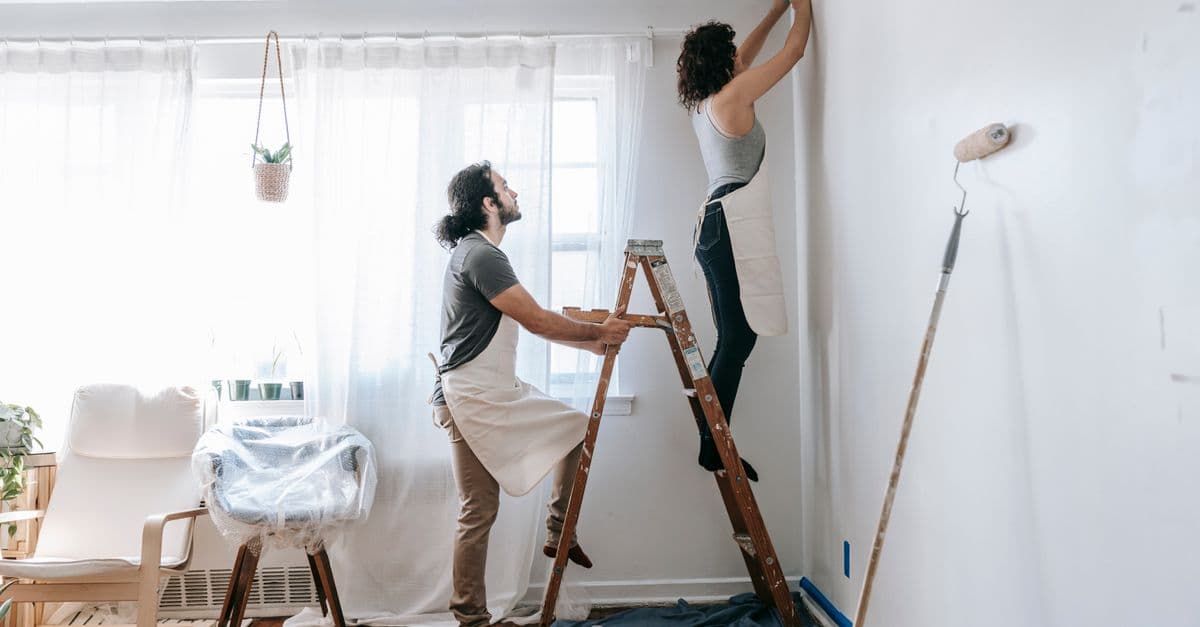
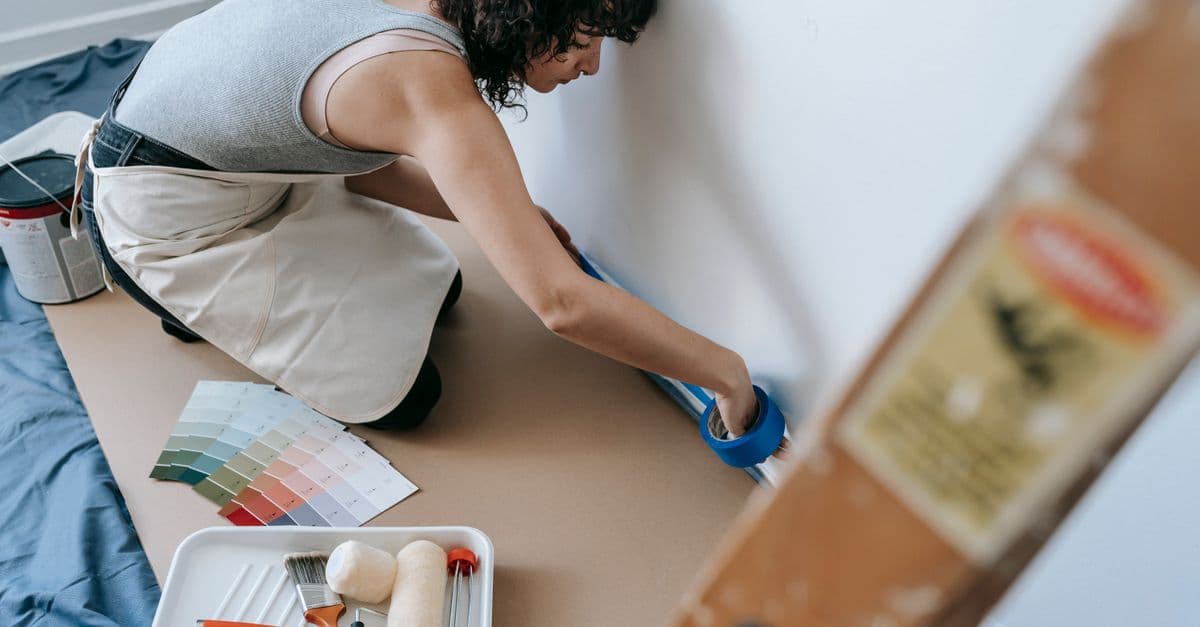
Here it is. The single biggest variable. Prep is 80% of a quality paint job and about 99% of what separates a pro from a weekend warrior. This isn't just about laying down a drop cloth. We're talking about:
Wall Cleaning: You can't paint over grease or grime. Washing walls, especially in kitchens and bathrooms, is non-negotiable.
Repairs: Filling nail holes, fixing dings and dents, repairing cracked plaster, or dealing with water stains.
Sanding: Getting a smooth surface for the paint to adhere to, especially on trim and doors.
Priming: Essential for new drywall, stain blocking, making a drastic colour change (like covering that crimson feature wall), and for specialized jobs like oil-to-latex trim conversions.
Every hour spent on prep is an hour of labour that needs to be factored in, and it can easily double the time a "simple" paint job takes source.
Number of Coats and Colours
Two coats. That's the standard for a professional job. One coat is a lie unless you're just "refreshing" the exact same colour and sheen. If you're making any kind of colour change, or if the walls are in rough shape, two coats are the honest baseline source.
Want an accent wall? A different colour for the trim? Another for the ceiling? Every time we have to cut in a new colour, it's more time, more tape, and more cleaning of brushes and rollers. It all adds up. Similarly, some specialty paints or humid conditions can increase drying time between coats, stretching out the project timeline and labour costs.
Painting Cost Per Square Foot: Interior vs. Exterior
Let's put some rough numbers on this. Remember, these are ballpark figures. Your walls may vary.
Interior Painting: For a standard job with decent prep, you're in that $1.80 to $3.00 per square foot range. For a 1,500 sq ft house, you aren't painting 1,500 sq ft of walls. You're painting closer to 4,000 sq ft of wall and ceiling surface. The math gets complex, which is why many painters quote by the room or by the job.
Exterior Painting: The range is wider here, often $1.50 to $4.50 per square foot of paintable surface. A simple bungalow with wood siding is one thing. A three-story Victorian with intricate trim and peeling old paint is another universe of cost. The prep work, equipment needed (scaffolding vs. a ladder), and type of siding are huge factors.
So, a 2,000 sq ft house won't cost the same as a 900 sq ft condo or a 650 sq ft bachelor apartment, but it's not a simple multiplication. The layout, ceiling height, and condition of the surfaces matter more than the raw floor plan.
How Do Painting Costs Vary Across Canadian Cities?
Just like a cup of coffee, the cost of a paint job changes depending on your postal code. A painter in downtown Toronto or Vancouver has higher overheads, insurance, fuel, parking, than a painter in rural Saskatchewan.
Major Urban Centres (Toronto, Vancouver): Expect to be at the higher end of the price range. Labour costs are higher, and competition doesn't always mean lower prices; it often means more established companies with higher quality standards and the prices to match.
Other Cities (Calgary, Ottawa, Montreal): Prices are often more moderate. You'll still find a range, but the baseline might be 10-15% lower than in the biggest cities.
Regional/Rural Areas: Generally lower costs, but you might have fewer professionals to choose from.
Then you have local factors. In British Columbia, many condo painters have to navigate Strata requirements, which can dictate working hours, paint types, and procedures. And everywhere in Canada, you have to account for HST, which should always be clearly stated on a quote source.
Beyond Square Footage: Other Pricing Models
Not every job fits neatly into a per-square-foot box. I've seen painters from companies like Student Works Painting and Hemlock use different methods depending on the project.
Per Room: This is common for smaller jobs. A painter will have a standard price for a bedroom, a living room, etc., and adjust for ceiling height or extensive trim. It's easier for a homeowner to understand. "It's $500 to paint this room." Simple.
Day Rate (Time and Materials): This is perfect for jobs where the scope is uncertain. Think major repair work, wallpaper removal, or complex decorative finishes. The client pays for the painter's time plus the cost of all materials. It's transparent, but the final cost isn't fixed upfront, which can make some clients nervous.
A good painter knows which model to use. As a tradesperson, being flexible shows you understand the unique needs of each project.
Vetting Painting Quotes: A Tradesperson's Guide
A quote on the back of a business card isn't a quote. It's a guess. A professional quote is a detailed document that protects both you and the client. When you prepare a quote, you need to be thorough. Standardizing this process saves a ton of time and makes you look sharper than the competition, especially when you're using tools designed for creating Unlimited proposals & quotes.
As a professional, here’s a checklist of what your rock-solid quotes should always include:
Painting Quote Comparison Checklist
Company Details: Full name, address, phone number, and GST/HST number.
Client Details: Full name and address of the property.
Detailed Scope of Work: A room-by-room breakdown of what will be painted (e.g., "Living Room: Walls, ceiling, trim, two windows, one door").
Prep Work Specified: What's included? (e.g., "Fill all nail holes, sand, and spot-prime. Cover all furniture and floors.")
Paint & Materials: Brand, specific product line, and sheen of paint. Who is supplying it?
Number of Coats: Clearly state that the price includes primer (if needed) and two top coats.
Exclusions: What is not included? (e.g., "Moving of heavy furniture," "Painting inside closets").
Timeline: Estimated start date and duration of the project.
Price Breakdown: A clear cost, indicating whether HST is included or extra.
Payment Terms: Deposit amount, progress payments, and final payment schedule.
Proof of Insurance & WCB: Proactively include proof of your liability insurance and WCB coverage. It’s a mark of professionalism that builds immediate trust and sets you apart.
If a quote is missing these details, it's a red flag. It leaves too much room for misunderstanding, and that's where projects go sour.
Calculating Paint Needs and Understanding Tiered Costs
"How much paint do we need?" is the eternal question. Under-buy and you're making a frantic trip back to the store, praying the batch colour is the same. Over-buy and you're stuck with half-full cans.
A good rule of thumb is that one gallon (3.78 litres) of quality paint covers about 400 square feet with one coat. But don't just use the floor plan. You need the surface area of the walls.
Worked Example: Calculating Paint for a 1500 Sq Ft House
Let's imagine a 1500 sq ft single-story house with standard 8-foot ceilings. The actual wall surface area is much larger than the floor area. A rough multiplier is 2.5x to 3x the floor space, but let's do it properly.
Measure the perimeter: Let's say the house is 50 ft x 30 ft. The total perimeter is (50 + 30) x 2 = 160 feet.
Calculate total wall area: 160 feet (perimeter) x 8 feet (height) = 1,280 sq ft of exterior wall area. We need to account for interior walls too. A safe estimate for a 1500 sq ft house is around 3,500 - 4,000 sq ft of paintable wall surface. Let's use 3,800 sq ft.
Calculate paint needed per coat: 3,800 sq ft / 400 sq ft per gallon = 9.5 gallons. Let's round up to 10 gallons per coat.
Calculate for two coats: 10 gallons x 2 coats = 20 gallons.
This is a rough estimate. It doesn't subtract for large windows or doors, but it also doesn't account for waste or the texture of the walls, which can soak up more paint. It's always better to have a little left over for touch-ups.
As for paint tiers, think of it as good, better, best. The "good" is often contractor-grade paint, it does the job but isn't very durable. "Better" is a solid choice for most residential uses. "Best" offers enhanced durability, washability, and specialized features (like mold resistance). The price difference can be $30-$50 per gallon between tiers. For a 20-gallon job, that's a $600-$1000 difference in material cost alone. It's a significant part of the budget that the client needs to understand.
Your Quote Tells the Real Story
The price per square foot is a starting point, not a final answer. I've read countless guides online from sources like Reno Quotes that give you a number, but they miss the jobsite reality. The true cost of a project is written in the height of the ceilings, the number of holes in the drywall, and the choice of that impossible-to-cover dark red for the dining room. A detailed quote isn't just paperwork; it’s the foundation of a successful project that protects everyone involved.