Plumber’s Trick: Remove a Broken Piece in Pipe
Learn the plumber’s trick for removing a broken piece inside a pipe fast, safely, and without damaging threads. Tools, steps, and backup methods.
Intro
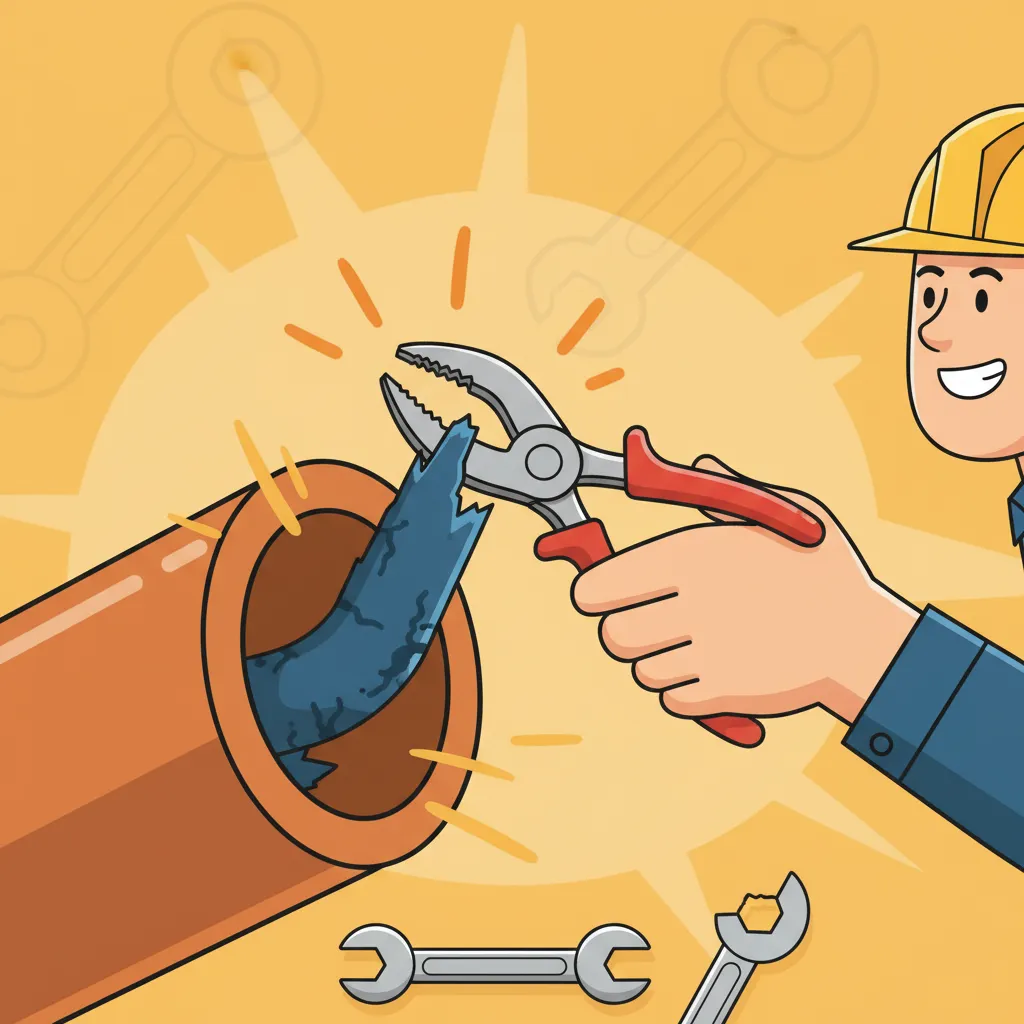
On most jobs, the panic starts when a brass nipple snaps flush in a fitting. You can’t grip it. You can’t turn it. Water’s off and the client’s waiting. Here’s the plumber’s trick for removing a broken piece inside a pipe without chewing up threads. We’ll cover the right tools, simple steps, and smart backups. You’ll see when to use heat, when to drill, and when to walk away and cut out. The goal is fast, clean removal and a thread that seals on the first try.
Quick Answer
The plumber’s trick for removing a broken piece inside a pipe is to use an internal pipe wrench (nipple extractor). It bites from the inside, grips hard, and turns the broken stub out without touching the female threads. Set it 15–20 mm deep, apply steady anti-clockwise torque, and back the piece out smoothly.
Table of Contents
- Key Takeaways
- Why Pieces Get Stuck
- The Plumber’s Trick For Removing A Broken Piece Inside A Pipe
- When the Plumber’s Trick Doesn’t Work: Plan B Options
- Protect Threads and Reseal Like a Pro
- Prevent Repeat Breaks on Future Jobs
- Document and Communicate
- FAQ
- Conclusion
Key Takeaways
- Use an internal pipe wrench first. It saves the threads 9 times out of 10.
- Seat the tool 15–20 mm deep and use slow, even torque.
- For PVC, cut two relief slits and collapse inward. Don’t overheat.
- Clean threads with a pick and tap; reseal with 6–8 wraps of PTFE.
- If it won’t budge in 10–15 minutes, stop. Cut out and replace.
Why Pieces Get Stuck
Broken stubs happen for three reasons: over-tightening, corrosion, and side load. On old galvanised, rust locks the male threads. On brass or 15 mm/22 mm copper fittings, over-torque can snap the nipple when you try to “give it one more turn.” PVC cracks if stressed or chilled.
You’re usually dealing with:
- A brass or steel nipple snapped flush in a tee.
- A shower arm broken 5–10 mm inside a drop-ear elbow.
- A PVC male adapter fractured in a valve body.
The trick is simple: grip the inside of the stub, not the outside. That keeps the female threads clean and ready for resealing.
The Plumber’s Trick For Removing A Broken Piece Inside A Pipe
This is the go-to method most plumbers trust.
Tools You Need
- Internal pipe wrench (nipple extractor), sized for 1/2" or 3/4" BSP/NPT
- Adjustable spanner or 250 mm wrench
- Penetrating oil
- Pick or scribe
- PTFE tape and thread sealant
Step-By-Step (10–15 minutes)
- Isolate and drain. Shut off water. Open a low tap to relieve pressure.
- Inspect depth. Use a torch. If the stub sits 5–25 mm deep, the tool will bite.
- Clean the mouth. Pick out tape or sealant for 30–60 seconds.
- Oil it. A small shot of penetrating oil helps on metal threads.
- Set the extractor. Slide the internal wrench 15–20 mm into the stub.
- Expand and seat. On cam-style tools, twist to cam out; on toothed types, push firm.
- Turn anti-clockwise. Use slow, even pull. No jerks. Keep the tool square.
- Walk it out. Once it moves 1/8 turn, rock back and forth and keep easing out.
- Clean threads. Pick, then chase lightly with a tap if needed.
Why It Works
An internal pipe wrench spreads force against the stub’s inside wall. That gives full-contact grip and avoids chewing the female threads. You keep the fitting serviceable and ready for a new nipple.
When Not To Use It
- PVC that’s shattered thin. It may crumble under the tool.
- A stub under 5 mm deep. The tool can’t seat.
- Severely egged threads. The fitting may be scrap—plan to replace.
When the Plumber’s Trick Doesn’t Work: Plan B Options
Sometimes the stub laughs at you. Here are reliable backups.
Option 1: Left-Hand Drill Bit (2–5 minutes)
- Centre punch the stub.
- Use a 3–5 mm left-hand bit at low speed.
- Often the bit bites and spins the stub out on its own.
Best for brass and steel. Avoid on PVC.
Option 2: Spiral Screw Extractor (Use With Care)
- Drill a pilot hole 3–4 mm deep.
- Tap the extractor in gently.
- Turn anti-clockwise with a T-handle.
Good bite, but it can wedge and expand the stub. If it tightens and won’t move within 1–2 turns, stop.
Option 3: Relief Cuts and Collapse (PVC Favourite)
- Use a fine hacksaw blade to cut 2 slots 180° apart.
- Stop just before the female threads—check every 2–3 strokes.
- Pry the segments inward with a pick and pull out.
Takes 5–10 minutes and saves plastic threads.
Option 4: Heat and Cool (Metal Only)
- Warm the fitting, not the stub, with a small torch for 10–20 seconds.
- Quench the stub with a damp cloth.
- Try the internal wrench again.
Never heat near gas lines, flammable insulation, or plastic fittings. Use shields.
Option 5: Cut Out and Replace
If none of the above works in 10–15 minutes, cut the section. Replace the fitting. This is faster and safer than wrecking a valve body or elbow.
Protect Threads and Reseal Like a Pro
You got it out. Now make the reseal stick first time.
Clean-Up (2–3 minutes)
- Pick out old tape or dope from the first 2–3 threads.
- Brush and wipe. For metal, a quick pass with a thread file can help.
- Lightly chase with a tap if you feel burrs. Don’t go deep—just clean.
Reseal
- PTFE tape: 6–8 wraps, clockwise, start 1 thread back from the end.
- Paste: Thin, even coat over the tape if needed.
- For plastic, use the sealant the valve maker specifies. Some pastes attack PVC/CPVC.
Test
- Reassemble hand-tight, then wrench 1–2 turns.
- Pressurise slowly. Watch for weeps for 2–3 minutes.
Prevent Repeat Breaks on Future Jobs
Small habits save call-backs.
- Use unions near valves. Future swaps take 5–10 minutes, not an hour.
- Add pipe support within 150–300 mm of heavy fittings.
- Mix metals correctly. Fit dielectric unions between copper and steel.
- Don’t over-torque. Aim for snug + 1–2 turns on tapered threads.
- Use quality brass nipples, not thin imports. Wall thickness matters.
- In cold weather, warm PVC parts indoors before fitting.
If you quote repairs often, building [professional proposals] and clear [invoice templates] helps clients understand the fix and the cost. This pairs well with planning accurate [project timelines] after unforeseen demo work.
Document and Communicate
On site, take 2–3 photos: the break, the extraction, the clean threads. Note the fitting type and size (1/2" or 3/4"). Log parts used and time on site (e.g., 45 minutes).
If you need to quote follow-up work, tools like Donizo let you capture details by voice, generate a branded proposal, and send it for e‑signature. Turning an accepted proposal into an invoice in one click keeps things tidy when the job’s wrapped.
Conclusion
The cleanest, fastest method is simple: use an internal pipe wrench to bite inside the stub and back it out without harming the threads. Have backup options ready—left-hand bits, relief cuts, or heat on metal—and know when to cut and replace. Next steps: 1) Add a properly sized internal wrench to your kit. 2) Practise the 9-step method on scrap. 3) Standardise your reseal routine: 6–8 PTFE wraps and a quick pressure test. For quick proposals after emergency call-outs, platforms such as Donizo help you capture details, send for e‑signature, and invoice in minutes. Work clean, work calm, and you’ll be out the door faster.
Ditch the paperwork and reclaim your time with Donizo.
Contractors across Europe trust Donizo to handle their quotes and invoices while they focus on what they do best: their craft.