Intro
On most jobs, the clock starts ticking as soon as the bucket hits the dirt. You need a clean trench, the right slope, tight joints, and a solid test before backfill. This guide covers the 4 essential tools for roughing in underground PVC so you can set grade fast, make clean cuts, glue right, and pass inspection the first time. We’ll show what each tool does, how to use it, and simple steps to avoid callbacks. You’ll see real numbers—slopes, depths, cure times—so you can work with confidence. Let’s keep it simple, accurate, and safe.
Quick Answer
The 4 essential tools for roughing in underground PVC are: a laser level with receiver and grade rod, a trenching setup (mini‑excavator or trenching shovel), a PVC cutting and beveling kit, and a jointing and testing kit (primer, solvent cement, test plugs, and a low‑pressure gauge). Use them to set slope, fit clean joints, and verify tightness before backfill.
Table of Contents
Roughing underground is about slope, stability, and sealing. If you miss grade by 10 mm (3/8 in), wastewater can sit. If you skip bevels, a joint can snag paper and clog. If you don’t test, you might bury a leak. The 4 essential tools for roughing in underground PVC keep you ahead of these problems. They speed up layout, reduce hand digging, produce clean joints, and confirm your work before the trench closes.
Key specs to keep in mind
- Typical DWV slope: 1/4 in per foot (2%), sometimes 1/8 in per foot (1%) on larger mains—check code.
- Common cover depths: 300–600 mm (12–24 in) minimum, deeper in frost zones—confirm local rules.
- Bedding: 100–150 mm (4–6 in) of sand or fine gravel under the pipe.
- Compaction: backfill in 150–300 mm (6–12 in) lifts, compact each lift.
A self‑levelling rotary or line laser with a receiver and a grade rod sets your elevations fast and keeps your slope accurate end to end.
What it does
- Sets invert elevations within ±3 mm (±1/8 in) over 30 m (100 ft).
- Lets one person check depth and slope while digging.
How to use it
- Set a benchmark on solid ground or a stake.
- Zero your laser to that benchmark.
- Mark your pipe inverts every 3–6 m (10–20 ft).
- Aim for 2% slope (1/4 in per ft) unless plans say otherwise.
Pro tips
- Use a receiver staff clamp so your hands are free.
- If wind or vibration is an issue, switch the laser to a narrow scan mode.
- Record your start and end invert—take a photo with the reading beside the pipe. If you later need to explain slope to a client, you’ll have proof. Tools like Donizo help you attach photos and voice notes to a proposal or change order fast.
You need a way to open a narrow, safe trench to grade. For most sites, that’s a mini‑excavator with a 300–450 mm (12–18 in) bucket. In tight spots, a trenching shovel and mattock still shine.
What it does
- Cuts consistent trench width so bedding wraps 150 mm (6 in) around the pipe.
- Reaches design depth without over‑excavation.
How to use it
- Keep trench width close: pipe OD plus 300 mm (12 in) is common practice.
- Drop in 100–150 mm (4–6 in) of bedding and rake level to your laser marks.
- In frost areas, go below frost line or insulate per local code.
Safety basics
- At 1.2 m (4 ft) depth or more, use shoring, shields, or slope back—follow OHS rules.
- Keep spoil at least 600 mm (24 in) from the edge.
- Check for locates before you dig. Mark utilities every 3–5 m (10–16 ft).
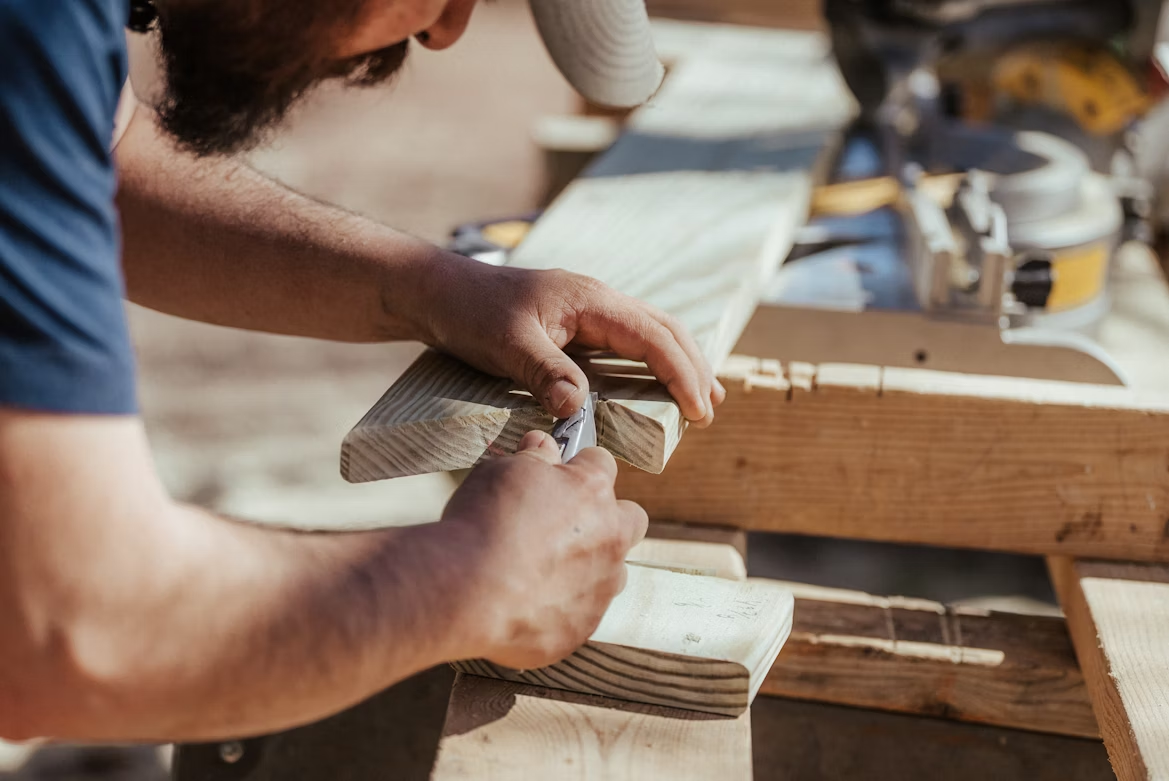
Clean, square cuts and a 15–22.5° bevel make better joints. A ratcheting PVC cutter is great up to 50 mm (2 in). For 75–150 mm (3–6 in), use a fine‑tooth saw and a beveling tool.
What it does
- Delivers square cuts within 1–2 mm, reducing gaps at the hub.
- Bevels edges so solvent cement doesn’t wipe off as you push the pipe home.
How to use it
- Measure twice. Mark all cuts with a wrap‑around square or tape.
- Cut slow and steady. Don’t crush the pipe with the cutter.
- Deburr inside and out. Bevel to about 3–5 mm (1/8–3/16 in) land.
- Dry‑fit first. Mark alignment with a pencil tick.
Pro tips
- Wipe dirt and moisture before gluing. Mud in a joint is a future callback.
- Keep a spare blade in the kit. A dull blade splinters PVC.
This kit includes purple primer, solvent cement, daubers, rags, test plugs (mechanical or inflatable), and a low‑pressure gauge with a Schrader valve.
What it does
- Makes strong, uniform joints and verifies tightness before backfill.
How to use it
- Primer: Wet the hub and spigot. 5–10 seconds per side.
- Cement: Full coverage in the hub and on the pipe. No dry spots.
- Assembly: Insert fully with a 1/4 turn. Hold 10–30 seconds so it doesn’t push out.
- Set time: Initial set about 15 minutes at 21°C (70°F). Full cure often 2 hours or more—see can label and local temperature.
- Testing: Follow local code. Commonly, a 5 psi air test for 15 minutes, or a water test with a 3 m (10 ft) head for 15 minutes. Never over‑pressurize PVC DWV.
Pro tips
- Keep primer and cement above 5°C (41°F). Cold glue cures slow.
- Use end caps or plugs rated for the test method. Tighten evenly.
Step-by-Step: Roughing In Underground PVC
Use the 4 essential tools for roughing in underground PVC in this simple order.
- Establish grade with the laser. Set start and end inverts. Mark every 3–6 m.
- Excavate to near depth. Leave the last 50–75 mm (2–3 in) for hand trim.
- Place 100–150 mm (4–6 in) bedding. Check slope with the laser.
- Cut and bevel pipe and fittings. Dry‑fit and mark alignment.
- Prime, cement, assemble with a 1/4 turn. Hold each joint 10–30 seconds.
- Install test plugs and caps. Set up the air or water test per code.
- Test: hold 5 psi (air) for 15 minutes, or 3 m head (water) for 15 minutes—verify locally.
- Photograph joints, test gauge, and laser readings. Note locations every 3–6 m.
- Backfill in 150–300 mm (6–12 in) lifts. Compact each lift, especially the haunches.
- Lay detectable warning tape 300 mm (12 in) above the pipe run.
Common Mistakes and Simple Fixes
- Wrong slope: Re‑shoot with the laser. Adjust bedding, not just the pipe.
- No bevel: Cut back the joint, re‑bevel, and re‑glue. Don’t bury a sharp edge.
- Glue push‑out: Hold pressure longer. Wipe squeeze‑out. Respect set times.
- Skipped test: Always test before backfill. A 15‑minute test can save a 4‑hour dig‑up.
- Poor compaction: Compact in small lifts. Use a hand tamp near the pipe and a plate compactor on the surface.
If you’re also looking to streamline professional proposals for these scopes, link the anchor text “professional proposals” to your proposals guide. This pairs well with understanding clear “change orders” when site conditions differ. For invoicing the extra trench time, consider linking “invoice templates that save time.”
Key Takeaways
- Use a laser and rod to hold 2% slope over long runs.
- Cut square, bevel 3–5 mm, and glue with a 1/4 turn.
- Test before backfill: 5 psi for 15 minutes or a 3 m water head.
- Backfill and compact in 150–300 mm lifts to prevent settlement.
Conclusion
The 4 essential tools for roughing in underground PVC are simple: a laser for grade, a trenching setup, a cutting and beveling kit, and a jointing and testing kit. Use them in order, verify with numbers, and document before backfill. Next steps:
- Set your laser benchmarks and mark inverts every 3–6 m.
- Bevel every cut and hold each glued joint 10–30 seconds.
- Test for 15 minutes before you cover.
When you need quick, clear paperwork for underground rough‑ins or changes, platforms such as Donizo help you capture site details with voice, send proposals for e‑signature, and convert approvals to invoices in one click. Build once, bury once, and move on with confidence.