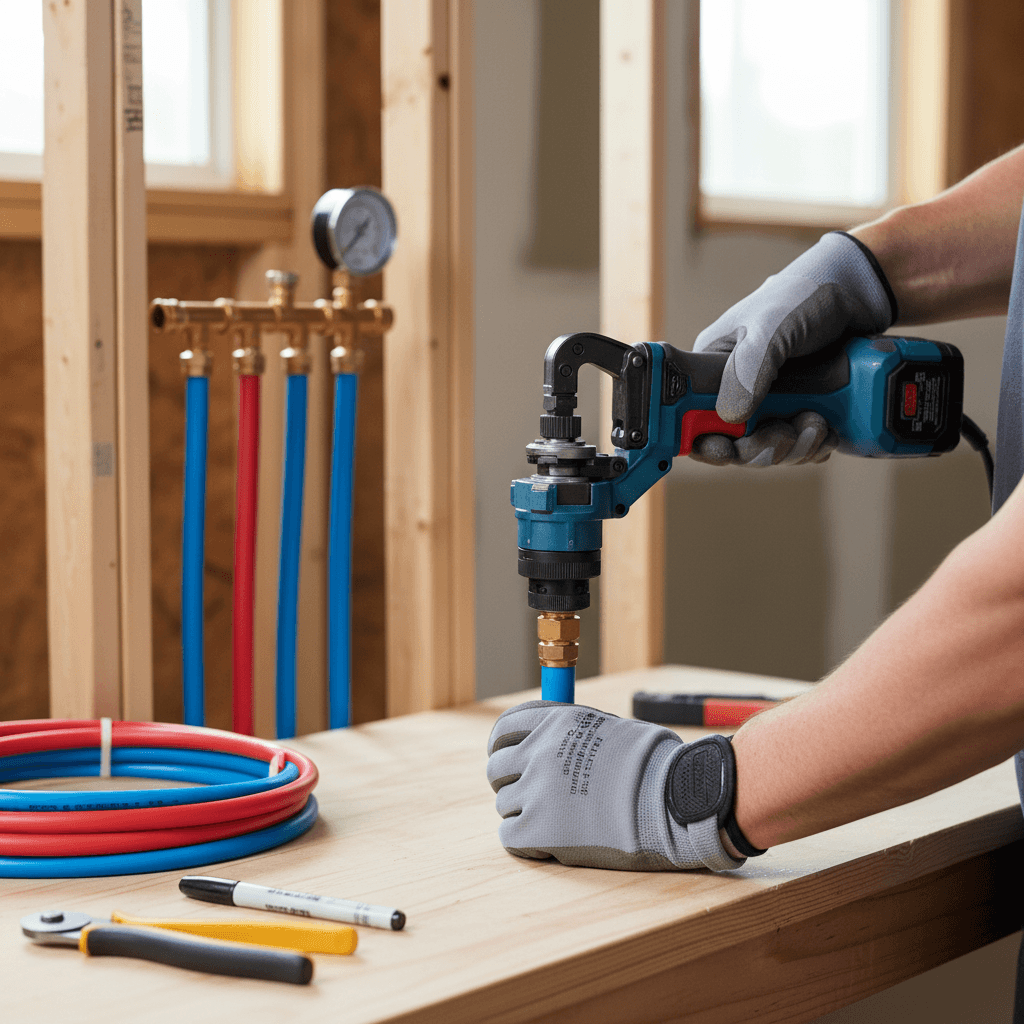
Intro
On most jobs, a clean cut saves time and avoids callbacks. A Ratchet Pipe Cutter gives you square, burr-free cuts on copper, plastic, and thin-wall steel with less effort. It works in tight spaces and reduces hand strain. In this guide, you’ll learn what a Ratchet Pipe Cutter is, how to choose the right one, and how to use it step by step. You’ll also get pro tips, maintenance routines, and safety checks. Follow this, and your cuts stay clean, fast, and consistent.
Quick Answer
A Ratchet Pipe Cutter uses a ratcheting handle and a sharp cutting wheel to slice pipe cleanly with controlled pressure. It’s ideal in tight spots and for repetitive cuts. Choose a cutter that matches your pipe sizes, keep the wheel sharp, and use steady ratchet strokes for square, burr-free ends.
Table of Contents
Key Takeaways
- Pick a cutter with a capacity that covers 10–42 mm pipe.
- A sharp wheel gives cleaner cuts and saves 30–60 seconds per joint.
- Deburr inside and outside: aim for a smooth 0.5–1 mm edge.
- Replace cutting wheels every 3–6 months in normal use.
What Is a Ratchet Pipe Cutter?
A Ratchet Pipe Cutter is a hand tool with a ratcheting handle and a cutting wheel. The ratchet multiplies your force. That means smooth pressure with less effort. The tool advances in small clicks. You keep alignment while the wheel bites in evenly.
Compared to a standard tubing cutter, the ratchet version needs less swing space. It can work with only 30–40 mm of clearance around the pipe. That helps under sinks, in riser cupboards, or behind boilers. It’s a strong choice when a hacksaw is slow or messy.
Typical capacities range from 3–35 mm for compact units and up to 6–42 mm for heavy-duty models. Many contractors carry two sizes: one for 15–22 mm work, and one for 28–35 mm.
Choosing the Right Ratchet Pipe Cutter
Picking the right Ratchet Pipe Cutter comes down to three things: size, material, and build.
- Capacity: Match your pipe range. For plumbing, 10, 15, 22, and 28 mm are common. If you handle 32 or 42 mm, get a larger frame. Check the stated range, like 6–42 mm.
- Wheel material: For copper and plastic, a standard hardened steel wheel is fine. For stainless or thin-wall steel, choose a high-speed steel (HSS) or alloy wheel rated for steel.
- Frame and ratchet: Look for a rigid frame and a smooth 60–72 tooth ratchet. More teeth mean shorter strokes in confined spaces.
- Ergonomics: A larger handle reduces hand fatigue over 50+ cuts per day.
- Spares: Make sure cutting wheels and rollers are easy to source. Keep at least 2 spare wheels on the van.
If you do both plumbing and HVAC, consider a Ratchet Pipe Cutter set with interchangeable wheels for copper, PEX-AL-PEX, and stainless. That avoids carrying three separate tools.
How to Use a Ratchet Pipe Cutter (Step-by-Step)
Follow these steps for straight, clean cuts every time.
- Measure and mark
- Mark the cut line with a fine tip marker. Use a square if you can. Aim for a line that wraps 360° around the pipe.
- Prepare the pipe
- Wipe dirt or paint. Remove heavy scale. Even a 1 mm lump can push the wheel off-line.
- Position the Ratchet Pipe Cutter
- Open the jaws and seat the pipe on the rollers. Align the wheel on your mark. Check squareness from two angles.
- Set initial pressure
- Lightly tighten until the wheel just kisses the pipe. Do not crush it. You want a light groove after 1–2 clicks.
- Ratchet in short strokes
- Pump the handle. After 4–6 clicks, add a quarter-turn of pressure. Keep the tool square. Repeat: ratchet, tighten, ratchet.
- Control the final turn
- As the pipe thins, reduce pressure. Two gentle cycles prevent a flare or an egg-shaped end.
- Deburr and clean
- Use an internal reamer or deburring tool. Remove 0.5–1 mm of sharp edge. Chamfer the outside lightly. Wipe clean.
- Check fit
- Dry-fit the fitting. It should seat fully without force. A smooth entry protects O-rings and solder joints.
Most 15–22 mm copper cuts finish in 15–30 seconds. Larger 28–35 mm cuts can take 40–60 seconds. With practice, you’ll get consistent times.
Clean Cuts on Different Materials
Different pipe materials need small tweaks. Use your Ratchet Pipe Cutter the right way for each.
Copper (soft and hard)
- Use a standard copper wheel. Don’t overtighten early. Let the wheel score first.
- Deburr well. Even a 0.5 mm burr can trap flux and cause pinholes.
Plastic (PVC, CPVC, PP-R)
- Use a plastic-rated wheel if available. Go lighter on pressure to avoid cracking.
- Support the pipe within 100–150 mm of the cut to prevent flex.
Multilayer (PEX-AL-PEX)
- Use a wheel rated for multilayer. Keep the wheel sharp. A dull wheel can delaminate the aluminium layer.
- Deburr both layers cleanly to protect O-rings.
Thin-Wall Steel and Stainless
- Fit an HSS or steel-rated wheel. Add pressure slowly. Steel needs patience.
- Expect longer cutting times: 45–90 seconds on 22–28 mm.
If a pipe is out-of-round by more than 1 mm, pre-round with a clamp or move your cut 20–30 mm to a better section. The Ratchet Pipe Cutter does its best work on round, supported pipe.
Safety, Care, and Maintenance
A Ratchet Pipe Cutter is simple, but a few habits make it safer and longer-lasting.
- Eye protection: Tiny chips and burrs fly. Wear safety glasses.
- Gloves: Use cut-resistant gloves when handling freshly cut steel.
- Stable stance: Keep your wrist straight. Don’t twist your back in tight voids.
- Wheel checks: Inspect the cutting wheel weekly. Replace if chipped, glazed, or if cutting time doubles.
- Roller care: Clean rollers. Grit in rollers skews cuts by 1–2 degrees.
- Lubrication: A drop of light oil on the ratchet every month. Wipe off excess.
- Storage: Keep the tool closed lightly so the wheel is protected. Store in a dry bag or case.
Many workers find that replacing wheels every 3–6 months keeps cut times short and finishes clean. If you hit hard paint or corrosion often, carry an extra wheel and a small file on site.
Productivity Tips for Teams and Pricing
Your Ratchet Pipe Cutter can speed up more than the cut itself. Small changes add up across a day.
- Prep in batches: Measure and mark six pipes at once. Then cut them all. This saves 5–10 minutes per bathroom fit-out.
- Keep sizes grouped: Cut all 15 mm, then all 22 mm. Less tool adjustment, faster rhythm.
- Protect finishes: Use a cloth under the cutter when near fresh paint or tiles. Saves rework time.
- Track your cutting times: 30 seconds for 15 mm, 45 seconds for 22 mm, 60 seconds for 28 mm. Use these as labour benchmarks.
- Document as you go: Capture quick notes and photos after each section. Platforms such as Donizo let you turn voice notes and photos into clear proposals and invoices, which helps you bill small extras like extra cuts or pipe reroutes.
Internal linking ideas for your site:
- If you’re also looking to create professional proposals, link the phrase “professional proposals”.
- For standardised “invoice templates”, link those words in your billing posts.
- When you talk about “pricing strategies”, link to your margin and markup guide.
- For scheduling, link “project timelines” in your planning article.
Key Takeaways
- Choose a Ratchet Pipe Cutter with the right size range for your work.
- Use light pressure first, then tighten slowly to stay square.
- Deburr inside and outside to protect seals and solder.
- Keep spare cutting wheels. Replace them at the first sign of drag.
Conclusion
A Ratchet Pipe Cutter gives you fast, square cuts with less effort. Choose the right capacity, start with light pressure, and keep the wheel sharp. Do that, and your joints seat clean, first time. Next steps: 1) Check your cutter’s wheel and rollers today. 2) Time three cuts on 15, 22, and 28 mm to set your benchmarks. 3) Capture job notes and extras as you work; tools like Donizo turn voice notes into proposals and invoices fast. Keep your cuts clean, your workflow tight, and your day moving.