Spray Foam Insulation Removal Tool in Action!insulationtoolscontractorsbest-practices
Spray Foam Insulation Removal Tool in Action: Field Guide
See a spray foam insulation removal tool in action. Learn safe setup, step-by-step removal, production rates, and cleanup tips to finish faster and cleaner.
Intro
On most jobs, old foam fights back. It's stuck hard, in tight corners, and over wires. This guide shows the Spray Foam Insulation Removal Tool in Action! You’ll see how it works, what to watch for, and how to finish clean. We cover open-cell and closed-cell foam, wall studs and roof decks, and small patches or full gut jobs. You’ll get simple steps, safe setup, and fair production rates. Follow this, and your next Spray Foam Insulation Removal Tool in Action! project will run smoother, faster, and safer.
Quick Answer
A Spray Foam Insulation Removal Tool in Action! means using a powered scraper or oscillating tool to slice foam at the substrate, then vacuuming and brushing clean. Expect 25–50 sq ft/hour by hand, 100–200 with mechanical help, and up to 300–600 with dry ice blasting. Protect surfaces, wear PPE, and bag debris right away.
Closed-cell needs mechanical power; open-cell often brushes off.
Safe setup takes 20–30 minutes and prevents hours of cleanup.
Plan for 25–200 sq ft/hour, depending on method and thickness.
Use 3–6 mil bags and a HEPA vac to control dust and chips.
What This Spray Foam Insulation Removal Tool Does
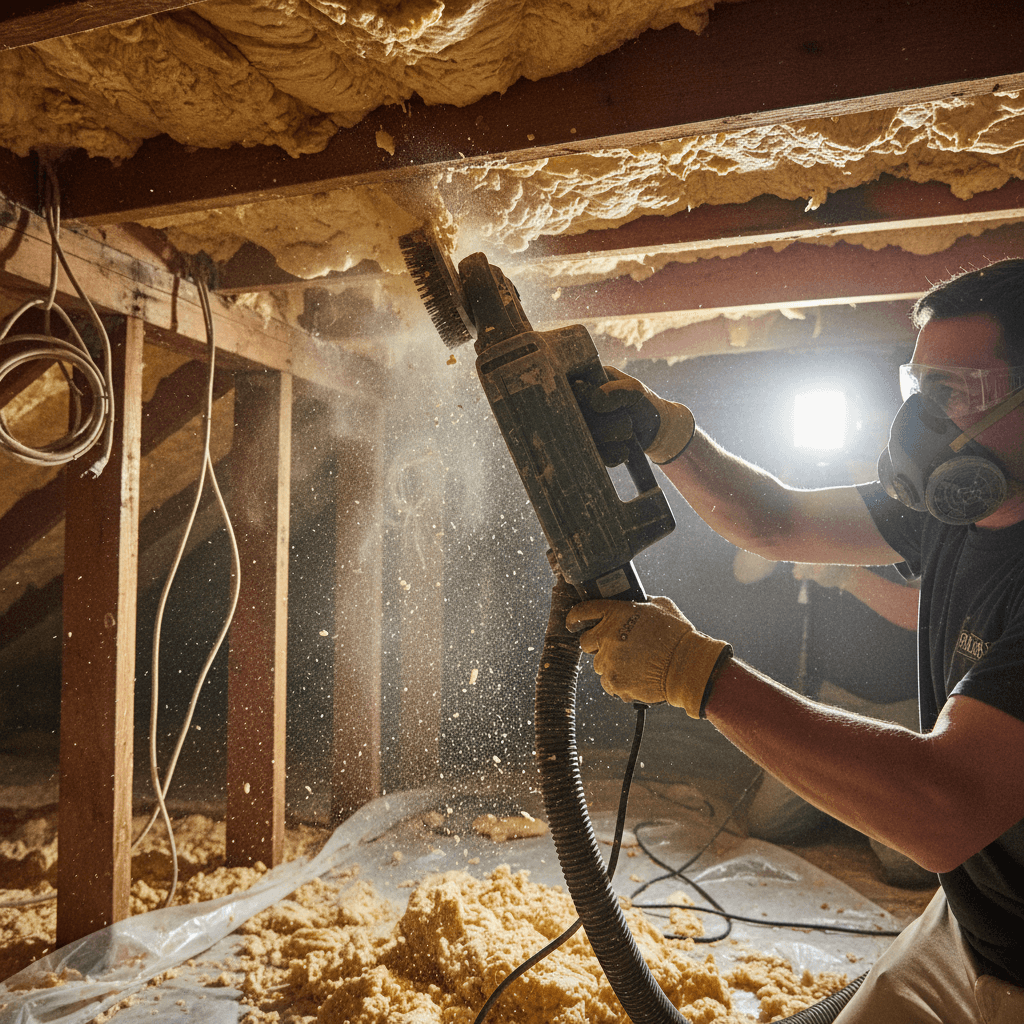
The Spray Foam Insulation Removal Tool in Action! is about control and speed. You cut foam flush without gouging studs or sheathing. Most crews use an oscillating multi-tool with a 3–5 inch scraper blade for detail work. For speed, add a power scraper or a long-handled floor scraper with a 6 inch blade.
Open-cell foam is soft. A stiff brush and wide scraper move fast.
Closed-cell foam is dense. You’ll need a powered edge and patience.
A HEPA vacuum running at the blade keeps dust down and saves time.
Dry ice blasting is another Spray Foam Insulation Removal Tool in Action! It lifts foam by embrittling it at about -109°F. It’s fast on large, open areas, but needs trained hands and good ventilation.
Prep the Site and Stay Safe
Good prep makes the Spray Foam Insulation Removal Tool in Action! safer and cleaner.
Clear and cover: Move items. Lay poly sheeting on floors and doorways. Tape seams.
Power check: Kill circuits in affected walls. Foam hides wires and boxes.
PPE: Wear eye protection, cut-resistant gloves, and a half-face respirator with P100 filters. A disposable suit helps.
Ventilation: Set a fan to exhaust outside. Keep fresh air coming in.
Tools ready: Have a multi-tool, scraper blades, pry bar, stiff brush, utility knife, HEPA vac, and 3–6 mil contractor bags.
Test area: Start with a 12–18 inch square. Learn the bond and thickness (often 1–3 inches).
This setup takes 20–30 minutes. It saves you 1–2 hours later in cleanup.
Removal Steps: The Tool in Action
Here’s the Spray Foam Insulation Removal Tool in Action! step by step. Keep strokes controlled. Let the blade do the work.
Score the face: Lightly score the foam surface with a utility knife. This breaks the skin on closed-cell.
Find the seam: Start at an edge, stud, or seam. Gently probe to find the substrate.
Slice flush: Use an oscillating tool with a scraper blade. Hold it at 10–15 degrees and skim along the substrate. Work in 12–24 inch passes.
Pop and peel: When the foam lifts, use a hand scraper to peel sections. Keep pressure even.
Vacuum as you go: Keep the HEPA vac at the blade. This stops floaty dust and speeds visibility.
Brush residue: Use a stiff nylon or wire brush on wood or concrete. On metal, use nylon to avoid scratches.
Detail corners: Switch to a narrower 1–1.5 inch blade for outlets and tight spots.
Production guidance:
Manual scraping: 25–50 sq ft/hour for closed-cell, 50–90 for open-cell.
Power scraper/multi-tool: 100–200 sq ft/hour, depending on bond and access.
Dry ice blasting: 300–600 sq ft/hour on open spans with trained techs.
These are common ranges. Foam thickness, adhesive bond, and access change speeds fast.
Tough Scenarios: Roof Decks, Concrete, and Tight Spots
Some areas test your patience. Here’s how to keep the Spray Foam Insulation Removal Tool in Action! on track.
Roof Decks and Attics
Work with gravity. Start high and move down.
Use knee boards and planks to protect decking.
Watch fasteners. Change blades when you hit screws.
Consider dry ice blasting for 300+ sq ft open spans.
Concrete and Masonry
Use a rigid scraper and a nylon brush. Avoid gouging.
A rotary tool with a nylon abrasive wheel helps with residue.
Don’t soak the wall. Excess water drives dust into pores.
Around Wires, Pipes, and Boxes
Kill power. Confirm with a non-contact tester.
Switch to a narrow blade and low speed.
Hand-scrape within 1 inch of fixtures. Finish with a brush.
Painted or Finished Surfaces
Mask edges with painter’s tape.
Use plastic shims behind the scraper to protect finishes.
Test a small patch before full removal.
Pricing, Proposals, and Client Expectations
Removal work is messy. Clients worry about dust, damage, and time. Set the tone early, and your Spray Foam Insulation Removal Tool in Action! jobs close smoother.
Show method: Explain manual vs mechanical vs dry ice. Share typical speeds.
Price by conditions: Note foam type, thickness, access, and cleanup.
Put it in writing: Define protection steps, disposal, and what “clean” means.
Capture details fast with tools like Donizo. You can speak notes on foam type, thickness, and square footage with Voice to Proposal, then email a branded PDF. If they accept, the e‑signature locks scope, and you can convert to an invoice in one click. If you’re also refining professional proposals, see our guide on professional proposals and our tips on pricing strategies for variable labor.
Cleanup, Disposal, and Final Checks
A clean finish proves you’re a pro. Close the Spray Foam Insulation Removal Tool in Action! with these steps.
Bag debris: Use 3–6 mil contractor bags. Don’t overfill. Tie tight.
HEPA vac surfaces: Studs, floors, and corners. Two slow passes work best.
Residue check: Run a gloved hand along studs. If it snags, brush again.
Moisture and air checks: If re-insulating, check moisture and air paths. Seal obvious gaps with compatible sealant.
Disposal: Most foam can go as construction debris. Follow local rules.
Photos: Shoot before/after. Note square feet removed and crew hours.
If you manage a lot of change scope, this pairs well with understanding change orders and invoice templates that save time.
FAQ
Can I remove spray foam without damaging studs?
Yes. Keep the scraper shallow, around 10–15 degrees, and skim the surface. Use the oscillating tool to lift foam, then switch to a hand scraper. Work with the grain on wood. Use nylon brushes on metal to avoid scratches.
How long does 500 sq ft of removal take?
In general, expect 3–6 hours with mechanical scraping on average access. Hand scraping can take 8–16 hours. Dry ice blasting can cut that to 1–2 hours on open spans. Thickness, bond, and cut-ups change the timeline quickly.
Do I need a respirator for removal?
Yes. Use a half-face respirator with P100 filters, eye protection, and gloves. A disposable suit helps keep dust off your clothes. Keep a fan exhausting to the outside and run a HEPA vacuum while you work.
Is chemical remover a good idea?
Commonly, no. Solvents can smear foam, stain surfaces, or trap residue. Mechanical removal is safer and more predictable. If you test a solvent, try a tiny hidden area first and follow the product’s safety data sheet.
When should I choose dry ice blasting?
Use it on large, open areas where speed matters and access is good. It shines on roof decks and big walls. You need trained techs, ventilation, and containment. It’s overkill for small patches or tight, occupied spaces.
Conclusion
Putting the Spray Foam Insulation Removal Tool in Action! is about control, sequence, and cleanup. Prep well, slice flush, vacuum as you go, and verify clean with a simple touch test. For faster closes and clear scope, capture details and send branded proposals with platforms such as Donizo.
Next steps:
Walk your next site and run a 12–18 inch test patch.
Choose your method: manual, mechanical, or dry ice.
Set a fair rate using realistic sq ft/hour ranges.
Follow this plan and you’ll finish cleaner, with fewer callbacks, every time.
Related Articles
Discover more insights and tips for your construction business