Intro
When a client calls with a small issue, you need quick wins. This Hardware Tools Repair Tools Shorts guide shows fast fixes you can do in minutes. Think short, punchy tasks you can teach, share, and bill fast. We cover the essential kit, seven quick repairs, safety steps, and simple admin. You’ll see clear times, sizes, and steps. Run these as repeatable “shorts” on site and on camera. Keep it simple. Deliver solid results.
Quick Answer
Hardware Tools Repair Tools Shorts are short, practical repair tips you can do and show in under five minutes. Stock a tight kit, follow safe steps, and document work. Use quick, repeatable methods for small wins: hinges, valves, shelves, covers, and clamps. Then send a fast proposal and invoice.
Table of Contents
Key Takeaways
- Small “shorts” fixes take 30 seconds to 5 minutes each.
- Carry 10 core tools; add 3-4 bits and blades.
- Use 3 in #9 screws for loose hinges into framing.
- Hand-tight plus 1/8 turn stops most compression drips.
- Document work on site; invoice in 1 click later.
Shorts are quick, clear repairs you can do right away. They fit service calls, punch lists, and callbacks. Each task should be safe, simple, and repeatable.
- Goal: fix in under 5 minutes with common tools.
- Show and tell: record a 30–60 second clip if you want.
- Result: a quiet hinge, a sealed valve, a solid shelf, or a clean cover.
Use this Hardware Tools Repair Tools Shorts approach to train helpers too. Keep each fix tight: one problem, one method, one result.
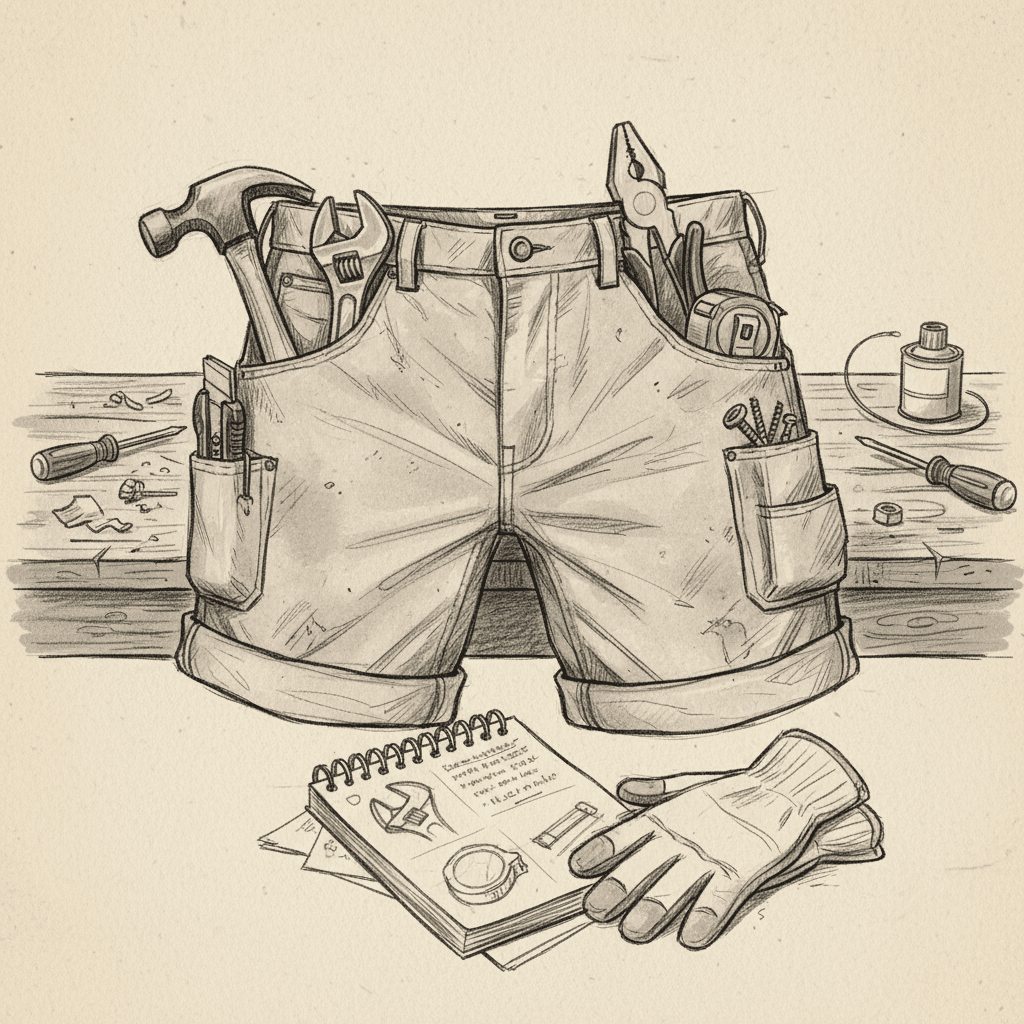
Build a small kit you can carry with one hand. It should cover 80% of fast fixes.
- 1/4 in impact driver with bits (PH2, SQ2, T25)
- Multi-bit screwdriver (slotted 4.5 mm and 6.5 mm)
- 6 in and 10 in adjustable wrenches
- 16 oz hammer and a nail set
- Utility knife with 5 spare blades
- Combination pliers and needle-nose pliers
- 5/16 in nut driver (for hose clamps)
- Stud finder and torpedo level (9 in)
- Assortment: 3 in #9 screws, #6-32 screws, plastic anchors (50 lb rated)
- Small lube: dry PTFE or silicone
Label your kit. Restock weekly. This supports the Hardware Tools Repair Tools Shorts method on every call.
Below are seven fast repairs. Each one fits the Hardware Tools Repair Tools Shorts style. Film them if you want training clips.
1) Tighten A Loose Door Hinge (3 minutes)
- Open the door and support it with a wedge.
- Remove one short hinge screw. Replace with a 3 in #9 screw.
- Drive it into the framing. Do 2–3 screws per hinge.
- Check swing and reveal. Adjust if needed.
Tip: A 1/4 in impact with a PH2 bit speeds this up.
2) Stop A Dripping Compression Valve (60 seconds)
- Close the valve and wipe it dry.
- Place a wrench on the body and another on the nut.
- Tighten the nut hand-tight plus 1/8 turn.
- Open the valve. Watch for 30 seconds. Repeat 1/8 turn if needed.
Note: If it still drips, plan a ferrule and nut replacement.
3) Anchor A Wobbly Shelf (5 minutes)
- Empty the shelf. Find studs with a stud finder.
- If no stud, use 50 lb rated anchors.
- Drill the pilot. Set the anchor flush.
- Rehang the bracket. Level it. Drive screws until snug.
Result: It holds light loads without sway.
4) Quiet A Squeaky Hinge (60 seconds)
- Hold the door open.
- Apply a small shot of dry PTFE lube to the pin.
- Swing the door 5–10 times.
- Wipe excess. Repeat once if needed.
Avoid oil that attracts dust. Dry lube keeps it clean.
5) Replace A Stripped Outlet Cover Screw (2 minutes)
- Turn off the circuit if you’ll touch the device.
- If only the cover: keep hands clear of conductors.
- Use a #6-32 x 1 in screw. Start by hand.
- Snug with a screwdriver. Do not overtighten.
Safety first: If unsure, de-energize and test.
6) Reset A Tripped GFCI (30 seconds)
- Press “Reset” on the GFCI outlet.
- If it won’t hold, unplug all loads.
- Reset again. Reconnect one load at a time.
- If it trips empty, schedule replacement.
Document findings for your ticket.
7) Secure A Loose Hose Clamp (2 minutes)
- Slide the clamp off the damaged section.
- Seat it 1/4 in behind the hose end.
- Tighten with a 5/16 in nut driver until snug.
- Run water. Check for 60 seconds. Re-snug 1/8 turn if needed.
These seven tasks are perfect for your Hardware Tools Repair Tools Shorts routine. They’re quick, safe, and easy to repeat.
Safety And Setup For Fast Repairs
Shorts are fast, but safety is first.
- PPE: safety glasses, gloves, and hearing protection.
- Ladders: use a 6 ft ladder on level ground.
- Electrical: de-energize when hands enter the box; verify with a tester.
- Plumbing: know the local main shutoff and fixture stops.
- Anchors: match anchor rating to expected load; 50 lb for light shelves.
- Torque: for hand fittings, go snug, then add 1/8 turn; stop if creaking.
Set the work zone. Clear 3 ft around you. Keep a trash bag in your pouch. Safety keeps your Hardware Tools Repair Tools Shorts reliable.
Turn Shorts Into Revenue: Simple Admin
Small fixes add up. Close the loop= while you’re still on site.
- Capture scope fast: use a voice note and 2–3 photos.
- Create a one-page proposal with line items and times (e.g., “Hinge reset, 3 minutes; Shelf anchor, 5 minutes”).
- Get sign-off before extra parts.
- Convert to invoice the same day.
Tools like Donizo help: speak the job into Voice to Proposal, send a branded PDF, collect an e-signature, then convert it to an invoice in one click. This flow matches the speed of your Hardware Tools Repair Tools Shorts work.
- If you’re also looking to streamline "professional proposals", our guide covers clear layouts and pricing.
- This pairs well with understanding "invoice templates" for small jobs.
- For contractors dealing with scheduling, we recommend tips on "project timelines" that prevent callbacks.
- If pricing is tricky, see strategies for "estimating small jobs" by time and materials.
FAQ
It means short, practical repair tips using common hardware and repair tools. Each “short” is a small fix you can do and show quickly, usually in 30 seconds to 5 minutes, with a clear result the client can see right away.
Carry about 10 core tools plus a few bits and anchors. A 1/4 in impact, two wrenches, two pliers, a utility knife, a 16 oz hammer, a stud finder, a level, and mixed screws and anchors will cover most shorts-style repairs.
Are these shorts safe for apprentices to try?
Yes, if you set rules. Use PPE, control power and water before touching systems, and follow simple checks. Start with non-energized, low-risk tasks like hinges and shelves. Add electrical or plumbing steps after proper training and supervision.
How do I price small, fast fixes?
Use a minimum service fee, then add time blocks (e.g., per 15 minutes) and small materials. List each short clearly: task, minutes, parts. This keeps scope clean and helps clients see value.
Can I film these shorts for marketing?
Yes. Keep clips 30–60 seconds. Show the problem, the tool, the fix, and the result. Get permission if you show client spaces. A few good shorts can bring steady small-job calls.
Conclusion
Short, repeatable fixes build trust and steady income. This Hardware Tools Repair Tools Shorts guide gives you the kit, the steps, and the safety to deliver results fast. Next steps: 1) Stock the 10-tool kit. 2) Run three shorts on your next call. 3) Document and bill on site. For faster paperwork, platforms such as Donizo let you speak the scope, get e-signatures, and invoice in one click. Keep it simple. Keep it moving.