Introduction
Seen a $500 faucet repair on a work order and thought, “That’s steep for a drip”? You’re not alone. The truth: a $500 faucet repair can be perfectly reasonable once you factor access, parts availability, seized shutoffs, and warranty risk. In this guide, we’ll break down when $500 fits, how to diagnose and fix common tap (faucet) faults, and how to price, communicate, and document the repair so your client understands the value and you protect your margin. We’ll also show simple ways to tighten up your paperwork with Donizo so you spend more time on the wrench and less on admin.
Quick Answer: A $500 faucet repair typically covers a service call, 1–2 hours of labour, OEM parts (cartridge/valve), replacing failing shutoffs or supply lines, testing, and a written warranty. It’s justified by access issues, corrosion, premium brands, or after-hours work. Always provide a clear scope, options, and photos.
Table of Contents
Key Takeaways
- Price transparently: show labour (1–3 hours), parts, access, and risk; offer 2–3 options.
- Diagnose fast: confirm supply pressure, isolate, identify valve type, and test before/after.
- Standardise kits: carry cartridges, 2 shutoff valves, 2 braided lines, PTFE tape, grease—cuts 20–30 minutes.
- Document with photos, voice notes, and a written scope to reduce disputes and callbacks.
- Use e-sign proposals and instant invoicing to shorten approval-to-payment by 1–2 days.
Why a $500 Faucet Repair Is Sometimes Right
The Problem
Homeowners see a drip and expect a quick tighten. You find a seized cartridge, dead shutoffs, tarnished finish, and a cramped vanity with a waste disposer in the way. Now the “ten-minute fix” is a full mini-project.
The Solution
Price the job around a defined scope: arrive, isolate, diagnose, repair/replace parts, reassemble, test, tidy, and warranty. Be explicit about variables that add time: access, corrosion, OEM parts sourcing, after-hours attendance.
Example Breakdown (Typical $500 Repair)
- Service call/diagnostic: $75–$120
- Labour: 1.5–2.5 hours at $100–$160/hr
- Parts: cartridge $40–$120, 2 shutoffs $40–$120, 2 braided lines $20–$40
- Consumables: PTFE tape, plumber’s grease, putty: $5–$15
- Testing/documentation/warranty overhead: included
Many contractors find that once shutoffs fail and a cartridge is stuck, the job reliably hits $400–$550. Communicate that early.
CTA: Use Donizo’s Voice to Proposal to capture the scope in minutes on-site, then Send Proposal as a branded PDF with e-sign so you can start work faster.
Step-By-Step $500 Faucet Repair Process
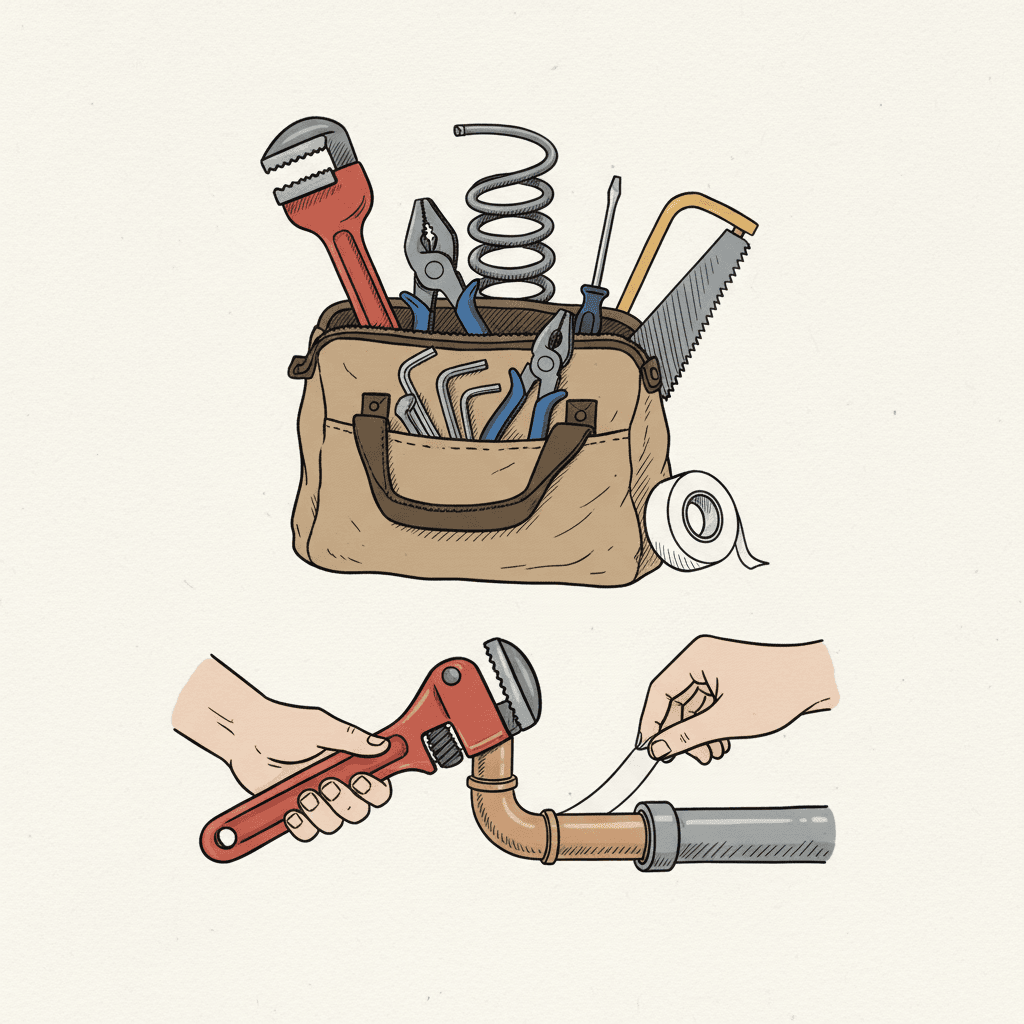
- Adjustable spanner, basin wrench, long-nose pliers
- Hex keys (2–3 mm commonly for handle set screws), Torx set
- Screwdrivers, utility knife, seat wrench if compression type
- Cartridge puller (saves 15–20 minutes on stuck units)
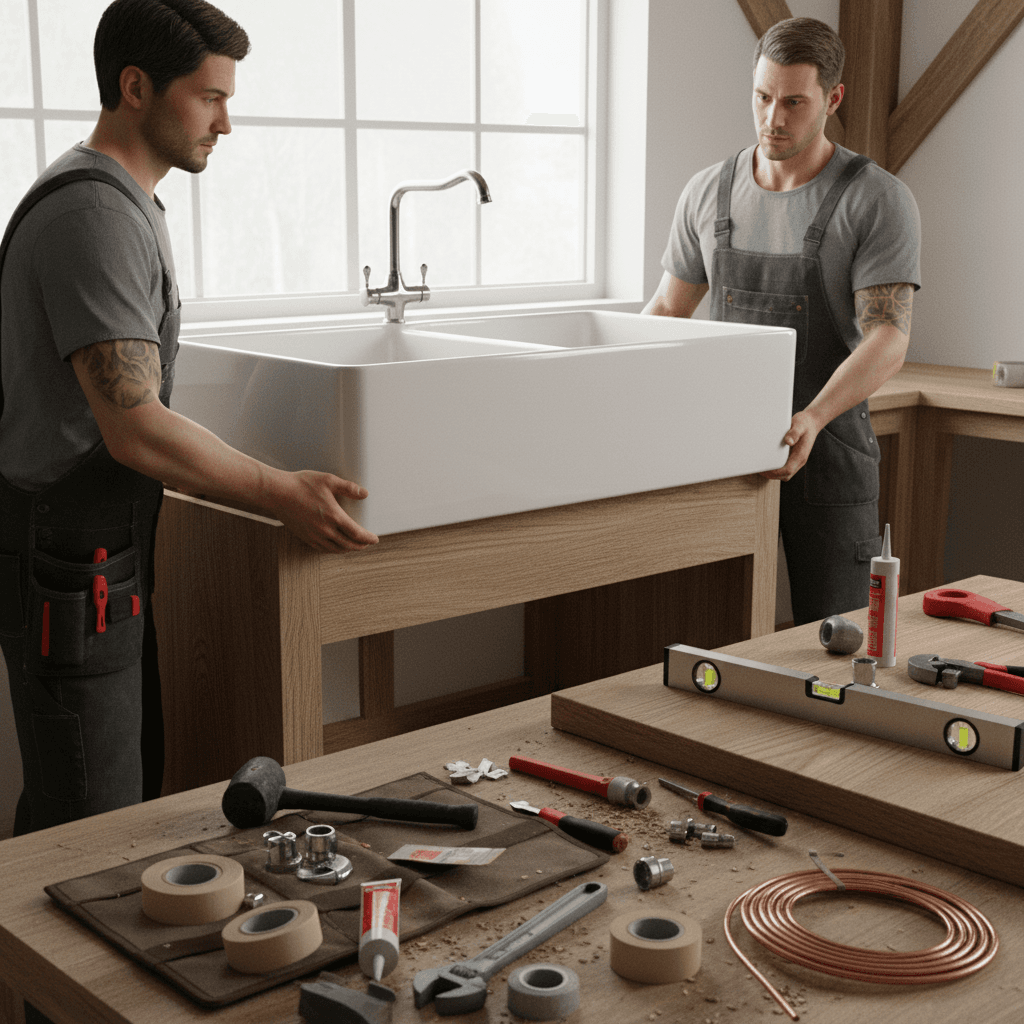
- 2 ball/angle stop valves (3/8 inch or 15 mm as needed)
- 2 braided supply lines (300–500 mm typical)
- PTFE tape, plumber’s grease, silicone/putty, rags
1. Verify and Isolate (5–10 minutes)
- Ask: leak from spout, base, or under-sink? Intermittent or constant?
- Check supply pressure and temperature.
- Close local shutoffs. If they don’t hold, plan to replace—add 30–45 minutes.
2. Diagnose Valve Type (5–10 minutes)
- Compression (older two-handle): rubber washer/seat.
- Cartridge (common modern): brand-specific cartridge.
- Ceramic disc: typically two discs, smooth 1/4 turn.
- Ball (older single-handle): ball and springs.
Identify brand/model. Many mixers have a logo on the cap; measure cartridge length (e.g., 40 mm) if unknown.
3. Disassemble Cleanly (10–20 minutes)
-
Remove handle cap, loosen set screw (often 2.5 mm hex), lift handle.
-
Photograph each layer: handle, dome, retaining nut, cartridge. Photos speed reassembly.
-
If the retaining nut is stuck, apply penetrating oil and wait 2–3 minutes; use a correctly sized socket to avoid rounding.
4. Replace Cartridge/Seals (10–25 minutes)
- Pull cartridge straight up. Use a cartridge puller if seized.
- Inspect O-rings and seats. Replace as a set if worn.
- Lightly grease O-rings; avoid over-greasing ceramic discs.
- Seat the new cartridge in the correct orientation (note hot/cold marking).
5. Refresh Shutoffs and Lines (20–40 minutes if needed)
- Drain, cut or unthread old valves; install two new 1/4-turn stops.
- Use PTFE tape on male threads; do not over-torque—snug plus 1/4 turn is usually enough.
- Fit two new braided lines (3/8 inch or 1/2 inch to match fittings), 300–500 mm to avoid kinks.
6. Reassemble and Align (5–10 minutes)
- Install retaining nut to manufacturer torque guidance if available (commonly hand-tight plus 1/8–1/4 turn).
- Refit handle, align index cap. Confirm smooth 1/4-turn action on ceramic types.
7. Flush and Test (10–15 minutes)
- Open supplies slowly; purge air. Remove aerator and flush for 30–60 seconds.
- Check for drips at: cartridge, base, shutoffs, supply connections. Use a dry tissue to spot weeping.
- Run hot and cold for 3–5 minutes; operate handle 10 cycles.
Outcome: A clean, documented repair that stands up to scrutiny and reduces callbacks.
CTA: Convert the accepted proposal to an invoice in one click with Donizo’s Invoice Management, and track payment without chasing separate spreadsheets.
Scenarios That Push a Faucet Repair to $500
Typical Upshifts
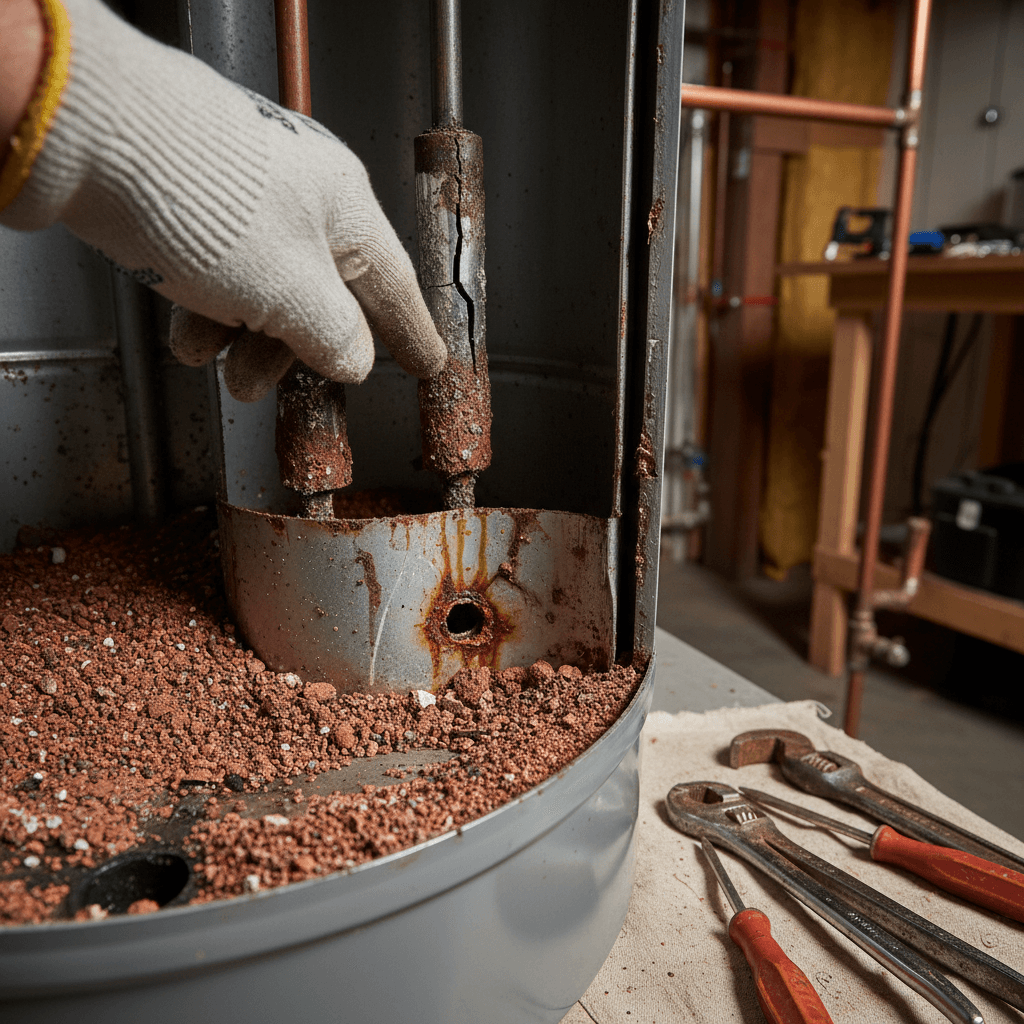
- Seized cartridge requiring puller and heat: +20–30 minutes
- Dead or leaking shutoffs (both): +30–45 minutes and $40–$120 parts
- Under-sink obstacles (disposer, water filter manifold): +15–25 minutes
- Wall-mounted or widespread taps (200–250 mm centres): +20–40 minutes for access/alignment
- Premium brands (OEM-only cartridges/finishes): +$60–$150 parts
- After-hours/emergency attendance: common uplift
Real-World Example
A single-handle ceramic tap leaking at the spout. Shutoffs don’t close; handle set screw is rounded; cartridge is stuck. You replace two shutoffs, two braided lines, and the OEM 40 mm cartridge. Total time: 2.2 hours; parts: $120. With travel and warranty risk, a $500 invoice is entirely reasonable.
Pricing Options, Parts, and Warranty
Offer Tiered Options (Good/Better/Best)
- Basic Repair (Good): Inspect, replace cartridge or washers, test. $180–$250. No shutoff/line refresh.
- Full Refresh (Better): Cartridge + 2 shutoffs + 2 braided lines, test, photos. $300–$450.
- Premium Repair (Best): OEM cartridge, new shutoffs/lines, minor trim seals, written 12-month labour warranty, photo report. $500–$750.
Presenting options reduces pushback and helps clients self-select value.
Parts and Time Reference
| Scenario | Parts | Labour Time | Notes |
|---|
| Cartridge swap only | Cartridge $40–$120 | 30–60 min | Easy access, working shutoffs |
| Add 2 shutoffs | +$40–$120 | +30–45 min | Drain and re-pressurise |
| Add 2 supply lines | +$20–$40 | +10–15 min | Prevents future leaks |
| Stuck retaining nut | — | +10–15 min | Penetrant, correct socket |
Warranty
Many contractors offer 90 days on labour for repairs; some extend to 12 months when replacing shutoffs and lines (fewer variables). Make sure manufacturer parts warranties are clear and noted on the proposal.
CTA: Use Donizo’s templates (Ascension/Autopilot plans) to standardise “Good/Better/Best” options and reduce quoting time by 10–15 minutes per call-out.
Client Communication and Paperwork (Donizo Tips)
What Clients Want to See
- What’s wrong (plain language), what you’ll do, and why it costs what it costs.
- Photos: corroded shutoffs, stuck cartridge, finish condition.
- Clear exclusions: tile/stone removal, cabinet modification, structural issues.
Speed Up Approval and Payment
- Voice to Proposal: Dictate findings and snap 3–4 photos on-site; generate a professional proposal before you leave the driveway.
- Send Proposal: Email a branded PDF with client portal access; clients review from their phone.
- E-signature Integration: Get legally binding approval without paper.
- Invoice Management: Convert accepted proposals to invoices in one click and track payments.
On Donizo’s Free plan, you can send unlimited proposals with voice/text/image input and E‑signature; PDFs export with a watermark. Paid plans remove the watermark and add custom branding, templates, analytics, and priority support. See proposal examples.
Testing, Photos, and Preventing Callbacks
Testing Routine (7–10 minutes)
- Aerator off: flush 60 seconds hot, 60 seconds cold.
- Inspect every joint with a dry tissue; any damp gets reworked.
- Cycle handle 10 times; check base and spout after 5 minutes.
- Refit aerator; confirm flow rate and spray pattern.
Photo and Note Checklist
- Before: leak location, finish condition, underside valves/lines.
- During: old parts, corroded threads, new shutoffs installed.
- After: dry tissue at connections, pressure reading if available.
Store photos with your proposal so any warranty call is a two-minute check, not a 20-minute debate. If you maintain a knowledge base, link this job to your internal “Tap Repair Standard” for faster onboarding. Learn more about invoicing.
FAQ
Is a $500 Faucet Repair Reasonable?
Yes—when the job includes proper diagnosis, an OEM cartridge, replacing failed shutoffs and supply lines, and thorough testing. Access issues, corrosion, premium brands, and after-hours attendance commonly push a simple fix into the $400–$550 range. Always itemise what’s included so the client sees the value.
How Long Should a Faucet Repair Take?
A straightforward cartridge swap with working shutoffs can take 30–60 minutes. If shutoffs are seized, supply lines are brittle, or the cartridge is stuck, plan for 1.5–3.0 hours including testing and cleanup. Wall-mounted or widespread taps often add 20–40 minutes due to access and alignment.
Should I Repair or Replace the Faucet?
If the tap is less than 10 years old, branded, and parts are available, repair is often best. Replace when finishes are failing, the body is cracked, the brand is obscure with no parts, or the client wants a style upgrade. If labour exceeds 2–3 hours and the faucet is dated, discuss replacement.
Do I Need to Replace Shutoff Valves During Repair?
If shutoffs don’t hold or they weep, yes—replace both. It adds roughly 30–45 minutes and $40–$120 in parts but prevents future leaks and makes future maintenance easy. Replacing supply lines at the same time is smart, low-cost insurance against callbacks.
What Warranty Should I Offer on a Faucet Repair?
Commonly, contractors offer 90 days on labour for repairs and pass through manufacturer part warranties. If you refresh shutoffs and supply lines and use OEM cartridges, offering up to 12 months on labour is realistic because you’ve controlled the variables.
Conclusion
A $500 faucet repair isn’t about a ten-cent washer—it’s the service call, 1–3 hours of skilled labour, quality parts, safe isolation, thorough testing, and standing behind the work. Price by scope, offer options, and document with photos. Next step: capture the job with Donizo’s Voice to Proposal, send a branded PDF for E‑signature, and convert to an invoice in one click. Reduce back-and-forth, get approval faster, and move on to the next call confidently.