Intro
On most jobs, a call about “a small drip” turns into a wet cupboard and a worried client. Inside A Leaking 5.5 Year Old Water Heater, you’ll usually find early tank corrosion, a tired anode rod, sediment buildup, or a stressed relief valve. In this guide, we open up what’s happening, show you how to pinpoint the leak fast, and lay out clear repair-or-replace choices. We keep it simple: quick checks, safe steps, and straight pricing talk you can use on site today.
Quick Answer
Inside A Leaking 5.5 Year Old Water Heater, the common failures are an anode that’s spent, a dip tube cracked, a TPR valve lifting, or tank seams corroding from sediment. Confirm the source in 10 minutes, then decide: replace small parts (1–2 hours) or swap the unit if the tank itself is compromised.
Table of Contents
Key Takeaways
- Most 5.5‑year leaks trace to anode loss, sediment, or valve issues.
- You can locate the source in 8–10 minutes with a dry wipe test.
- Small fixes take 1–2 hours; tank failure means full replacement (2–4 hours).
- Store at 60°C; deliver 50–55°C via a mixing valve to cut stress.
- Flush annually and check the anode every 24–36 months to prevent repeats.
What’s Going On Inside A Leaking 5.5 Year Old Water Heater
At 5.5 years, you’re at the first real wear point. Inside A Leaking 5.5 Year Old Water Heater, you’ll commonly see:
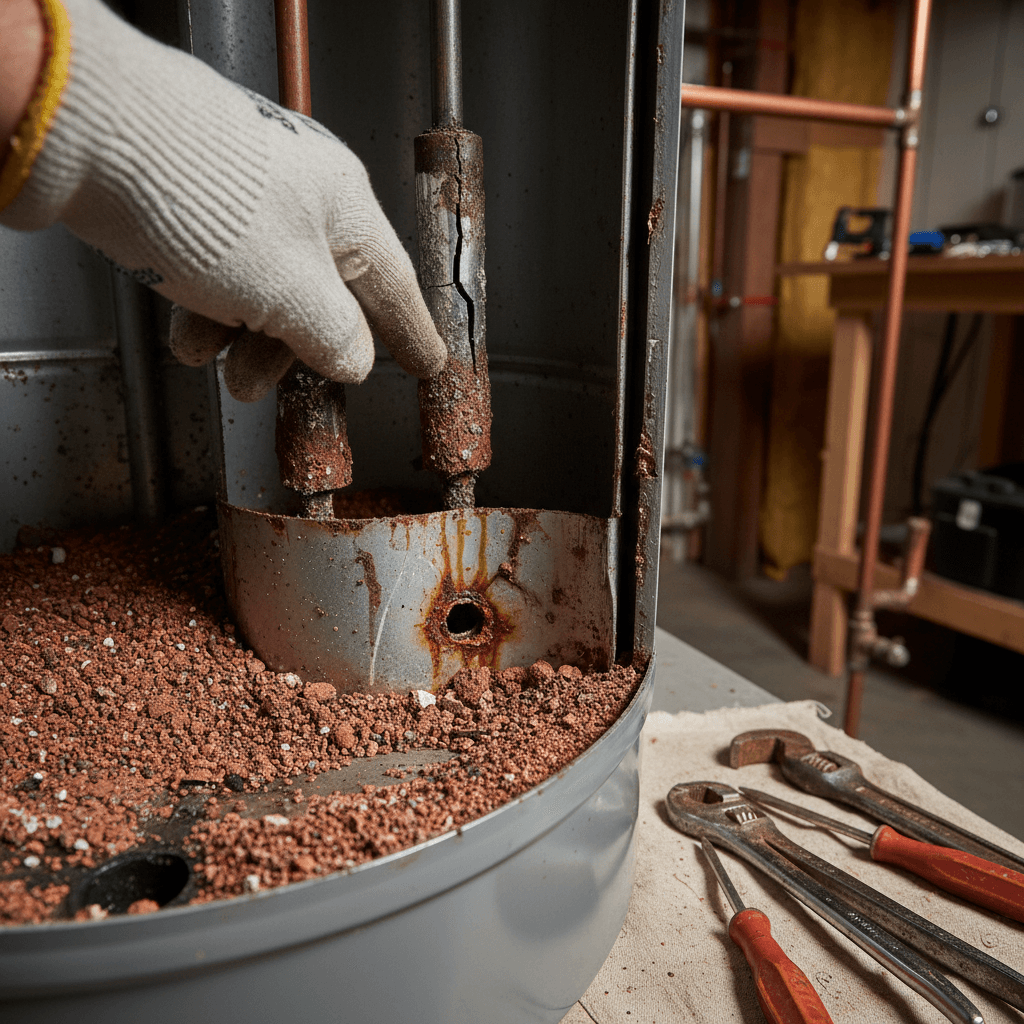
- Spent anode rod: Once the sacrificial rod is gone, the tank steel starts to rust. You’ll spot rust “mud” at the drain, and orange staining.
- Sediment blanket: 10–30 mm of limescale and grit can overheat the base, stress welds, and make popping sounds.
- Cracked dip tube: Cold water mixes at the top, causing lukewarm taps and odd expansion surges.
- Weeping TPR valve: A temperature and pressure relief (TPR) valve rated around 7–10 bar and ~90–99°C may lift if pressure spikes or debris sits on the seat.
- Loose or corroded fittings: Dielectric unions, drain valves, or element gaskets can drip under pressure.
- Seam corrosion: If the tank seam is wet and rusted, that’s a death blow. Replacement beats repair.
Tip: If you hear sizzling, that’s water hitting hot metal. Look for weeps above the sound.
Fast Field Check: Find The Leak In 10 Minutes
Use this quick method before you grab spanners. Inside A Leaking 5.5 Year Old Water Heater, speed matters.
- Kill power/fuel. Isolate electric at the breaker. Turn gas to off. 30 seconds.
- Shut the cold inlet. Note the handle position. 10 seconds.
- Dry the whole shell with a towel. Start top to bottom.
- Wrap tissue around suspect joints (TPR, nipples, element, drain). Watch for wet rings.
- Open a hot tap for 10 seconds to bleed pressure, then close.
- Turn cold back on. Watch where water first appears. 1–2 minutes.
- Lift the TPR test lever briefly. If it continues to weep after reseating, note it.
- Check the base pan. Rust flakes mean sediment and internal corrosion.
- Note pipe sizes (often 15–22 mm), discharge route, and any expansion vessel.
Result guide:
- Wet at fittings only? Plan a valve, gasket, or union fix.
- Wet seam or shell? Replace the heater.
- TPR discharge hot or constant? Check pressure/expansion and replace the valve.
Open It Up: Safe Drain And Inspect
When the source isn’t obvious, open and inspect. Inside A Leaking 5.5 Year Old Water Heater, these steps keep you safe and efficient.
- Isolate power/fuel and cold inlet. Confirm zero volts with a tester.
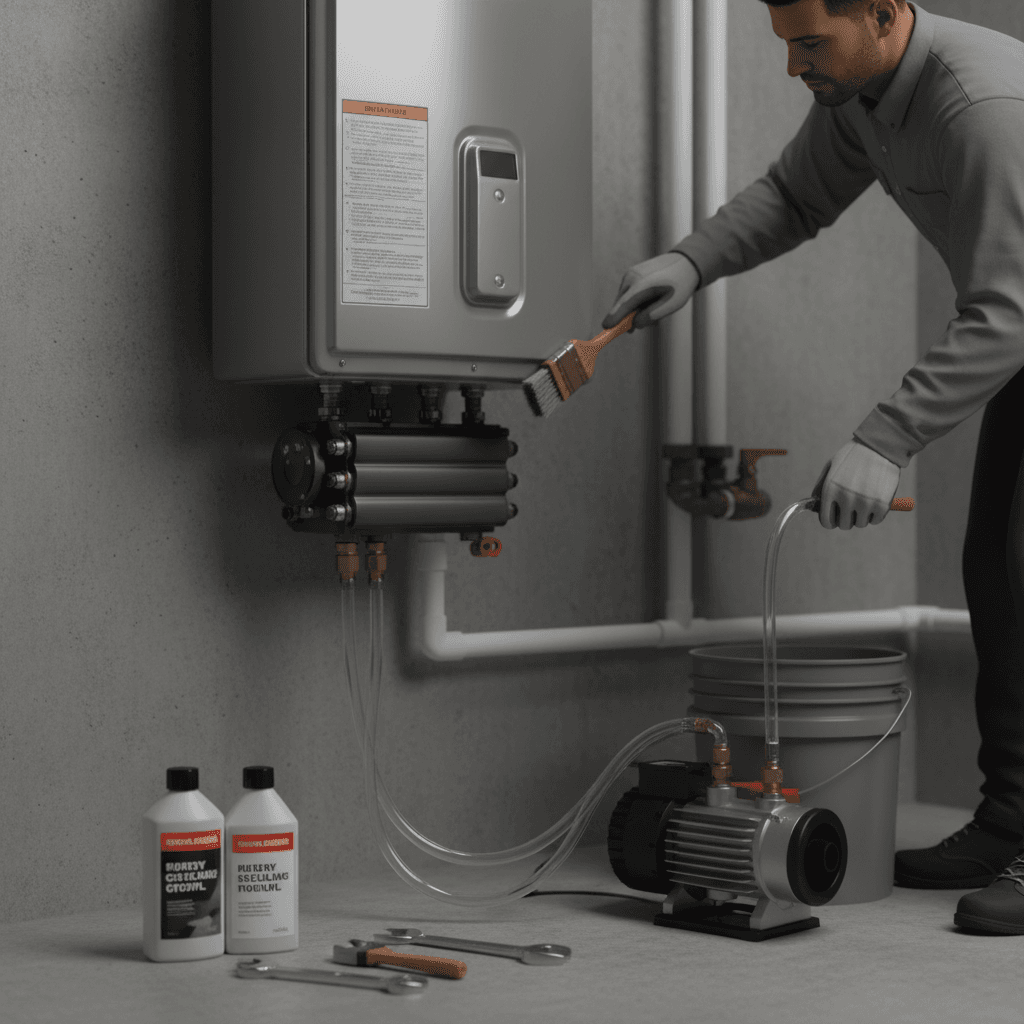
- Connect a hose to the drain. Run to a gully. Protect floors.
- Crack a nearby hot tap to vent. Drain 120–150 litres in 20–40 minutes.
- Pop the element cover. Look for scorch, mineral tracks, or blown gaskets.
- Remove the anode with a socket (often 27–32 mm). If it’s a wire with crumbs, it’s done.
- Inspect the dip tube. Any splits or missing end means replacement.
- Lift the TPR out. Check for debris on the seat. Always replace if suspect.
- Flush the tank until water runs clear. 3–5 short bursts help.
Safety notes:
- Follow local code or Building Regulations G3 for unvented cylinders.
- TPR discharge must remain unobstructed (commonly 15 mm copper, full‑bore path).
- If you find seam corrosion or pinholes, stop. Quote replacement.
Repair Or Replace At 5–6 Years?
Inside A Leaking 5.5 Year Old Water Heater, this is your decision tree.
Repair makes sense when:
- The tank shell is sound and dry after fittings are fixed.
- Issues are TPR, drain valve, element gasket, dip tube, or anode.
- Labour is 1–2 hours and parts are modest.
Typical parts and time:
- Anode rod: 30–60 minutes.
- TPR valve: 30–45 minutes.
- Element gasket or drain valve: 30–60 minutes.
- Dip tube: 30–60 minutes.
Replace when:
- You see seam rust, pinholes, or a damp shell after drying.
- Sediment has baked hard and the base creaks or pops loudly.
- Repeated TPR lifts point to chronic over‑pressure and tank stress.
Replacement basics:
- Allow 2–4 hours, depending on access and pipe rerouting.
- Common cylinder sizes are 120–210 litres. Check dimensions and flue/venting if gas.
- Add or verify an expansion vessel where required. Pre‑charge to mains static (often ~3 bar, site‑dependent).
Pricing talk tip: Offer two clear lines—“repair now” versus “replace with warranty”. If you’re also looking to streamline professional proposals, our guide covers the best way to present scope and options.
Prevent The Next Leak: Simple Routine
Prevention starts right after you fix or replace. Inside A Leaking 5.5 Year Old Water Heater, prevention is mostly about temperature, pressure, and cleanliness.
- Temperature: Store at 60°C to control Legionella risk. Use a thermostatic mixing valve to deliver 50–55°C to taps. This reduces limescale stress.
- Pressure: Verify static pressure. Add pressure reduction or an expansion vessel where needed. A stable system keeps the TPR quiet.
- Flush: Drain a bucket every 3 months, and a full flush every 12 months.
- Anode checks: Inspect every 24–36 months. Replace before it vanishes.
- TPR test: Lift the lever briefly every 6 months. Replace if it won’t reseat.
Many contractors find this routine saves 1–2 call‑backs per year per property.
Document And Quote Without Friction
Clarity wins the job. Take 6–8 good photos: leak point, fittings, TPR, anode, and the data plate. Record static pressure and set temperatures. Then present two options with time windows: “repair in 1–2 hours” or “replace in 2–4 hours”.
Tools like Donizo help here. You can capture site notes with voice and photos, generate a branded proposal, and send it for e‑signature. After approval, convert it to an invoice in one click. This pairs well with understanding invoice templates that save time and how to manage change orders cleanly when scope shifts.
FAQ
Is 5.5 years too early for a water heater to leak?
It’s early, but not rare. Inside A Leaking 5.5 Year Old Water Heater, you often find heavy sediment, a spent anode, or pressure issues. Hard water and high temperatures speed wear. Check the anode and TPR before assuming full replacement.
Can I fix a leak without replacing the whole unit?
Often, yes. If the tank shell is sound, replace the TPR valve, anode rod, dip tube, drain valve, or element gasket. Each takes around 30–60 minutes. If the seam or shell is wet and rusted, replacement is the right move.
How long should diagnosis and repair take?
You can locate the source in 8–10 minutes using the dry wipe and tissue test. Small part swaps take 1–2 hours total. Full replacement, including drain, lift, and commission, usually takes 2–4 hours depending on access.
What temperature should I set to reduce leaks?
Store at 60°C to manage health risks, then mix down to 50–55°C at outlets. Lower delivered temperature reduces limescale formation and thermal stress. Don’t run storage below 60°C unless local guidance says otherwise.
Do I need an expansion vessel?
If you have check valves or a sealed system, you likely do. Without expansion control, pressure spikes can make the TPR weep. Fit and pre‑charge the vessel to match static pressure. This keeps the system stable and quiet.
Conclusion
Inside A Leaking 5.5 Year Old Water Heater, the usual culprits are a spent anode, sediment, and stressed valves. Diagnose in minutes, fix small parts in under two hours, and replace the unit if the shell is compromised. Next steps: 1) Run the 10‑minute leak test. 2) Open, flush, and inspect the anode and TPR. 3) Present clear repair vs replace options. For clean proposals and faster sign‑off, platforms such as Donizo make it easy to capture site details, send quotes, and get paid. Do the basics well, and you’ll cut call‑backs and win trust.