Intro
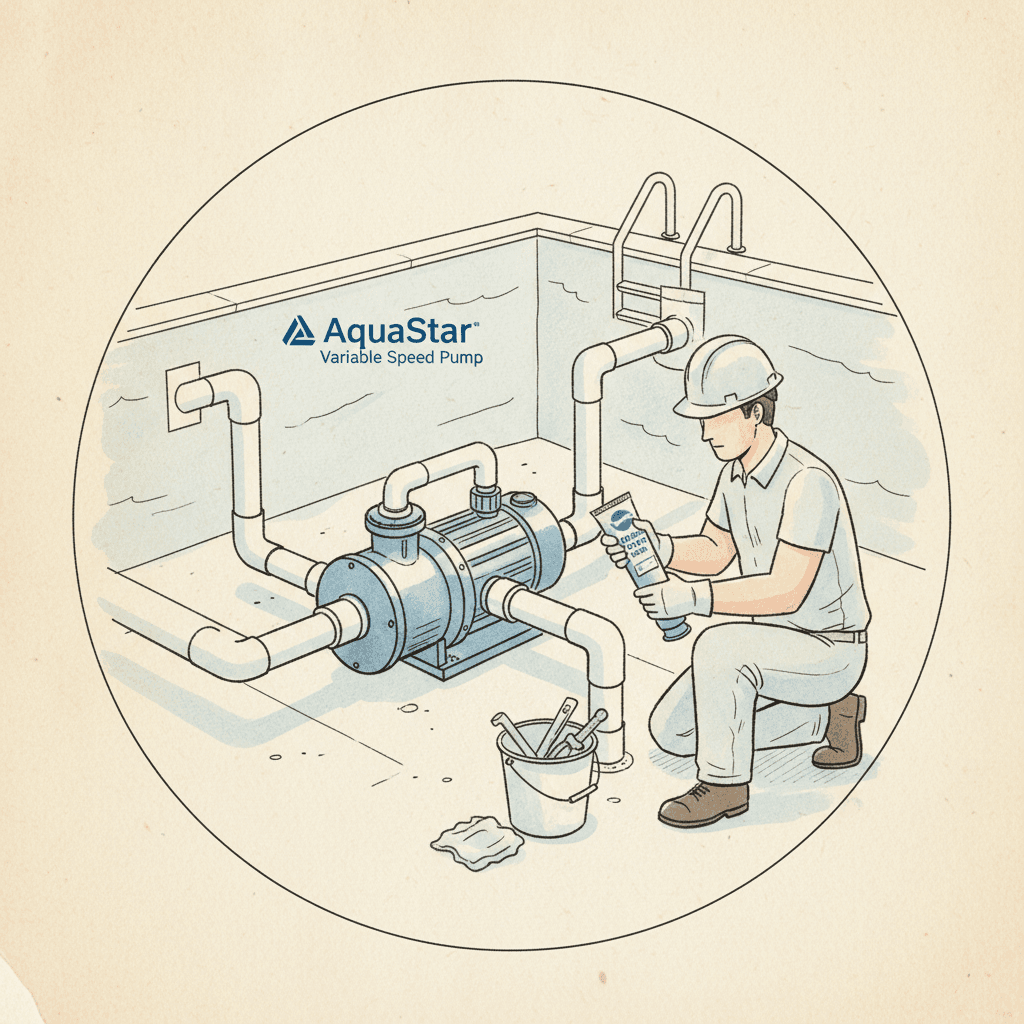
When you hear “Clean PVC: New AquaStar Variable Speed Pump Setup,” think simple, clean, and quiet power. This guide shows you how to prep clean PVC, set the new AquaStar variable speed pump, and commission it right. You’ll get clear steps, sensible measurements, and common checks. We keep it practical. On most jobs, clean pipe work and good priming save you hours. We’ll cover site prep, pipe layout, unions, wiring basics, start-up, and handover. You’ll avoid air leaks, noisy runs, and callbacks.
Quick Answer
Clean PVC: New AquaStar Variable Speed Pump Setup means clean, square-cut PVC, proper primer and cement, true unions, a level pad, safe wiring, careful priming, and a smart speed schedule. Allow 15–30 minutes glue set, 2 hours before start-up at around 20°C, then prime for 2–5 minutes and test flow, noise, and leaks.
Table of Contents
Key Takeaways
- Clean, square cuts and proper primer stop 80% of leak issues.
- Keep at least 5× pipe diameter straight on the suction side.
- Hand-tighten unions, then add 1/4–1/2 turn. Don’t overtighten.
- Allow 15–30 minutes set time; 2 hours before start-up at 20°C.
- Start at 1,200–1,800 RPM for filtration; 2,800–3,000 RPM for vacuuming.
Planning Your Installation
On most jobs, good planning is half the work.
- Choose a level pad: at least 600 × 600 mm, 100–150 mm thick concrete. Keep the pump above the equipment slab water line if flooding is possible.
- Check pipe size: most pool sets use 50 mm (2") or 40 mm (1.5"). Match the pump unions to pipe size. Use reducers only when needed.
- Layout for service: leave 150–200 mm clear in front of the lid for easy basket access. Leave 50–75 mm under unions for removal.
- Ventilation: variable speed pumps run cooler but still need air. Keep 300 mm clearance around the motor housing.
- Plan the electrics: allow a dedicated circuit and an RCD (30 mA). Follow BS 7671 and Part P where applicable. Use a qualified electrician.
Tip: This pairs well with understanding professional proposals and clear project timelines. If you’re also looking to streamline professional proposals, look for resources under “professional proposals,” “project timelines,” and “invoice templates that save time.”
Clean PVC: New AquaStar Variable Speed Pump Setup — Materials and Prep
Clean PVC work makes or breaks the job.
- Tools: pipe cutter or fine-tooth saw, deburring tool, tape, level, marker, torque-free strap wrench, soft cloths.
- Materials: PVC primer, PVC solvent cement, unions, 2–3 true 90° elbows (if needed), flexible couplers if retrofit, PTFE tape for threaded adapters.
Steps for clean joints:
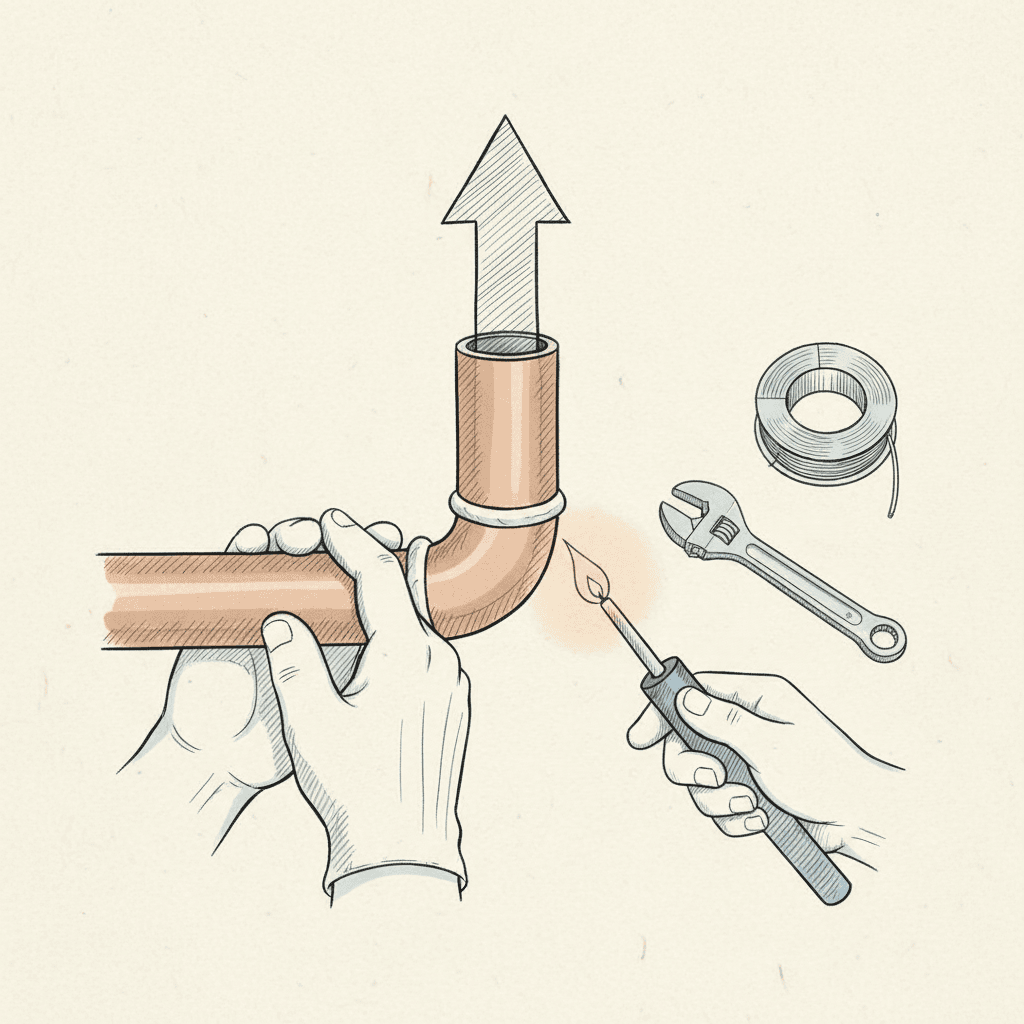
- Cut square. No angles. A 1–2 mm skew can cause leaks.
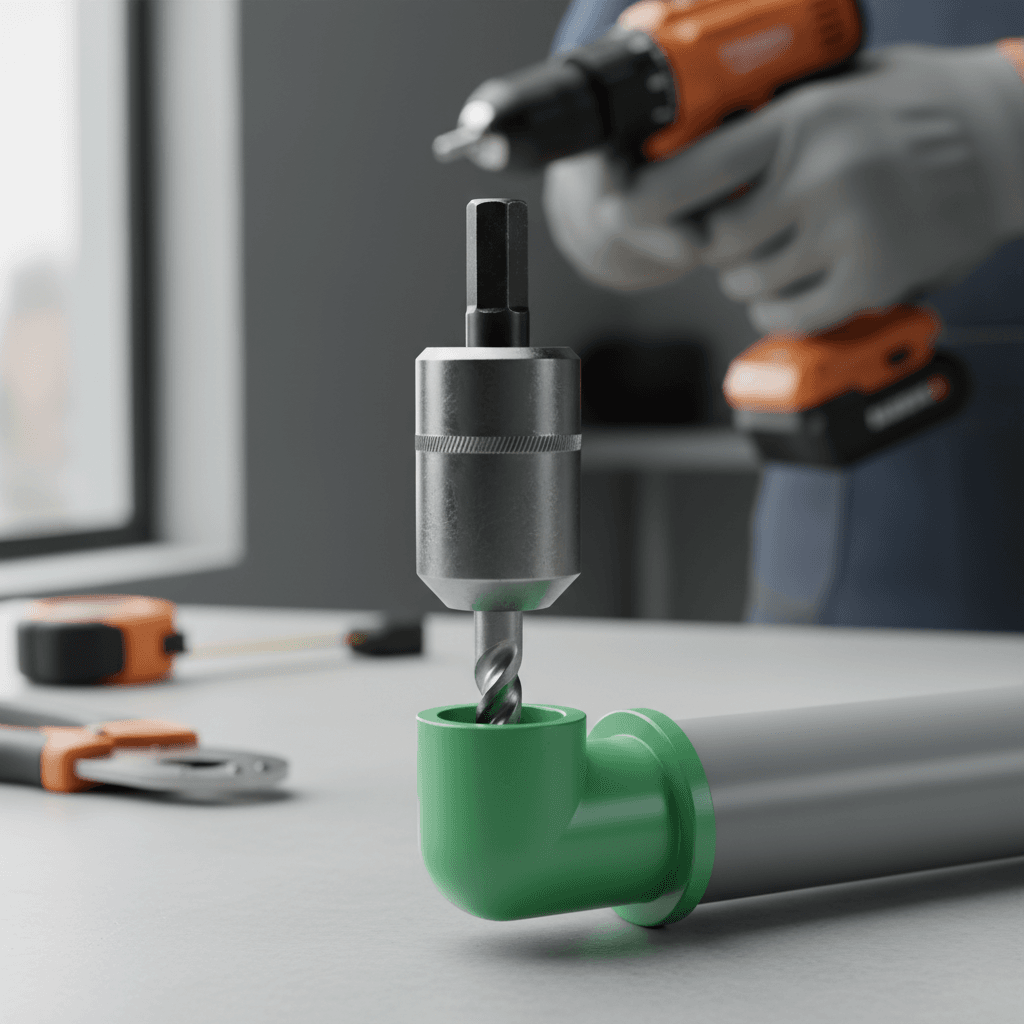
- Deburr inside and outside. Remove chips. Smooth the edge.
- Dry-fit. Mark alignment with a pen line over fitting and pipe.
- Prime both surfaces. Full coverage. No dry patches.
- Cement both surfaces. Even coat. No puddles.
- Push fully home and twist 1/4 turn to spread. Hold 20–30 seconds.
- Wipe excess. Let it set. Commonly 15–30 minutes to handle, 2 hours before start-up at 20°C. In cold weather, double the time.
Most contractors skip proper priming. Don’t make that mistake.
Pipework Layout and Assembly
Think “smooth flow” on suction. Pressure side is more forgiving.
-
Suction side rules:
- Keep at least 5× pipe diameter straight into the pump. For 50 mm (2"), that’s 250 mm minimum.
- Use long-sweep 90s or two 45s instead of a tight 90 when you can.
- Fit a union at the pump inlet and outlet. Add a union at the filter inlet for service.
- Add a clear lid strainer before the pump only if spec’d. Most pumps have an integrated basket.
-
Discharge side tips:
- Keep the first 200–300 mm straight after the pump before any tee.
- Add a check valve only where the system needs it (e.g., raised solar loop).
- Use a pressure gauge at the filter. Record baseline pressure at clean media.
-
Alignment:
- Support pipe every 1–1.5 m. Avoid strain on unions.
- Keep couplings square to the pump ports. Twist or side load will leak.
Mounting, Wiring, and Bonding
Mounting is simple. Wiring needs care.
-
Mounting:
- Set anti-vibration pads or rubber feet. Four points, 5–10 mm thick.
- Fix the base using suitable anchors. Don’t twist the pump body. Check it’s level with a spirit level.
-
Wiring (overview):
- Use a dedicated circuit sized per manufacturer data. Many variable speed pumps are 230 V single-phase; size the MCB and cable to BS 7671 and the nameplate current.
- Fit an RCD/RCBO 30 mA. Pools are special locations; comply with bonding and zoning rules.
- Equipotential bonding: bond metal parts with 4 or 6 mm² copper as required.
- Final connections and testing should be done by a qualified electrician.
-
Controls:
- Keep low-voltage control cables separate from mains. Follow the manual for terminal labelling.
- Protect cables with conduit. Leave a 50–100 mm drip loop.
Step-by-Step: Clean PVC: New AquaStar Variable Speed Pump Setup
Follow these numbered steps for a clean, repeatable install.
- Isolate and drain. Shut valves. Open the filter bleed. Confirm zero pressure.
- Place the pump. Level it on the pad. Check basket lid clearance.
- Dry-fit suction piping. Keep 5× diameter straight into the inlet.
- Mark joints. Prime and cement suction side. Hold each joint 20–30 seconds.
- Dry-fit discharge piping. Keep 200–300 mm straight, then fittings.
- Prime and cement discharge side. Wipe excess. Support pipes every 1–1.5 m.
- Fit unions. Hand-tighten, then add 1/4–1/2 turn with a strap wrench.
- Electrical connection. Qualified electrician only. Fit 30 mA RCD. Bond as required.
- Cure time. Wait 2 hours at ~20°C before start-up. Longer if cold.
- Prime and test. Fill pump basket, start at 1,500 RPM, check for leaks and noise.
Document the install. Note pipe size, union locations, and baseline filter pressure. For smooth client sign-off, many contractors capture site photos and voice notes, then create clean proposals and invoices using platforms such as Donizo.
Priming, Programming, and Testing
Get water in, set speeds, and prove the system.
-
Priming:
- Open valves. Fill the pump basket with water.
- Seal the lid. Start at 1,200–1,800 RPM. Let it pull for 2–5 minutes.
- If no prime in 5 minutes, stop. Recheck lid O-ring, suction joints, and water level.
-
Programming speeds (typical starting points):
- Filtration: 1,200–1,800 RPM for 10–16 hours/day. Lower speed = quiet and efficient.
- Skimming boost: 2,200–2,600 RPM for 1–2 hours, morning or evening.
- Vacuum/Backwash: 2,800–3,000 RPM for manual cleaning or backwash (as needed).
-
Checks and numbers to record:
- Basket lid seal: lubricate O-ring lightly with silicone grease.
- Filter pressure: note clean pressure, for example 8–12 psi (0.6–0.8 bar).
- Flow sound: a steady hum is fine. Cavitation sounds like gravel. If you hear it, reduce restrictions or speed.
- Current draw: verify against the nameplate. High current can mean blockage or wiring issues.
-
Final test:
- Run 15–20 minutes across two speeds. Dry the unions and check for weeps.
- Inspect within 24 hours. Small weeps show as white crust at joints.
If you handle maintenance, this content pairs well with resources on pricing strategies, change orders, and invoice templates. Search for “pricing strategies for service plans” and “change orders done right.”
Questions and Answers
Do I really need PVC primer?
Yes. Primer softens and cleans the pipe so cement can fuse the joint. Without primer, you’ll often get weak bonds and leaks, especially on suction lines. Use a matching primer and cement system, and fully cover both surfaces.
How long should I wait before starting the pump after gluing?
Commonly, 15–30 minutes is fine for handling, and about 2 hours before start-up at around 20°C. In cold weather, double the time. Always follow the cement manufacturer’s label for exact cure times.
What RPM should I use first?
Start at 1,500 RPM. Let the system prime and stabilise. Then adjust to 1,200–1,800 RPM for filtration. Use 2,800–3,000 RPM for vacuuming or backwashing. Set a daily schedule and refine it after a week of observation.
How tight should pump unions be?
Hand-tighten until the O-ring seats, then add 1/4–1/2 turn with a strap wrench. Don’t overtighten. If it leaks, check the O-ring for nicks and make sure the faces are clean and square.
Do I need a check valve on the discharge?
Only if the system needs to hold prime across a height change or prevent backflow to a heater or solar loop. Many basic sets don’t need one. Fit it where service access is easy, and match the pipe size.
Conclusion
A clean, square pipe job and a careful start-up are the backbone of any reliable pool system. With Clean PVC: New AquaStar Variable Speed Pump Setup, focus on straight suction runs, proper priming, sensible RPMs, and safe electrics. Next steps: 1) Set your pad and dry-fit layout, 2) Glue and cure with time to spare, 3) Prime, programme, and log your baseline readings. For fast quotes and tidy handovers, many installers record site details and send professional proposals using tools like Donizo. Do the basics well, and your pump will run quiet, cool, and trouble-free.