Intro
On site, time is money. Clients panic. Water rises. You need a fix now. This guide shows you exactly how to clear a tough toilet blockage in seconds using power. We’ll cover air-ram blasting, wet/dry vac suction, and a closet auger. You’ll get step-by-step moves, times, and checks. We explain what to use, when to use it, and how to keep it safe. If you want to clear a tough toilet blockage in seconds and look like a hero, follow this.
Quick Answer
To clear a tough toilet blockage in seconds, use a pressure tool (air ram or CO₂ plunger) with a tight seal and 1–2 short blasts. If that fails, switch to a wet/dry vac for 30–60 seconds of suction. A 900–1200 mm closet auger clears most remaining clogs in under 2 minutes.
Table of Contents
Key Takeaways
- Pressure power clears many clogs in 10–30 seconds when you seal it right.
- Wet/dry vacs move water and waste fast. Expect 30–60 seconds per attempt.
- Closet augers reach 900–1200 mm and punch through wipes, pads, or toys.
- Always protect the bowl with towels. Wear eye protection and gloves.
- If water rises to 10–20 mm below rim twice, stop and assess for a full stack issue.
Why Speed Matters On Site
Blocked toilets stop jobs. Tenants call. Offices lose hours. On most jobs, the fastest safe method wins. That means power, a tight seal, and controlled force. Your aim is simple: clear the trap fast, avoid splash-back, and protect the ceramic. Use tools you can deploy in under 60 seconds. That’s how you clear a tough toilet blockage in seconds without drama.
Clear a Tough Toilet Blockage in Seconds: Pressure Power
This is the fastest reliable method when the trap is packed but intact.
What You Need
- Air ram or CO₂ toilet plunger (with rubber cone)
- Thick towel or splash guard
- Eye protection and gloves
- Bucket and sponge
Steps (HowTo)
- Kill the water. Close the isolation valve. Keep bowl water 100–120 mm deep.
- Warm the cone. Run it under hot tap water for 20–30 seconds for a better seal.
- Seat the cone. Centre it in the outlet. Press down to seal fully.
- Drape a towel around the rim. This stops spray and protects the client’s floor.
- Pre‑charge the tool to the manufacturer’s setting (commonly 4–6 bar, or CO₂ single cartridge). Don’t exceed ratings.
- Warn anyone nearby. Keep faces 600 mm back. Stand to the side.
- Fire one short blast (0.5–1 second). Hold the seal firm.
- Listen. A clear gurgle and drop in water level means the trap is open.
- If still blocked, fire a second blast. Do not exceed 3 blasts in one session.
- Flush once. Watch for a strong siphon and full bowl clear in 4–6 seconds.
Pro Tips
- Never fire with a poor seal. You’ll get blowback.
- If the bowl fills to within 10 mm of the rim, bail out 2–3 litres before the next attempt.
- This is how you clear a tough toilet blockage in seconds when the trap is choked with wipes.
Clear a Tough Toilet Blockage in Seconds: Wet/Dry Vac
Pure suction moves mass fast. Great on soft clogs and small objects.
What You Need
- Wet/dry vacuum (20–30 litres) with a tapered nozzle
- Cloth or duct tape for sealing gaps
- Towels and a small bin liner
Steps (HowTo)
- Remove most bowl water. Leave 30–50 mm to prime suction.
- Wrap the nozzle with a cloth for a snug fit.
- Press the nozzle into the outlet. Seal any gaps with your hand or tape.
- Start the vac. Hold the seal for 20–30 seconds.
- Listen for a slurp and watch the water drop fast.
- Check the bin. Stop if you hear rattling; you may have pulled a solid object.
- Flush test. A clean pull-down in 4–6 seconds means you’re done.
Pro Tips
- Keep the filter set for wet use. Dry filters will clog and tear.
- Don’t vacuum caustic chemicals. If the client poured drain cleaner, switch to the auger.
- Many contractors find this method clears a tough toilet blockage in seconds when paper loads are heavy.
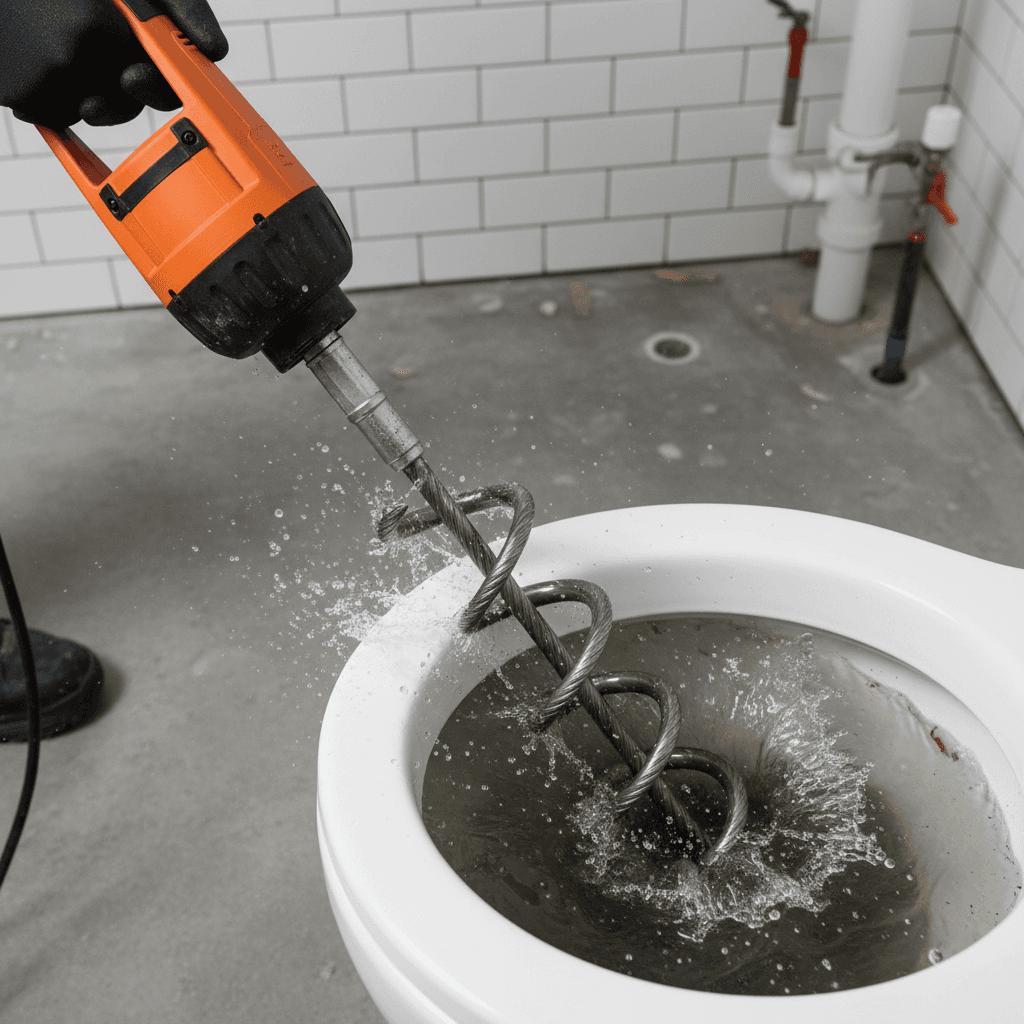
Clear a Tough Toilet Blockage in Seconds: Closet Auger
When pressure and suction don’t finish it, cable power does.
What You Need
- Closet auger (900–1200 mm) with a protective bowl guard
- Old towel for the floor
- Disposable wipes or rags
Steps (HowTo)
- Insert the auger tip into the outlet with the bowl guard in place.
- Feed 50–100 mm, then crank gently clockwise.
- Advance in 100–150 mm steps. Don’t force it. Feel for resistance.
- When you hit the blockage, keep steady pressure and crank for 10–15 seconds.
- Pull back 50–100 mm. Then advance again. Repeat 2–3 times.
- Withdraw slowly. Wipe the cable as it exits.
- Flush. If the trap is clear, the bowl will empty in 4–6 seconds.
Pro Tips
- Most cistern to pan bolts sit far from the outlet. Still, control the tip to avoid scratching glaze.
- If you bring back fabric or cotton buds, advise the client on safe disposal.
- This approach helps you clear a tough toilet blockage in seconds when a toy or pad catches in the trap.
Prep, Clean-Up, and Client Communication
A quick win still needs clean work.
- PPE first: gloves, eye protection, and non‑slip shoes.
- Protect the floor with a towel or mat. Keep 500–600 mm clear around the pan.
- After clearing, run 2 full flushes and 1 bucket test (6–8 litres) to confirm a strong siphon.
- Disinfect the seat, rim, and surrounding floor. Wipe handles and door latches.
- Explain the cause in simple terms. Show any items removed.
- For quotes and speedy approvals on follow‑up work, tools like Donizo let you capture site notes by voice and send a branded proposal in minutes.
This pairs well with understanding professional proposals, invoice templates that save time, and client communication tips you can link from your resource hub.
Troubleshooting and When to Pull the Pan
Sometimes the blockage isn’t at the trap.
Signs It’s Beyond the Pan
- Refill rises to 10–20 mm from the rim twice after strong attempts.
- Multiple fixtures gurgle. A sink 2–3 metres away backs up too.
- You smell sewer gas and hear slow gurgling over 30–60 seconds after a flush.
What To Do Next
- Scope from the pan if you carry a short camera (5 m) to confirm location.
- Jet or snake the branch line through a nearby access within 2–5 metres.
- If no access, pull the pan. Plan 45–90 minutes including reset and silicone.
- If roots or heavy scale are suspected, schedule jetting and descale.
If you also want to streamline project timelines and pricing strategies, link readers to your guides on managing project timelines and building profitable pricing models.
FAQ
Is boiling water safe to pour into a toilet?
No. Boiling water can crack the ceramic. Use hot tap water only, around 50–60°C. If you try a hot water assist, add 2–3 litres carefully. Wait 5–10 minutes, then test flush. For fast results, pressure tools are better.
If a proper flange plunger doesn’t clear it in 4–6 firm pumps, switch. Pressure tools or a wet/dry vac will often clear a tough toilet blockage in seconds. Don’t waste 10–15 minutes on a tired plunger.
Are air rams and CO₂ plungers safe for old pipes?
Yes, if used correctly. Keep seals tight. Use short 0.5–1 second bursts. Do not exceed the maker’s pressure. Avoid if the client has reported cracked ceramics or loose pans. In those cases, use a closet auger first.
What if a toy or hard object is jammed?
Use a closet auger to hook and pull. Don’t blast it deeper with air. If it won’t move within 2–3 passes, pull the pan. It’s faster than risking a lodged object further down the branch.
Can chemicals help before I start?
Avoid mixing chemicals. Unknown cleaners can react, splash, or off‑gas. If you smell strong chemicals, skip vacuum and pressure. Use an auger, then flush thoroughly. Safety first.
Conclusion
Speed comes from the right tool, good seals, and clean steps. Use pressure power first, then suction, then a closet auger. That’s how you consistently clear a tough toilet blockage in seconds while keeping the site safe and tidy. Next steps: 1) Stock an air ram, wet/dry vac, and 1200 mm auger in your van. 2) Practise the 10‑step pressure method until it’s muscle memory. 3) Log causes and upsell prevention. For fast approvals on follow‑up work, platforms such as Donizo help you capture details and send proposals quickly. Do the job once, do it right, and move on to the next call.