Introduction
Crooked pipe cuts, chewed pipe ends, and wasted fittings—every contractor’s been there. The fix is quicker than you think. The Simple Pipe Hack You Should Know. turns a standard hose clamp into a dead‑square cutting and marking guide. Why it works: a clamp’s band is manufactured square and wraps uniformly around round stock. How to use it: snug it around your pipe, line up your mark, and cut or scribe along the band. You’ll get cleaner joints, tighter fits, and less rework with the Simple Pipe Hack You Should Know.
Subscribe to our newsletter for more no‑nonsense site hacks that save hours each month.
Quick Answer: The Simple Pipe Hack You Should Know. uses a stainless hose clamp as a perfectly square guide for cutting or marking. Wrap and snug the clamp, align to your mark, then trace or cut along the band. It works on 15–110 mm pipe, takes 30–60 seconds, and delivers cuts within about 1 mm when using a sharp blade.
Table of Contents
Key Takeaways
- Use a hose clamp as a square cut/mark guide; it’s accurate to about 1 mm with a sharp blade.
- Works on copper, PVC, steel, and cast-iron sleeves from 15–110 mm diameter.
- Two clamps 100–200 mm apart help align couplings and maintain straightness.
- Setup takes 30–60 seconds and often saves 10–15 minutes of rework per joint.
- Safer, cleaner cuts reduce leaks, chatter, and fitting waste by 1–3 pieces per job.
What Is the Simple Pipe Hack You Should Know.
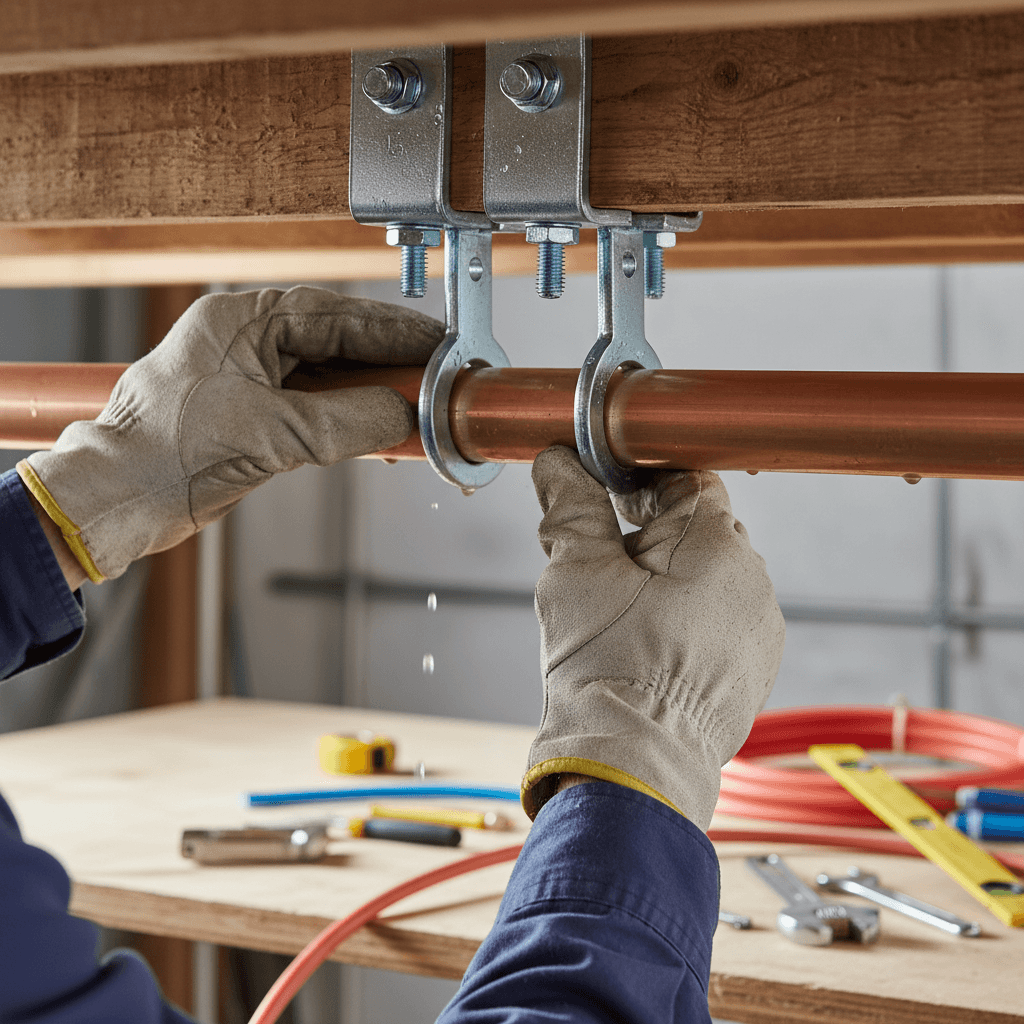
It’s straightforward: a standard jubilee/gear‑drive hose clamp becomes a precision guide. The clamp’s band edges are square to its tensioning screw, so when wrapped and snugged around a pipe, the band forms a true 360‑degree reference line. You trace or cut right along that edge. This is the Simple Pipe Hack You Should Know.
Why it matters on site: many cutters and recip saws wander, especially on 32–63 mm plastic or old oxidised copper. A wandering cut leaves a bevel that fights your solvent weld or solder capillary action. Using a clamp keeps the blade indexed all the way round. That’s why crews stick with the Simple Pipe Hack You Should Know.
- 1 stainless hose clamp sized for your pipe: 12–16 mm band width is ideal; keep a set covering 15–110 mm pipe.
- Permanent marker or scribe.
- Cutting tool: tubing cutter, hacksaw, recip saw with 14–24 TPI for metal or fine‑tooth PVC blade.
- Deburring tool, utility knife, or reamer.
- Tape measure, square, and PPE (gloves, eye protection).
Optional but handy:
- Second clamp for alignment.
- Damp cloth for heat control during soldering.
- Fine emery cloth for finishing.
Stocking this small kit in your pouch makes the Simple Pipe Hack You Should Know. a five‑second decision.
How to Use the Simple Pipe Hack You Should Know.
Follow these steps for consistent, square results.
-
Measure and mark
- Measure your cut length twice. Put a single tick mark where the cut will land.
- If you need a precise insertion depth, mark to the millimetre; the clamp will carry that line around the pipe.
-
Fit the clamp
- Open the clamp, wrap it around the pipe, and snug it so it can slide with firm pressure.
- Align the clamp’s band edge exactly to your tick mark. Check all the way round—no gaps or skew.
-
Tighten to hold
- Firmly tighten until the clamp doesn’t move, but don’t crush soft plastic. You want it secure and square.
- For larger diameters (50–110 mm), give the screw an extra quarter‑turn to lock the band.
-
Trace the guide
- Run a marker or scribe along the band edge to transfer a 360‑degree line. This takes 10–20 seconds.
- For copper using a tubing cutter, this line is your reference to keep the wheel true.
-
Make the cut
- Hacksaw/recip: keep the blade just kissing the clamp’s band as a fence. Go slow for the first 5–10 strokes.
- Tubing cutter: align the wheel to the line and make 3–6 rotations, tightening a quarter‑turn per rotation.
-
Deburr and finish
- Remove the clamp, deburr inside and outside. Aim to remove 0.5–1.0 mm of burr for smooth insertion.
- Dry fit: you should see a uniform gap or flush seating around the entire circumference.
-
For alignments (bonus)
That’s the Simple Pipe Hack You Should Know. from start to finish.
Download our free cut‑quality checklist to standardise this on your crew.
Where This Hack Saves You Time and Rework
- Copper stubs and radiator tails (10–22 mm): Square cuts improve capillary flow; fewer pinholes. Expect 2–3 fewer re‑solders per week with the Simple Pipe Hack You Should Know.
- PVC waste and soil (32–110 mm): Solvent joints seat fully when cuts are square. Mis-seated joints often leak within 24 hours—this prevents that with the Simple Pipe Hack You Should Know.
- Galv/steel sleeves and guards: A square sleeve looks professional and protects evenly.
- Confined spaces: When you can’t swing a full saw arc, the clamp keeps the blade on track.
Real site example: On a bathroom first fix, a crew making 20+ PVC cuts cut square on the first pass using this trick. No recuts, no shaved fittings, and the riser alignment stayed within 1–2 mm over 1.2 m. That’s the power of the Simple Pipe Hack You Should Know.
Common Mistakes and How to Avoid Them
-
Clamp not square to the pipe
- Symptom: taper on one side. Fix: rotate the clamp until both edges align to your tick mark; check in 3–4 positions before tightening.
-
Over‑tightening on PVC
- Symptom: flat spot or hairline cracks. Fix: snug just enough to resist movement; if the band bites, back off 1–2 turns.
-
Cutting too aggressively
- Symptom: blade jumps the band and wanders. Fix: start slow; the first 5–10 seconds matter. Once a groove forms, you can speed up.
-
Skipping deburring
- Symptom: o‑ring nicks on push‑fit, poor solder flow. Fix: remove 0.5–1.0 mm of burr and chamfer the edge slightly.
-
Leaving the clamp on for soldering
- Symptom: scorched band or melted plastic nearby. Fix: remove the clamp before heat. For heat control, use a damp rag 30–50 mm away instead.
Avoid these and the Simple Pipe Hack You Should Know. stays quick, safe, and precise.
Pro Tips, Variations, and Safety Notes
- Use a wide band (12–16 mm) for pipes 50–110 mm; it stabilises the blade better than narrow bands.
- For perfect mitres on pipe boxing, set the clamp to a measured angle using a pipe wrap ruler, then trace. It’s the angled version of the Simple Pipe Hack You Should Know.
- Mark insertion depths: clamp at the socket depth (e.g., 21 mm for 40 mm PVC), scribe a stop line to prevent over‑insertion.
- Stainless band as heat sink? It’s modest. Prefer a damp rag and heat shield 30–50 mm from the joint.
- Keep 3 clamp sizes in your kit: small (12–25 mm), medium (32–60 mm), large (63–110 mm). That covers most domestic and light commercial.
- Safety: eye protection, gloves, and blade guards. When using a recip saw, keep both hands on the tool and use 14–24 TPI metal blades for copper/steel, fine‑tooth for PVC.
Want to standardise this across your quotes and method statements? Use Donizo’s Voice to Proposal to capture site photos and a 20–30 second description, then generate a branded proposal with the method outlined. Convert to an invoice in one click after approval.
FAQ
What is the Simple Pipe Hack You Should Know. in plumbing?
It’s using a standard hose clamp as a square guide to mark or cut around any round pipe. Wrap the clamp, align to your mark, tighten, and cut or scribe along the band. It works on copper, PVC, and steel from about 15–110 mm, ensuring clean, square ends that fit right the first time.
Does this hack work better than a tubing cutter?
For copper 10–22 mm, a tubing cutter is excellent. The Simple Pipe Hack You Should Know. shines when cutters won’t fit, on larger diameters, or with PVC and steel. It also helps start cuts straight with a hacksaw or recip saw, preventing blade wander and reducing rework.
Will a hose clamp damage PVC or copper?
Not if you tighten sensibly. Snug until it doesn’t slip, then stop. Over‑tightening can flatten thin‑wall PVC or score soft copper. Use a 12–16 mm wide stainless band, check squareness in 3–4 spots, and remove the clamp before applying heat.
How accurate is the Simple Pipe Hack You Should Know.?
In general, expect square cuts within about 1 mm if your blade is sharp and you start the cut slowly. Using two clamps 100–200 mm apart as sight rails improves long, straight cuts and coupling alignment, especially on 50–110 mm pipe runs.
Can I use this hack on press‑fit or push‑fit installations?
Yes. Square cuts protect o‑rings and ensure full engagement. Combine the Simple Pipe Hack You Should Know. with a deburr/chamfer of 0.5–1.0 mm and mark your insertion depth with the clamp set to the socket depth. You’ll reduce leaks and call‑backs.
Conclusion
If you carry one extra item in your pouch, make it a stainless hose clamp. In 30–60 seconds you’ll get a square, repeatable cut on diameters from 15–110 mm, trim rework by 10–15 minutes per joint, and avoid 1–3 wasted fittings per job. That’s the Simple Pipe Hack You Should Know. Put it in your method statements and teach the apprentices this week.
Capturing small scope changes? Use Donizo: speak the update with Voice to Proposal, send a branded PDF for e‑signature, then convert to invoice in one click. Learn more about how contractors are solving this with streamlined workflows and tight documentation.