Intro
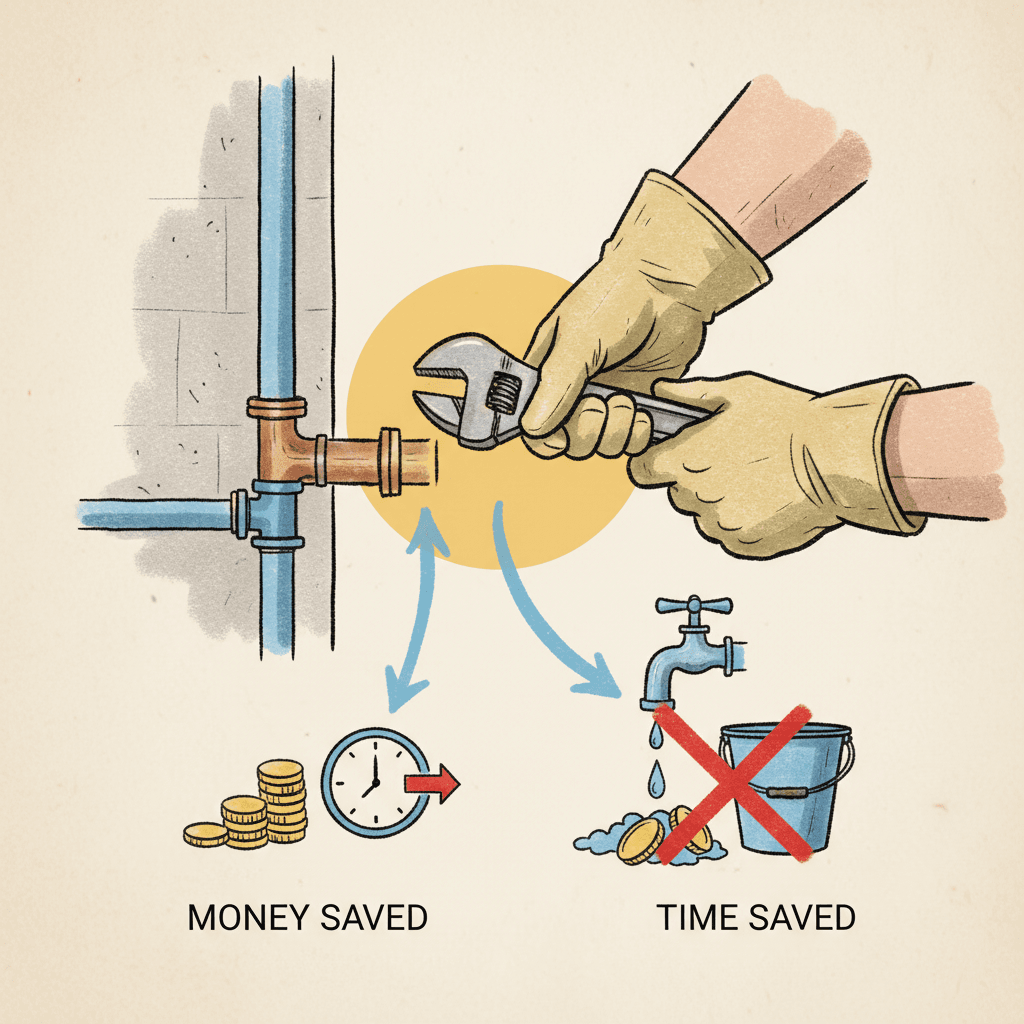
On most jobs, small leaks and slow drains eat time and profit. These home plumbing repair tips help you stop water fast, clear blockages cleanly, and avoid repeat visits. We’ll cover safety, tools, step-by-step fixes, and when to call in help. You’ll see simple checks that take 2 minutes but save hours later. We keep it practical: exact parts, clear measurements, and realistic timeframes. Use these home plumbing repair tips to tighten up your process, protect your margin, and keep clients happy.
Quick Answer
Need reliable home plumbing repair tips? Isolate the problem, protect the area, and work methodically. Shut water in 30 seconds or less, use 6–8 wraps of PTFE tape on male threads, set house pressure near 3 bar, and test under load for 2 minutes. Always clean, dry, and document your fix.
Table of Contents
Key Takeaways
- Isolate water in under 30 seconds. Know every shut-off.
- Use 6–8 PTFE wraps and “hand tight + 1/4 turn”. Test for 2 minutes.
- Aim for 3 bar house pressure; safe range is 1.5–5 bar.
- Clear traps first. Use a 3–5 m snake before any chemicals.
- Keep notes and photos; they prevent call-backs and speed quotes.
Before any fix, control risk.
- Find and test shut-offs. Main valve, stopcocks, and appliance isolators. You should shut water in 30 seconds.
- Protect the area. Lay towels, a 10–15 litre bucket, and a tray.
- Power safety. Kill electrics near wet work. Use RCD protection.
- PPE. Gloves, eye protection, knee pads. Simple, but it saves you.
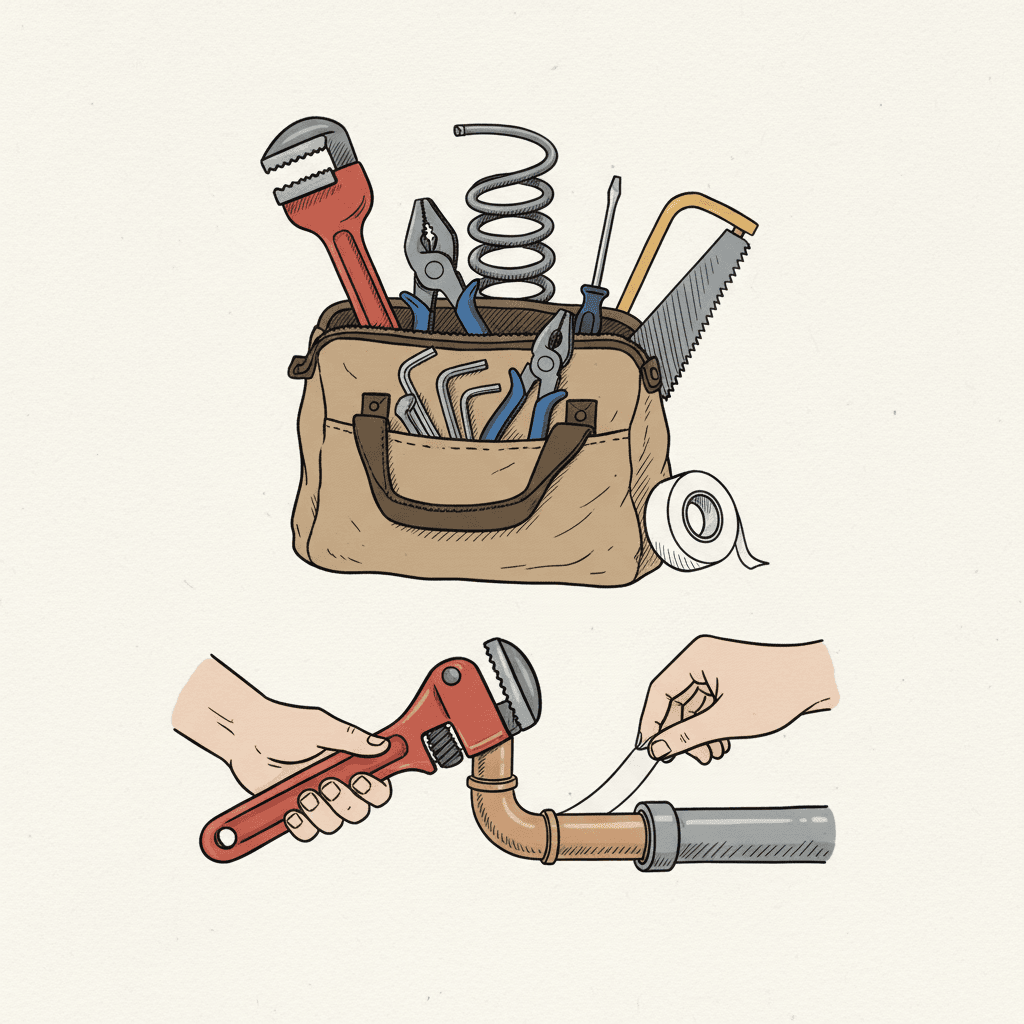
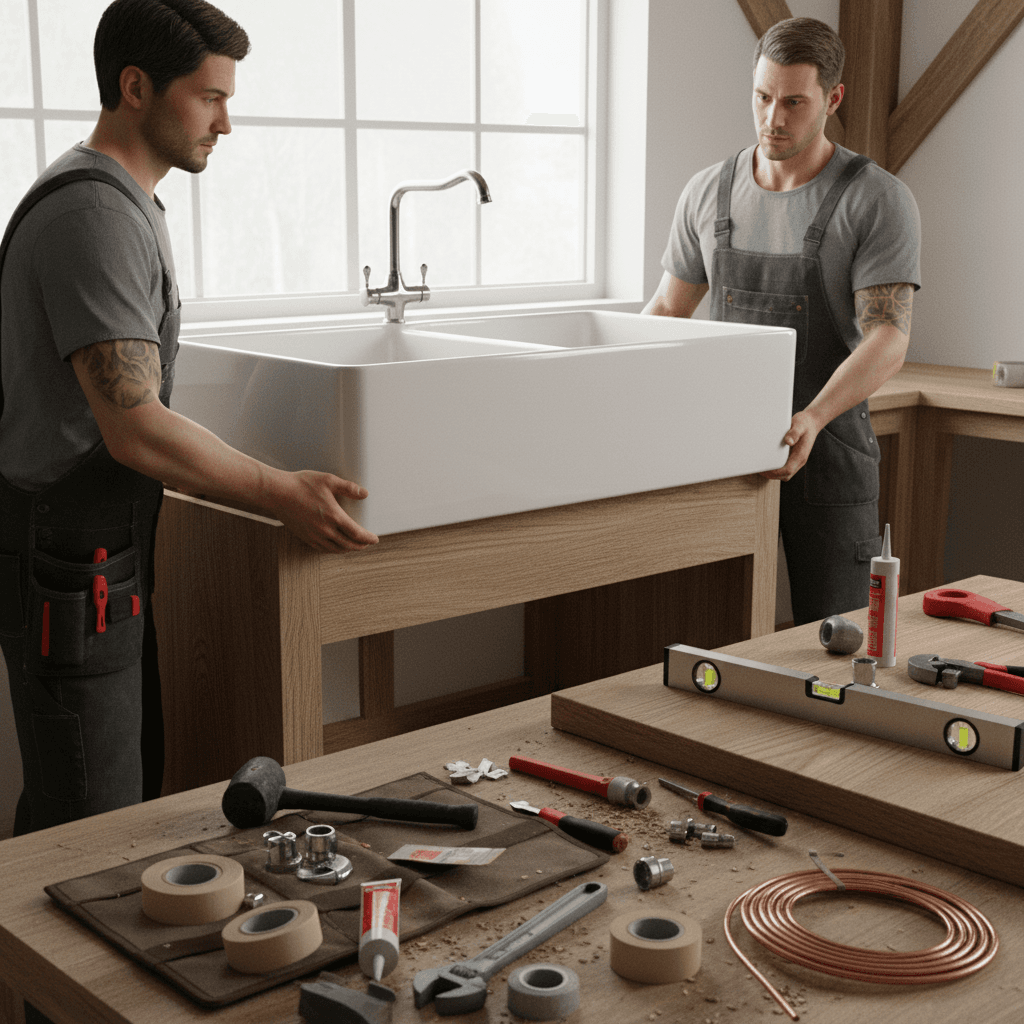
Essential kit that speeds home plumbing repair tips into real results:
- Adjustable spanners (150 mm and 300 mm)
- PTFE tape and jointing compound (non-setting for potable systems)
- Assorted fibre/rubber washers (1/2" and 3/4")
- Basin wrench, hacksaw, multi-bit screwdriver
- Pump pliers, pipe grips, and a small torque feeler: “hand tight + 1/4 turn”
- Pressure gauge for a hose bib or tap
Pro move: After any fix, wipe joints dry, then tissue-test. A single damp spot means redo the seal.
Home Plumbing Repair Tips: Stop Small Leaks Fast
Drips waste time and trust. Fix them cleanly.
- Isolate and drain. Close the nearest valve. Open the lowest tap to bleed pressure.
- Identify the joint. Compression, threaded, or cartridge.
- Reseat or replace.
- Compression: Inspect olive. If marked, replace olive and nut.
- Threaded: Clean threads. Apply 6–8 clockwise PTFE wraps. Do not back off after tightening.
- Tap cartridges: Most basin taps use 1/2"; baths often 3/4". Swap like-for-like.
- Tighten with feel. Go snug, then +1/4 turn. Over-tightening crushes olives and splits threads.
- Test under load. Turn on slowly. Hold for 2 minutes. Wipe dry. Check again in 10 minutes.
These home plumbing repair tips cut call-backs: always replace perished washers, and never reuse a chewed olive. If a weep persists, use a non-setting jointing compound sparingly and retest.
Micro-leaks on Plastic Fittings
- Use pipe inserts on 15 mm and 22 mm plastic pipe.
- Ensure full pipe engagement (mark depth with a pen).
- Do not use jointing compound on push-fit O-rings.
Home Plumbing Repair Tips: Clear Blockages Without Damage
Most blockages are in the trap or the first 1–2 metres.
- Plunge right. Fill the bowl to about 5 cm above the outlet. Seal overflow with a wet cloth. Drive 10–15 firm strokes.
- Strip the trap. Place a bucket. Undo hand-tight nuts. Clear hair/grease. Inspect and replace flat washers if misshapen.
- Snake smart. Use a 3–5 m hand auger. Rotate gently through bends. Do not force.
- Flush hot. Reassemble. Run hot water for 2–3 minutes.
These home plumbing repair tips protect finishes: avoid harsh chemicals that can etch chrome and damage seals. If the stack is slow, check venting. Poor venting mimics a blockage and causes gurgling.
Keep Waste Pipes Flowing
- Maintain fall at roughly 1:50 (20 mm drop per metre).
- Support 40 mm waste every 1.2–1.5 m to prevent sags.
- Fit a cleanout where runs exceed 3 m with bends.
Fix Low Pressure, Noise, and Water Quality
Clients often complain about “weak showers” or “banging pipes”. Work through this order.
- Measure pressure. Fit a gauge at an external tap. Target 3 bar; 1.5–5 bar is common.
- Clear end-point restrictions. Remove and clean aerators and shower heads. Limescale can cut flow by half.
- Adjust or fit a PRV. If pressure exceeds 5 bar, install or tune the pressure reducing valve. Adjust the screw in small turns, then remeasure.
- Kill water hammer. Secure loose 15 mm/22 mm pipes (clips every 1.5 m). Install water hammer arrestors near fast-closing valves (dishwashers, washing machines).
- Improve quality. Flush lines for 2–3 minutes after works. For persistent debris, fit a simple inline strainer at the entry.
These home plumbing repair tips restore flow fast. Always note final readings on the invoice: “Set PRV to 3.0 bar. Cleaned aerators. Secured pipe at kitchen run.” Documentation avoids disputes.
Restore Hot Water: Heaters, Valves, and Mixers
No hot water can ruin a day. Triage quickly.
- Check energy and isolation. Power on? Gas on? Immersion timer correct?
- Thermostat. Set cylinders between 50–60°C. Below 50°C risks bacteria; above 60°C scalds.
- Mixing valve. Many homes have a TMV. If taps are only lukewarm, the TMV may be set too low or scaled. Calibrate slowly.
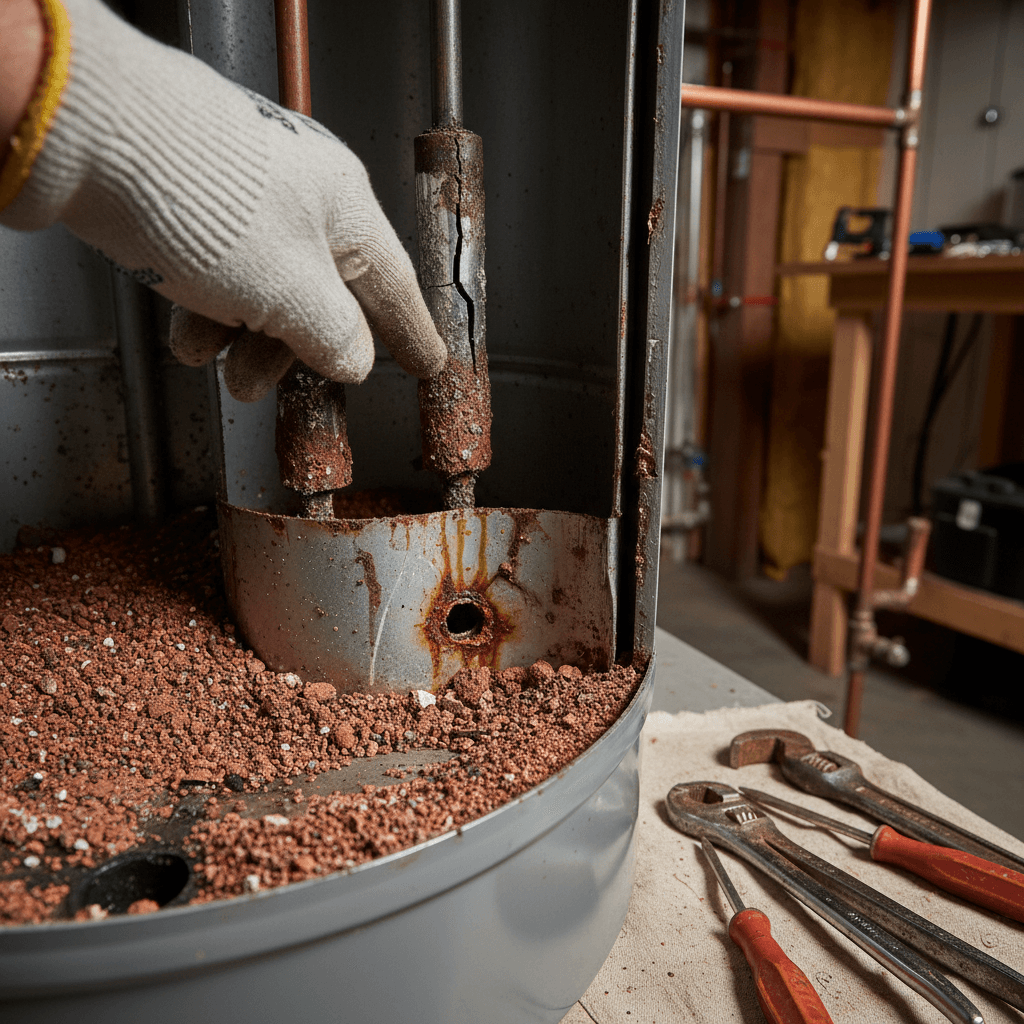
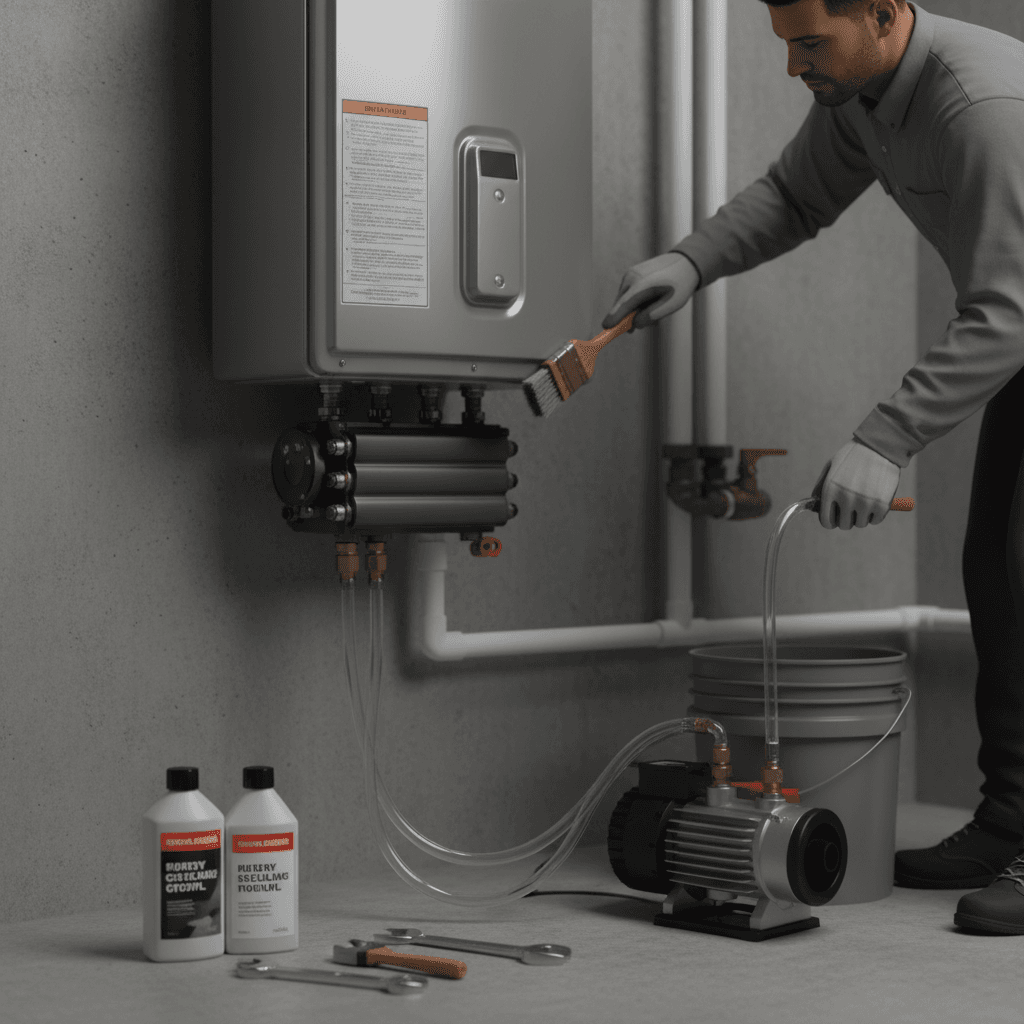
- Scale and sediment. Drain and flush cylinders or combi heat exchangers for 20–30 minutes where access allows.
- Reheat time. A typical 120-litre cylinder reheats in 45–90 minutes. Set client expectations.
- Safety checks. Test the TPR valve briefly. If it weeps after, plan a replacement. Inspect expansion vessels; recharge or replace every 3–5 years when needed.
These home plumbing repair tips prevent returns: always bleed air after opening hot circuits and confirm outlet temperatures with a thermometer. Record “Hot at 55°C after TMV set.”
When to Quote, Document, or Call a Pro
Some faults go beyond quick fixes: gas smells, burned wiring on immersions, hidden leaks in walls, or a collapsed drain line. Stop, make it safe, and brief the client.
- Quote clearly with photos. Outline the fault, the method, and parts. Tools like Donizo let you capture voice notes on site, turn them into a branded proposal, and send for e-signature in minutes. That keeps momentum on emergency repairs.
- Internal link ideas: if you also want faster professional proposals, see our guide; for better project timelines, read our planning checklist; and for clean invoice templates, check our billing tips.
- Hand-offs. If you suspect structural drain issues, camera surveys help. For live gas or electrical faults, bring in certified specialists.
These home plumbing repair tips are strongest when paired with clean paperwork and clear client updates.
FAQ
How do I find the main water shut-off quickly?
Look near the water meter, under the kitchen sink, or where the main enters the house. In flats, check the service cupboard. Label it. Practice closing and opening so you can shut water in under 30 seconds during a leak.
How many PTFE tape wraps should I use?
Use 6–8 tight, clockwise wraps on male threads. Start one thread back to avoid shedding. Press the final wrap into the root of the thread. Tighten “hand tight + 1/4 turn”, then test for 2 minutes under pressure.
What’s safe water pressure for a home?
In general, 1.5–5 bar is common for homes. Aim around 3 bar for comfort and fixture protection. If you read higher than 5 bar, fit or adjust a pressure reducing valve and re-test at two points.
Should I use chemical drain cleaners?
Only as a last resort. They can damage chrome, seals, and some plastics. Clear the trap first, then use a 3–5 m snake. If you must use chemicals, follow labels, protect surfaces, and flush thoroughly.
Why do my pipes bang when taps close?
That’s water hammer. High pressure and loose pipe runs cause it. Secure pipes every 1.5 m, set pressure near 3 bar, and fit arrestors at fast-closing valves like washing machines.
Conclusion
Strong home plumbing repair tips are simple: isolate fast, fix cleanly, and test under load. Document readings, temperatures, and photos so clients see clear value. Next steps you can apply today:
- Put a pressure gauge and PTFE in every van.
- Label shut-offs on each job within 5 minutes of arrival.
- Standardise your leak test: wipe, tissue-test, wait 10 minutes.
When the job needs a formal quote or quick sign-off, platforms such as Donizo help you turn on-site notes into e-signed proposals and invoices fast. Keep it safe, keep it tidy, and you’ll cut call-backs while protecting margin.