Inside A Leaking 5.5 Year Old Water Heaterplumbingwater heatersmaintenancecontractors
Inside a Leaking 5.5‑Year‑Old Water Heater: What Fails
See what’s happening inside a leaking 5.5‑year‑old water heater, how to find the source fast, and when to repair or replace. Clear steps, tools, and safety.
Intro
On most jobs, a customer calls you after spotting a puddle. You open the cupboard and there it is: inside a leaking 5.5‑year‑old water heater, something has gone wrong early. At 5.5 years, a tank shouldn’t be done yet. Most last 8–12 years with a 6‑year warranty. This guide shows what fails inside a leaking 5.5‑year‑old water heater, how to find the source in minutes, and when to fix or replace. We’ll cover pressure checks, valve tests, and a simple internal inspection. You’ll get clear steps, real numbers, and safety notes you can use on site today.
Quick Answer
Inside a leaking 5.5‑year‑old water heater, most leaks come from fittings, valves, or high pressure, not the tank shell. Check the T&P valve, drain valve, and top nipples first. If the tank seam or jacket is wet, replace the unit. Confirm with a pressure gauge, valve tests, and a quick internal inspection.
Safe static pressure: 3.5–4.0 bar (50–60 psi). Over 5.5 bar (80 psi) causes trouble.
T&P opens near 99°C and 10 bar (≈150 psi). Don’t cap it.
If the tank seam is wet, replace. If the valve drips, repair.
A 30–45 minute inspection can save a 2–4 hour replacement.
Inside a Leaking 5.5‑Year‑Old Water Heater: Common Failure Points
At 5.5 years, you’re mid‑life for most tanks. Inside a leaking 5.5‑year‑old water heater, these are the usual culprits:
Top connections (hot/cold nipples): Loose joints, failed dielectric unions, or pinholes. Many contractors find a slow weep here shows as water down the jacket.
Temperature and pressure (T&P) relief valve: It drips when pressure is high, temperature is high, or the valve is bad. It should be set around 99°C and 10 bar (≈150 psi).
Drain valve: Cheap plastic valves often seep. Brass is better.
Anode rod port: A loose anode plug or worn gasket can track water.
Internal corrosion: If water quality is harsh and the anode is spent early, the tank can rust from year 4–6.
High pressure and thermal expansion: No expansion tank or failed pre‑charge lets pressure spike after heat cycles.
If you’re diagnosing inside a leaking 5.5‑year‑old water heater, always think pressure + fittings first. The tank shell is the last suspect unless the seam is clearly wet.
Fast Leak Triage: Find the Source in 10 Minutes
When you arrive, don’t start draining. First, prove the source. This fast workflow works well inside a leaking 5.5‑year‑old water heater.
Kill power/heat (1 minute)
Electric: Turn off the 240 V breaker.
Gas: Set the control to Pilot or Off. Safety first.
Check the top (2 minutes)
Run a dry tissue around hot and cold nipples, unions, and the anode head. Look for a wet line. A mirror and torch help.
Check the T&P and discharge (2 minutes)
Is the discharge pipe warm or wet? If yes, the T&P is opening. Don’t cap the line. Note it.
Check the drain valve (1 minute)
Dab the valve body and cap. Plastic caps often hide drips.
Pull a pressure reading (3–4 minutes)
Thread a gauge on a drain or a nearby tap. Static should be 3.5–4.0 bar (50–60 psi). Over 5.5 bar (80 psi) is a problem. Watch a heated cycle: if it jumps 1.0–1.5 bar (15–20 psi), your expansion control is failing.
Tip: If the jacket seam or bottom pan is warm and wet with no drip above, the tank is likely gone. Inside a leaking 5.5‑year‑old water heater, a warm wet seam is a strong replacement sign.
This quick pass gives you the story before you grab spanners.
Repair or Replace? Decide With Numbers
You need a simple rule you can stand behind. Use numbers and location.
Repairable, common in a 5.5‑year unit:
T&P weeping with high pressure: Add/repair expansion tank and set pre‑charge. Target 3.5–4.0 bar (50–60 psi). Replace the T&P if it still weeps after pressure is right.
Drain valve drip: Swap to a brass valve. Takes 15–30 minutes.
Top nipple weep: Reseat with fresh tape + paste. Use dielectric unions to stop galvanic corrosion.
Replace the tank when:
You confirm a shell leak or seam rust. Water inside the jacket with no top source is the tell.
Multiple internal failures: rotten anode, heavy sediment, and a scored liner.
Safety concerns: burnt wiring, damaged flue, or gas issues.
Time and cost guide:
A repair call runs 30–90 minutes. Parts: a few small items.
A full replacement is 2–4 hours, plus haul‑away. Commonly, the total cost is more than half a new unit when the shell is compromised.
If you also need to present options clearly to the client, creating professional proposals becomes much easier when you outline “repair now vs replace now” with clear numbers and timeframes. It pairs well with managing change orders if scope grows after you open the unit.
How to Open and Inspect the Inside (Step by Step)
When you must look inside a leaking 5.5‑year‑old water heater, keep it controlled. Here’s a clean, safe method.
Make it safe (2 minutes)
Electric OFF at breaker. Gas OFF or set to Pilot. Let it cool if very hot.
Isolate cold water (1 minute)
Close the cold feed valve. Open a hot tap to relieve pressure.
Drain just enough (3–5 minutes)
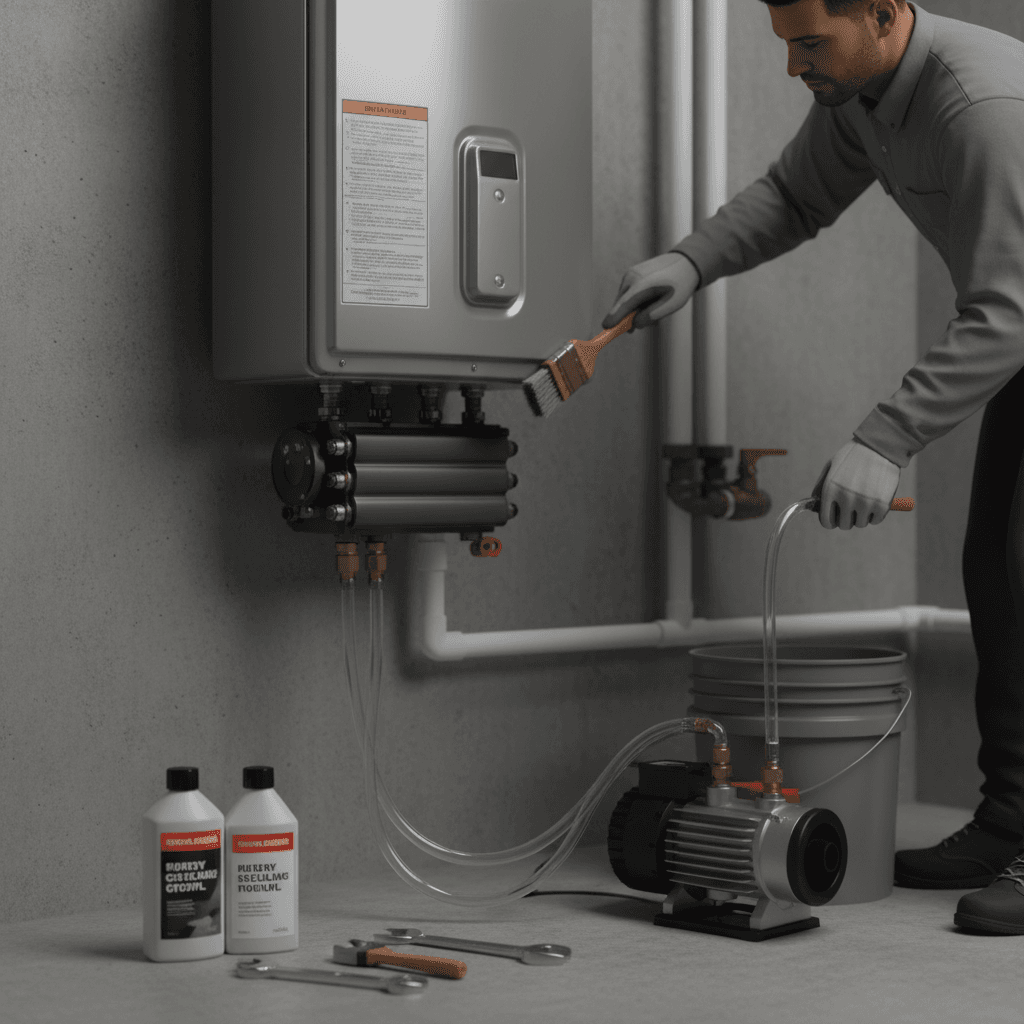
Connect a 12–15 mm hose to the drain. Dump 2–3 litres to drop the level below the top ports.
Inspect the anode port (5 minutes)
Crack the anode head (often 27–29 mm hex or 1‑1/16" socket). If the rod is under 10–15% of original thickness or less than 200–300 mm remains on a 0.8–1.2 m rod, it’s done. Replace it.
Check sediment (5–10 minutes)
Pulse‑flush the drain for 5–10 minutes. A heavy sand‑like flow means scale build‑up, which raises temperature swing and pressure.
Reseat fittings (10–15 minutes)
Rethread the top nipples with tape + paste. Fit dielectric unions if missing. Tighten, but don’t crush.
Pressure and T&P test (5–10 minutes)
Refill, bleed air, power ON. Check the gauge again. Set expansion tank pre‑charge to match static pressure (e.g., 3.8 bar / 55 psi). If the T&P still weeps at normal pressure, replace the valve.
Safety notes:
Never cap the T&P discharge. It must run to a safe drain point.
Keep hands clear of live terminals and hot flues.
If you smell gas or see burnt wiring, stop. Replace the unit and make it safe.
When you document findings, tools like Donizo help you capture voice notes and photos on site and turn them into a clear proposal fast, then send for e‑signature and convert to an invoice if the client says yes.
Prevent the Next Leak: Setup That Extends Service Life
The best callback is the one that never happens. Inside a leaking 5.5‑year‑old water heater, you often see early wear from pressure and chemistry. Fix the setup now.
Control pressure and expansion
Fit a pressure reducing valve if static is over 5.5 bar (80 psi).
Add or fix the expansion tank. Pre‑charge to match static (use a pump and gauge).
Upgrade weak parts
Swap plastic drain valves for brass.
Use dielectric unions between copper and steel. It slows galvanic corrosion.
Maintain the anode
Check every 2–3 years in hard water. Replace before it’s gone.
Flush sediment
A 5–10 minute flush each year reduces temperature swing and pressure spikes.
Add a pan and leak alarm
A simple pan and a £10–£20 alarm can save ceilings. It also buys you time to schedule work.
If you’re also looking to streamline professional proposals for this preventive work, our guide covers best ways to present options and upsells. For contractors dealing with admin, invoice templates that save time work well with maintenance plans and annual flush visits.
FAQ
Why would a 5.5‑year‑old water heater already be leaking?
Commonly, high pressure, a failed expansion tank, weak plastic drain valves, or missing dielectric unions start small leaks early. In hard water areas, a spent anode can speed up internal corrosion. A true tank shell leak at 5.5 years is less common, but it happens.
How do I know if the tank itself is leaking?
Dry all fittings. Watch for fresh water appearing from under the jacket seam or the base pan, with no wet spots above. A warm, damp seam usually means the liner has failed. If you confirm that, replace the unit.
Can I just replace the T&P valve to stop the leak?
Only if pressure and temperature are normal. First, measure static pressure (target 3.5–4.0 bar / 50–60 psi) and fix any expansion issue. If the valve still weeps after that, replace it. Don’t cap the discharge line.
How long does diagnosis and repair take?
A solid diagnosis takes 30–45 minutes. Simple fixes like a drain valve or a top nipple reseal take 15–45 minutes. A full replacement is usually 2–4 hours, depending on access and pipework.
Should I check the anode at 5.5 years?
Yes. Many contractors report anodes can be spent by year 4–6 in hard water. If the rod is mostly gone or the core steel is exposed, replace it. This small job can add years of life.
Conclusion
Inside a leaking 5.5‑year‑old water heater, most problems trace to pressure and fittings, not a dead tank. Prove the source, fix pressure, then repair or replace with confidence. Next steps:
Run the 10‑minute triage and pull a pressure gauge reading.
If repairable, reseat fittings, swap weak valves, and set expansion.
If the shell leaks, quote a clean replacement with proper protection.
When you need to turn site notes into a clear proposal fast, platforms such as Donizo let you capture details, send for e‑signature, and convert to an invoice in one click. Do the basics right now, and you’ll cut callbacks and keep clients happy.
Related Articles
Discover more insights and tips for your construction business