Intro
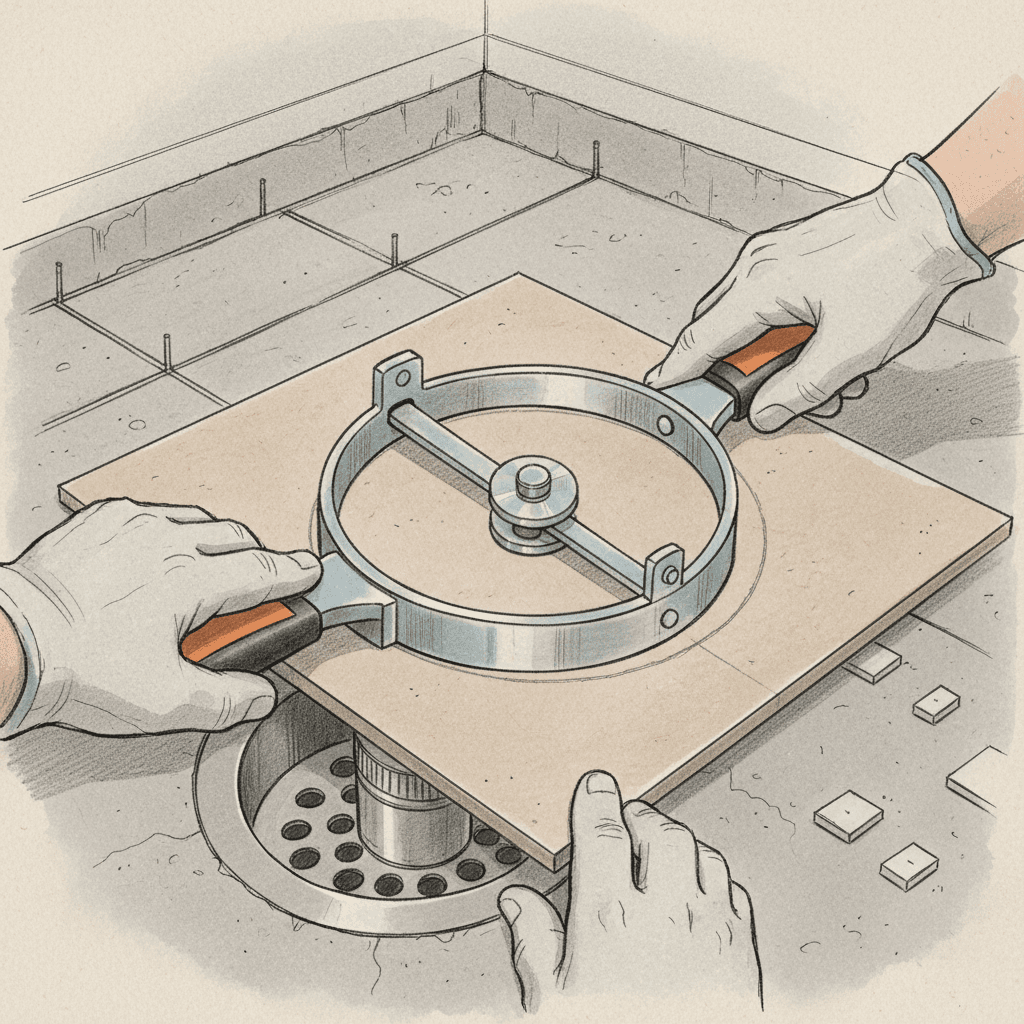
On most jobs, you need speed, clean work, and no callbacks. That’s why understanding why you shouldn’t use a monkey wrench on plumbing matters. A monkey wrench (or smooth‑jaw adjustable) bites poorly on round fittings. It slips, scars chrome, and twists joints. That leads to leaks, cracks, and angry clients. In this article, we break down the real risks, show better tool choices, and give a simple, step‑by‑step method that protects threads, seals, and finishes. You’ll see when to grab a pipe wrench, basin wrench, or flare‑nut wrench instead, and how a two‑wrench setup saves your day.
Quick Answer
Don’t use a monkey wrench on plumbing because it slips on round fittings, mars finishes, and twists connected joints. Use a pipe wrench on threaded steel/iron, a basin wrench for faucet nuts, and a flare‑nut wrench on compression nuts. Always counter‑hold with a second wrench. This prevents leaks and finish damage.
Table of Contents
Key Takeaways
- A monkey wrench slips and scars fittings, causing leaks and callbacks.
- Use two wrenches: turn with one, counter‑hold with the other.
- Correct tools: pipe wrench, basin wrench, and flare‑nut wrench.
- Most compression nuts seal at snug + 1/4 turn; don’t over‑torque.
- Plan 2–3 minutes to isolate and drain lines before work.
What Really Goes Wrong With a Monkey Wrench
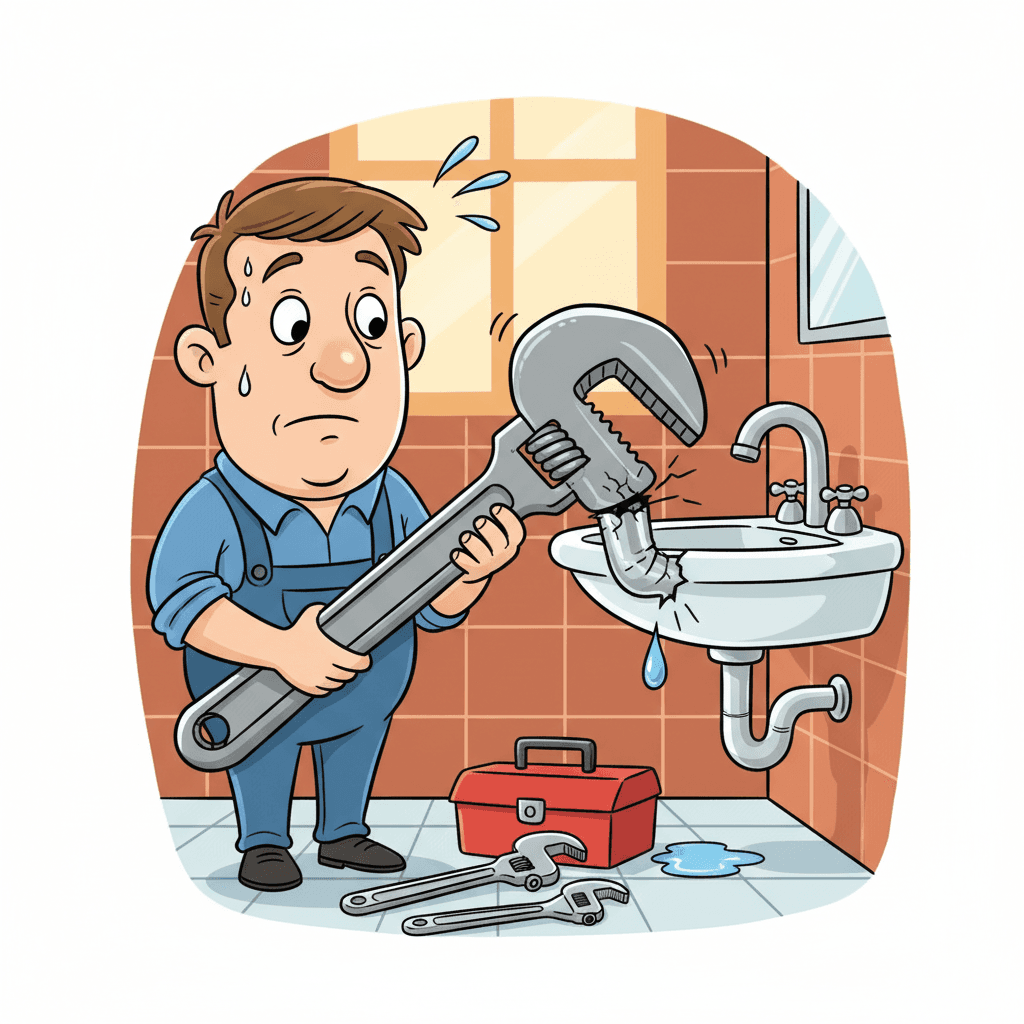
A monkey wrench has smooth, parallel jaws. Plumbing fittings are mostly round. That mismatch causes slip. Soft metals like brass and chrome‑plated brass deform fast. One slip can round a 17 mm or 19 mm compression nut. Once rounded, it’s 5–10 minutes longer to remove, sometimes with a hacksaw.
It also loads the joint wrong. When you turn a valve or union without counter‑holding, torque transfers down the line. Soldered joints, PEX fittings, and threaded nipples can crack or shift. Even a 1/8 turn past snug on old brass can split a ferrule or crush a seat.
Finally, finish damage is real. One drag across chrome leaves a permanent scar. Clients notice that in 1 second. You lose trust that took months to build.
Pick the right tool for the fitting. It saves time and avoids damage.
Threaded steel/iron pipe (1/2 in, 3/4 in, 1 in)
- Use: Pipe wrench (10 in, 14 in, or 18 in depending on pipe size)
- Why: Teeth bite into the pipe, creating secure grip without slipping.
- Tip: Position jaws so the pulling force closes the jaws tighter.
Compression nuts on supply lines (3/8 in OD, 1/2 in OD)
- Use: Flare‑nut wrench or crowfoot flare‑nut socket
- Why: It grips more flats than an open‑end wrench, won’t round nuts.
- Tip: Most seal at snug + 1/4 turn. If it leaks, add another 1/8 turn.
Faucet mounting nuts under sinks (up to 1‑1/4 in)
- Use: Basin wrench
- Why: It reaches where hands and pliers can’t (tight 2–3 in clearances).
- Tip: Many faucet nuts need only moderate force. Over‑tightening crushes gaskets.
Chrome traps and decorative fittings (1‑1/4 in, 1‑1/2 in)
- Use: Slip‑joint pliers with tape or soft jaws; strap wrench for finishes
- Why: Protects finish and provides wide, even grip.
- Tip: Wrap jaws with 2–3 layers of tape to avoid scratching.
PEX connections
- Use: PEX crimp or clamp tool sized for 1/2 in or 3/4 in rings
- Why: Correct compression makes a reliable seal. A monkey wrench can’t do that.
- Tip: Verify go/no‑go gauge after crimp.
Use the Two‑Wrench Method: Step‑By‑Step
This method stops joint twist and prevents leaks. Plan 5–10 minutes from shutoff to test.
-
Shut off and drain
- Close the nearest valve. If none, close the main.
- Open a nearby faucet for 30–60 seconds to bleed pressure.
-
Choose the right pair
- Example: 10 in pipe wrench on the fitting, 12 in adjustable on the body for counter‑hold.
- For chrome parts, use soft jaws or a strap wrench.
-
Position wrenches
- Space hands 6–8 in apart for control.
- Align the turning wrench to pull toward you; the counter‑hold resists in the opposite direction.
-
Break free smoothly
- Apply steady pressure. No jerks.
- If stuck, add penetrating oil and wait 2–5 minutes. Try again.
-
Reassemble with sealant
- For NPT threads, wrap PTFE tape 6–8 wraps clockwise. Add a thin pipe dope if needed.
- For compression fittings, seat ferrule gently, then snug + 1/4 turn.
-
Test
- Turn water on slowly. Watch for 60–90 seconds.
- If you see a weep, tighten 1/8 turn more. Stop if resistance spikes.
Protect Threads, Seals, and Finishes
Threads
- Use the right sealant: PTFE tape for NPT; no tape on compression seats.
- Clean old dope and tape fully. A wire brush saves 1–2 minutes per joint.
Seals
- Replace when in doubt. New ferrules and gaskets cost little, save hours later.
- Lube O‑rings with silicone grease. Dry installs tear seals fast.
Finishes
- Use tape, pad, or soft jaws. Even a 1 mm burr can gouge chrome.
- Strap wrenches are ideal for escutcheons and decorative sleeves.
Torque Control
- “Snug + 1/4 turn” is safer than “tight as possible.”
- If the fitting squeals or the wrench jumps, you’re over its limit.
Field Tips, Time Savers, and Buying Guide
- Carry two pipe wrenches: 10 in and 14 in. That covers most 1/2 in and 3/4 in work.
- Keep a basin wrench with a telescoping handle. It saves 10–15 minutes under sinks.
- Own flare‑nut wrenches in 10 mm–19 mm. They protect soft brass nuts.
- Use penetrating oil early. Waiting 2–5 minutes now saves broken parts later.
- Heat can free old threaded joints, but avoid near PEX or rubber within 2–3 in.
- Build a finish kit: soft jaw covers, strap wrench, low‑tack tape.
- If you’re also improving professional proposals, link “professional proposals.”
- For contractors working on estimates, link “pricing strategies for service calls.”
- To reduce billing delays, link “invoice templates that save time.”
- To keep clients aligned, link “project timelines and change approvals.”
FAQ
Can I ever use a monkey wrench on plumbing?
It’s best to avoid it. If you must, only use it on non‑finished, non‑round flats with a perfect fit. Even then, counter‑hold with a second wrench. For most plumbing tasks, a pipe wrench, basin wrench, or flare‑nut wrench is safer and faster.
What’s the difference between a monkey wrench and a pipe wrench?
A monkey wrench has smooth jaws. A pipe wrench has serrated teeth and a pivoting jaw that bites harder as you pull. The pipe wrench is designed for round pipe. The monkey wrench is not, so it slips and mars fittings.
Why do compression fittings leak after using the wrong wrench?
The wrong wrench twists the body instead of the nut. That distorts the ferrule and the sealing seat. Once the ferrule is crushed or misaligned, it may never seal right again. Use a flare‑nut wrench and counter‑hold the valve body.
What should I carry in a small service bag?
Carry a 10 in pipe wrench, 12 in adjustable with soft jaws, basin wrench, flare‑nut set (10–19 mm), slip‑joint pliers, PTFE tape, light pipe dope, and silicone grease. That kit covers 80–90% of everyday service calls.
How tight is tight enough on threaded pipe?
Snug by hand, then 1–2 full turns with a pipe wrench is common. Stop if resistance spikes or the fitting creaks. Always test under pressure for 60–90 seconds. If you see a weep, add 1/8 turn.
Conclusion
A monkey wrench on plumbing is a bad match: it slips, scars, and twists joints. Use the right tool and a two‑wrench method to protect threads, seals, and finishes. Next steps:
- Standardize a 10 in/14 in pipe wrench pair and a basin wrench.
- Add flare‑nut wrenches and a finish‑safe strap wrench.
- Train crews on “snug + 1/4 turn” and 60–90 second leak tests.
For proposals and clear scopes on service calls, tools like Donizo help you capture details fast and get quick approvals. Build the habit today; your future self will thank you.